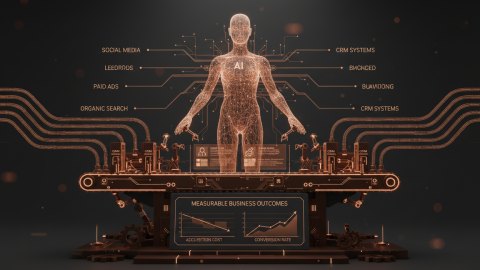
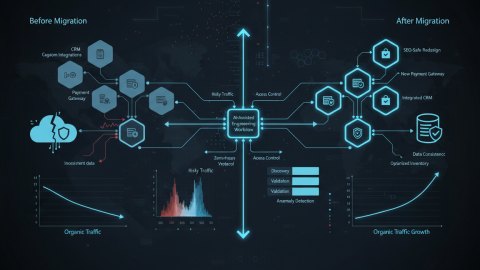
In the evolving landscape of commercial websites, growth often triggers complexity that strains traditional engineering workflows. Content volume surges, user interactions multiply, and integration points proliferate. Under tight budget and deadline constraints, the challenge is to architect a solution that accelerates delivery without sacrificing performance or reliability.
This article models a solution architecture focused on AI-assisted engineering workflows, designed to reduce incidents and regressions while improving time-to-market. The approach is grounded in practical engineering decisions, measurable outcomes, and a phased implementation plan.

Preparation: Context and Constraints
Consider a mid-sized commercial website experiencing rapid content expansion and user base growth. The engineering team faces a tight deadline to launch new features supporting personalized content delivery, while the budget restricts extensive manual QA and infrastructure overhauls.
Key constraints include:
- Budget: Limited resources for extensive manual testing or large-scale infrastructure upgrades.
- Deadline: Fixed launch date for new content personalization features.
- Performance: Maintaining sub-second page load times despite increased content complexity.
- Reliability: Minimizing incidents and regressions during and after rollout.
These constraints necessitate an architecture that leverages automation and AI to augment engineering workflows, enabling faster feedback loops and proactive issue detection.
Execution: Designing the AI-Assisted Engineering Workflow Architecture
The core architectural decision is to embed AI-driven quality gates and observability into the continuous integration and deployment (CI/CD) pipeline. This modeling approach treats AI as an augmentation layer that enhances human decision-making rather than replacing it.
1. Modular Pipeline with AI-Driven Quality Gates
Segment the CI/CD pipeline into discrete stages: code validation, automated testing, performance benchmarking, and deployment readiness. At each stage, integrate AI models trained on historical incident and regression data to predict risk levels for the current build.
Implementation notes:
- Use lightweight AI models that analyze commit metadata, test coverage, and static code analysis results.
- Set threshold-based alerts that flag builds with elevated risk scores for manual review.
- Continuously retrain models with new incident data to improve prediction accuracy.
2. Observability-Driven Incident Prevention
Embed observability hooks early in the development process to monitor key performance indicators (KPIs) such as response times, error rates, and resource utilization. AI-assisted anomaly detection algorithms analyze telemetry data in real time to identify deviations from baseline behavior.
Implementation notes:
- Instrument code with standardized telemetry libraries to ensure consistent data collection.
- Deploy AI models that correlate anomalies with recent deployments or configuration changes.
- Automate alerting workflows that prioritize incidents based on predicted business impact.
3. Incremental Rollout with Feedback Loops
Adopt a phased rollout strategy using feature flags and canary deployments. AI models analyze user engagement and error patterns during incremental releases to inform go/no-go decisions.
Implementation notes:
- Integrate feature flag management into the deployment pipeline for controlled exposure.
- Leverage AI to detect early signs of performance degradation or user dissatisfaction.
- Implement automated rollback triggers based on predefined thresholds.
Validation: Measuring Outcomes and Adjusting the Model
After initial rollout, validate the architecture by comparing key metrics before and after implementation:
- Incident frequency: Expect a measurable reduction in post-deployment incidents due to early AI-driven risk detection.
- Regression rate: Track decreases in regressions caught late in the release cycle.
- Time-to-market: Measure acceleration in release cadence enabled by automated quality gates.
- Performance KPIs: Confirm maintenance or improvement of page load times and error rates.
For example, a commercial website implementing this architecture reported a 30% reduction in critical incidents within the first quarter post-launch, alongside a 20% faster release cycle.
Monitoring: Sustaining Performance and Reliability
Continuous monitoring is essential to sustain gains and adapt to evolving conditions. The architecture must support ongoing AI model retraining, telemetry refinement, and feedback incorporation from engineering teams.
Key monitoring practices include:
- Regularly review AI model performance metrics such as precision and recall to detect drift.
- Maintain dashboards that visualize deployment health, incident trends, and user experience metrics.
- Establish a feedback loop where engineering teams report false positives/negatives to improve AI accuracy.
This monitoring discipline ensures the architecture remains aligned with business goals and technical realities.
Next Steps: Scaling and Integrating with Broader Engineering Ecosystems
With a validated AI-assisted engineering workflow in place, the next phase involves scaling the architecture to support additional product lines and integrating with broader enterprise systems.
Recommended actions:
- Extend AI models to cover security and compliance checks, enhancing governance.
- Integrate with centralized logging and alerting platforms for unified incident management.
- Collaborate with product and operations teams to align architecture evolution with strategic priorities.
For teams seeking detailed guidance on release risk reduction and migration under legacy constraints, reviewing the B2B Product Delivery in Multi-System Organizations with Legacy Constraints article offers complementary insights.
Practical Mini-Case: AI-Driven Quality Gates in a Budget-Constrained Launch
A commercial content platform with limited QA resources implemented AI-assisted quality gates in their CI/CD pipeline. By modeling historical defect patterns, the AI flagged high-risk commits, enabling targeted manual reviews. This approach reduced regression incidents by 25% and accelerated the release cycle by 15%, all within existing budget constraints.
This case underscores the value of modeling risk and performance data to inform engineering decisions, rather than relying solely on manual processes.
Common Anti-Patterns to Avoid
When implementing AI-assisted workflows, beware of these pitfalls:
- Over-reliance on AI predictions: Treat AI outputs as advisory, not absolute. Human judgment remains critical.
- Ignoring model drift: Failure to retrain AI models leads to degraded accuracy and missed risks.
- Insufficient telemetry: Poor data quality undermines anomaly detection and risk assessment.
- Monolithic pipelines: Lack of modularity hampers incremental improvements and troubleshooting.
Addressing these anti-patterns ensures the architecture remains robust and adaptable.
Conclusion
Modeling a solution architecture for growing content-driven commercial websites under budget and deadline constraints requires a deliberate balance of automation, AI assistance, and human oversight. Embedding AI-driven quality gates, observability, and incremental rollout strategies into engineering workflows reduces incidents and accelerates time-to-market.
By following the preparation, execution, validation, monitoring, and scaling steps outlined here, engineering teams can build resilient, performant digital products that grow sustainably.
For organizations ready to implement these strategies and optimize their commercial website performance, exploring our performance engineering services can provide tailored support and accelerate outcomes.
Further reading on related architecture and release engineering topics is available in our blog, including:
- MVP Delivery Architecture Blueprint for B2B SaaS and Internal Tooling Under Legacy Constraints
- Observability-Driven Incident Prevention and Resilience Architecture for MVP Product Teams
- Release Engineering and Operational Reliability for Content-Driven Commercial Websites
Enhancing AI-Assisted Engineering Workflows with Concrete Implementation Steps
To effectively adopt AI-assisted engineering workflows within the constraints of budget and deadlines, teams must follow a structured approach that integrates practical steps and continuous improvement mechanisms. Below is a detailed checklist and rationale for each phase of the workflow implementation.
Step 1: Establish Baseline Metrics and Data Quality Standards
Before integrating AI models, it is critical to define and collect baseline metrics that represent current system performance and incident rates. This includes:
- Defining key performance indicators (KPIs) such as page load time, error rates, and user engagement metrics.
- Ensuring telemetry data is comprehensive, accurate, and standardized across services.
- Implementing data validation pipelines to detect and correct anomalies in telemetry data.
Concrete example: A mid-sized content platform established a telemetry validation service that automatically flagged missing or inconsistent data points, reducing false positives in AI anomaly detection by 40% within the first month.
Step 2: Develop Modular AI Quality Gates with Clear Decision Criteria
Design AI-driven quality gates as modular components within the CI/CD pipeline. Each gate should have transparent decision criteria and fallback mechanisms:
- Define risk thresholds based on historical defect data to classify commits or builds as low, medium, or high risk.
- Implement manual review triggers for high-risk changes, ensuring human oversight.
- Enable gradual enforcement of AI gate decisions, starting with advisory mode before full automation.
Operational consequence: This phased enforcement reduces developer resistance and allows tuning of AI sensitivity to balance false positives and negatives.
Step 3: Integrate Observability with AI-Driven Alert Prioritization
Embed observability hooks that feed real-time telemetry into AI models capable of prioritizing alerts based on predicted business impact:
- Map telemetry signals to business KPIs to contextualize anomalies.
- Develop AI models that learn from past incident resolutions to improve alert triage accuracy.
- Automate escalation workflows that route high-priority alerts to on-call engineers with relevant expertise.
Mini-case: An e-commerce website reduced alert fatigue by 35% after implementing AI-based alert prioritization, enabling faster resolution of critical issues.
Step 4: Implement Incremental Rollouts with Automated Feedback Integration
Use feature flags and canary deployments to expose new features incrementally, while continuously feeding user behavior and performance data back into AI models:
- Set up automated monitoring to detect early signs of user dissatisfaction or performance degradation.
- Define rollback criteria based on quantitative thresholds, such as error rate spikes or engagement drops.
- Incorporate user feedback channels to complement telemetry data for holistic assessment.
Decision rationale: Combining quantitative and qualitative feedback ensures more accurate go/no-go decisions, reducing costly rollbacks post full release.
Step 5: Establish Continuous Model Retraining and Feedback Loops
AI models must evolve alongside the product and environment changes. Establish processes for:
- Regularly retraining models with new incident and telemetry data to prevent model drift.
- Collecting engineering team feedback on AI predictions to identify false positives and negatives.
- Updating feature sets and retraining schedules based on observed model performance metrics.
Operational consequence: This continuous learning cycle maintains AI accuracy and trustworthiness, essential for sustained adoption.
Checklist for Successful AI-Assisted Engineering Workflow Adoption
Teams can use the following checklist to guide implementation and avoid common pitfalls:
- Have baseline KPIs and telemetry data quality been established and validated?
- Are AI quality gates modular, transparent, and integrated with manual review processes?
- Is observability instrumentation comprehensive and feeding into AI-driven alert prioritization?
- Are incremental rollout mechanisms in place with automated rollback triggers?
- Is there a defined process for continuous AI model retraining and incorporating engineering feedback?
- Are stakeholders across product, engineering, and operations aligned on AI-assisted workflow goals and limitations?
Operational Trade-Offs and Risk Management
While AI-assisted workflows offer significant benefits, teams must carefully manage trade-offs and risks:
- Automation vs. Human Oversight: Over-automation can lead to missed contextual nuances. Maintaining human-in-the-loop checkpoints mitigates this risk.
- Model Complexity vs. Interpretability: Complex AI models may offer higher accuracy but reduce explainability. Balancing these factors is crucial for trust and debugging.
- Resource Allocation: Investing in AI tooling and model maintenance requires upfront effort that must be justified by long-term gains in quality and velocity.
- Data Privacy and Compliance: Telemetry and user data used for AI must comply with relevant regulations, necessitating careful data governance.
Teams should document these trade-offs and incorporate risk mitigation strategies into their engineering governance frameworks.
Rollout Scenarios and Scaling Considerations
Depending on organizational maturity and product complexity, rollout scenarios may vary:
- Pilot Phase: Start with a single product line or service to validate AI models and workflows under controlled conditions.
- Incremental Expansion: Gradually extend AI-assisted workflows to additional teams and services, adapting models to domain-specific characteristics.
- Enterprise Integration: Integrate AI workflows with centralized platforms for logging, alerting, and compliance to achieve unified operational visibility.
Scaling requires robust change management, training programs, and cross-team collaboration to ensure consistent adoption and knowledge sharing.
Quality Control Reasoning and Continuous Improvement
Embedding AI into engineering workflows necessitates a mindset of continuous quality control and improvement:
- Regularly review incident postmortems to identify gaps in AI detection and incorporate learnings into model updates.
- Conduct periodic audits of telemetry coverage and data integrity to sustain AI effectiveness.
- Engage cross-functional teams in retrospectives focused on AI-assisted workflow performance and user experience impact.
- Leverage A/B testing frameworks to evaluate the impact of AI-driven decisions on release outcomes and user satisfaction.
This disciplined approach ensures that AI assistance evolves in alignment with business objectives and technical realities.
Related reads
Relevant offers
If this article matches your task, here are two offers you can use to move from insight to implementation without extra discovery.