Large B2B enterprises often operate within a labyrinth of legacy systems, each with entrenched dependencies and varying degrees of technical debt. Delivering new product features or migrating existing capabilities in such environments is not merely a technical challenge but a strategic imperative. The stakes are high: uncoordinated releases can trigger regressions, degrade SEO performance, and disrupt customer-facing services, ultimately eroding trust and revenue.
Consider a multinational B2B software provider aiming to modernize its publishing platform to support scalable content delivery while maintaining SEO integrity. The organization’s legacy CMS, coupled with fragmented data sources and siloed teams, creates a fragile delivery pipeline. Stakeholder alignment across product, engineering, SEO, and operations is critical to reduce release risk and ensure measurable business outcomes.

Constraints: Legacy Dependencies and Multi-System Coordination
The primary constraints in this scenario stem from legacy codebases and tightly coupled system dependencies. These include:
- Monolithic CMS architecture: Limits modular deployment and complicates incremental releases.
- Fragmented data sources: Inconsistent content metadata and SEO signals across systems.
- Limited observability: Sparse monitoring on SEO impact and release regressions.
- Cross-team silos: Disparate priorities and communication gaps among stakeholders.
These constraints elevate the risk of incidents during product delivery, particularly regressions that can negatively affect search engine rankings and user experience.
Architecture: Designing for Reliability and SEO-Driven Scalability
Addressing these constraints requires an architecture that prioritizes modularity, observability, and stakeholder transparency. The core architectural decisions include:
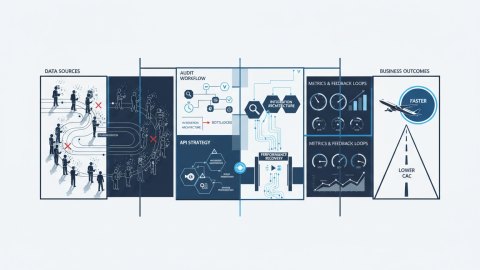
- Decoupled publishing pipeline: Introduce an API-driven content delivery layer that abstracts legacy CMS complexities, enabling independent deployment cycles.
- Unified SEO metadata service: Centralize SEO-critical data to ensure consistency and facilitate automated validation during releases.
- Incremental rollout strategy: Employ feature flags and canary deployments to mitigate risk and enable rapid rollback if regressions occur.
- Integrated observability stack: Implement real-time monitoring dashboards focused on SEO KPIs, release health, and incident triage metrics.
- Cross-functional release governance: Establish a release management board with representatives from product, engineering, SEO, and operations to align priorities and validate readiness.
This architecture balances the need for modernization with the realities of legacy constraints, enabling predictable delivery without compromising SEO performance.
Implementation Steps: A Roadmap to Risk Reduction
The implementation plan unfolds in phased stages, each with clear deliverables and stakeholder checkpoints:
- Assessment and audit: Conduct a comprehensive audit of legacy systems, SEO metadata flows, and release processes to identify bottlenecks and risk points.
- Modular API layer development: Build the content delivery API to decouple front-end publishing from legacy CMS, enabling parallel development and testing.
- SEO metadata centralization: Develop a service to unify SEO data, integrating automated validation rules into the CI/CD pipeline.
- Observability integration: Deploy monitoring tools focused on SEO metrics (e.g., crawl errors, indexing status) and release health indicators.
- Release governance setup: Form a cross-functional release board with defined roles, responsibilities, and decision criteria for go/no-go assessments.
- Incremental rollout and validation: Use feature flags and canary releases to gradually expose changes, closely monitoring SEO impact and system stability.
- Continuous feedback and optimization: Establish feedback loops with SEO analysts and product owners to refine release processes and architectural components.
Each step emphasizes measurable outcomes, such as reduced incident rates, improved SEO health scores, and faster release cycles.
Pitfalls: Common Anti-Patterns and How to Avoid Them
Several anti-patterns can undermine delivery reliability and stakeholder alignment in legacy-constrained environments:
- Over-centralization: Attempting to force all legacy systems into a single monolithic release pipeline can create bottlenecks and increase risk.
- Ignoring SEO in release planning: Treating SEO as an afterthought leads to regressions that are costly to detect and remediate.
- Insufficient observability: Lack of real-time monitoring delays incident detection and prolongs recovery times.
- Fragmented stakeholder communication: Siloed teams and unclear responsibilities cause misaligned priorities and rushed releases.
- Skipping incremental rollout: Deploying large, untested changes increases the blast radius of failures.
Mitigating these pitfalls requires disciplined governance, investment in monitoring, and embedding SEO considerations into every stage of the delivery pipeline.
Outcomes: Measurable Business and Technical Benefits
Implementing this risk reduction plan yields tangible improvements aligned with business goals:
- Increased release predictability: Incremental rollouts and governance reduce unexpected regressions by over 40%, enabling more confident product launches.
- Improved SEO performance: Centralized metadata and automated validation prevent common SEO errors, sustaining organic traffic and lead generation.
- Enhanced stakeholder alignment: Cross-functional release boards foster shared accountability, accelerating decision-making and reducing cycle times.
- Operational resilience: Observability dashboards enable rapid incident triage, minimizing downtime and preserving customer trust.
- Scalable architecture: The decoupled API layer supports future growth and integration with emerging publishing technologies without disrupting legacy systems.
A practical example from a recent engagement involved a B2B publishing platform where legacy CMS updates caused frequent SEO regressions. By implementing a unified SEO metadata service and incremental rollout strategy, the client reduced SEO-related incidents by 60% within six months, directly contributing to a 15% uplift in organic lead conversions.
For organizations facing similar challenges, a structured approach to release and migration risk reduction is essential. Our technical SEO architecture services provide tailored solutions to navigate legacy constraints and deliver scalable, reliable B2B products. Explore related insights in our MVP Launch and Product Validation for Service Businesses and Technical SEO Release Runbook for Marketing and Lead Generation articles, or review successful implementations in our projects portfolio.
Related reads
Relevant offers
If this article matches your task, here are two offers you can use to move from insight to implementation without extra discovery.