Case Studies

Practical B2B tech case studies: from problem framing and architecture to delivery, integrations and measurable business impact.

Building the traffic analytics module for 1C-Bitrix portcore.analytics
Client Bitrix product module development
Period Case format: building a product module for real 1C-Bitrix site and catalog needs
Focus Design and development of modular visit analytics, GEO and risk signals
Open case study

Building the traffic analytics module for 1C-Bitrix portcore.analytics

ProblemThe goal was to build a Bitrix module that provides technically useful analytics for visits, referrer, UTM, GEO, bot/risk signals and suspicious IPs rather than abstract top-level charts.
Industry1C-Bitrix, ecommerce, marketing, security, technical traffic analytics
OutcomeThe result was a standalone product module with capture logic, enrichment, suspicious-traffic rules and practical admin analytics that can be deployed as a ready-made solution and extended for project-specific workflows.

The original problem was familiar for Bitrix projects: external analytics tools showed overall trends, but did not help with technical traffic review, suspicious IPs, referrer chains or bot behavior inside a real catalog context.

I considered several options: keep everything in external analytics, build scattered custom logs inside each project, or package the logic as a standalone module. The module approach won because it created a reusable product with its own admin UI, unified storage model and a cleaner rollout path for other Bitrix projects.

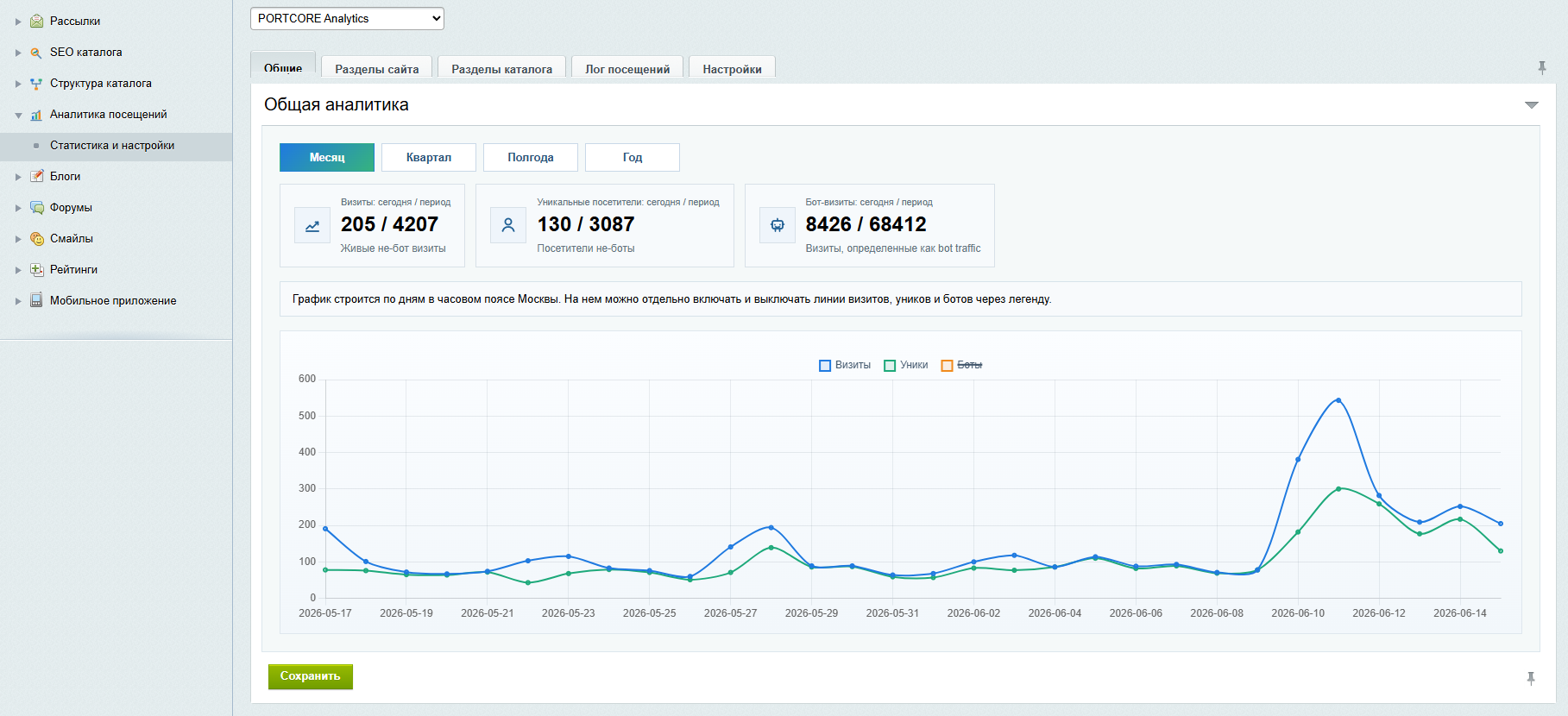
The product detail for portcore.analytics shows what this case eventually became: the screens, the signal model and the practical value in production use.

Context

The initial situation was not about “more charts”, but about the absence of an engineering-grade tool for traffic-quality analysis inside Bitrix. Marketing had numbers, but could not connect them to suspicious IPs, referrer sources, GEO context or section-level behavior.

During design I considered three approaches: keep everything in external systems, add a narrow set of custom logs to one project, or package the capability as a product module. The first option was too weak for technical diagnostics, the second had no reuse value, so the third path was chosen: a standalone module that could be deployed repeatedly and evolved independently of one site.

Solution

The chosen solution was a standalone module with dedicated visit, suspicious-IP and threat-rule tables, integration with an external GeoIP/antifraud API and admin screens for traffic review. This immediately removed dependence on scattered custom code.

Several product features were designed and implemented along the way: visit cards with UTM and GEO context, separation between human and bot traffic, suspicious-IP summaries, convenient source filters and a rule set that can be strengthened gradually without breaking the current flow.

Business impact

The outcome was not an internal workaround, but a real product module that can be shown, deployed and adapted to specific project needs. From an SEO perspective, the case also creates a strong reason to open the product detail and see what makes portcore.analytics more concrete than generic “traffic analytics” claims.
Building the catalog structure module for 1C-Bitrix portcore.catalogstructure
Client Bitrix product module development
Period Case format: building a product module for section-tree and property governance
Focus Design and development of a module for section-tree and property governance
Open case study

Building the catalog structure module for 1C-Bitrix portcore.catalogstructure

ProblemThe task was to solve a common large-catalog problem: an overgrown section tree, noisy properties, fragile smart-filter behavior and no safe engineering tool for structural refactoring.
Industry1C-Bitrix, large catalogs, SEO, content, ecommerce
OutcomeThe result was a module that turns catalog structure into a governed system, supports property analysis, merge/update scenarios and can be deployed as a ready-made product.

This case started with a very familiar situation: a Bitrix catalog had grown for years, the section tree became chaotic, properties were duplicated, the smart filter turned noisy and every structural change became a risky manual operation.

Several approaches were considered: clean sections directly inside one project, build internal scripts, or package the solution as a product module. The module format won because it did not only solve one issue, but created a repeatable tool for catalog diagnostics, cleanup and evolution.

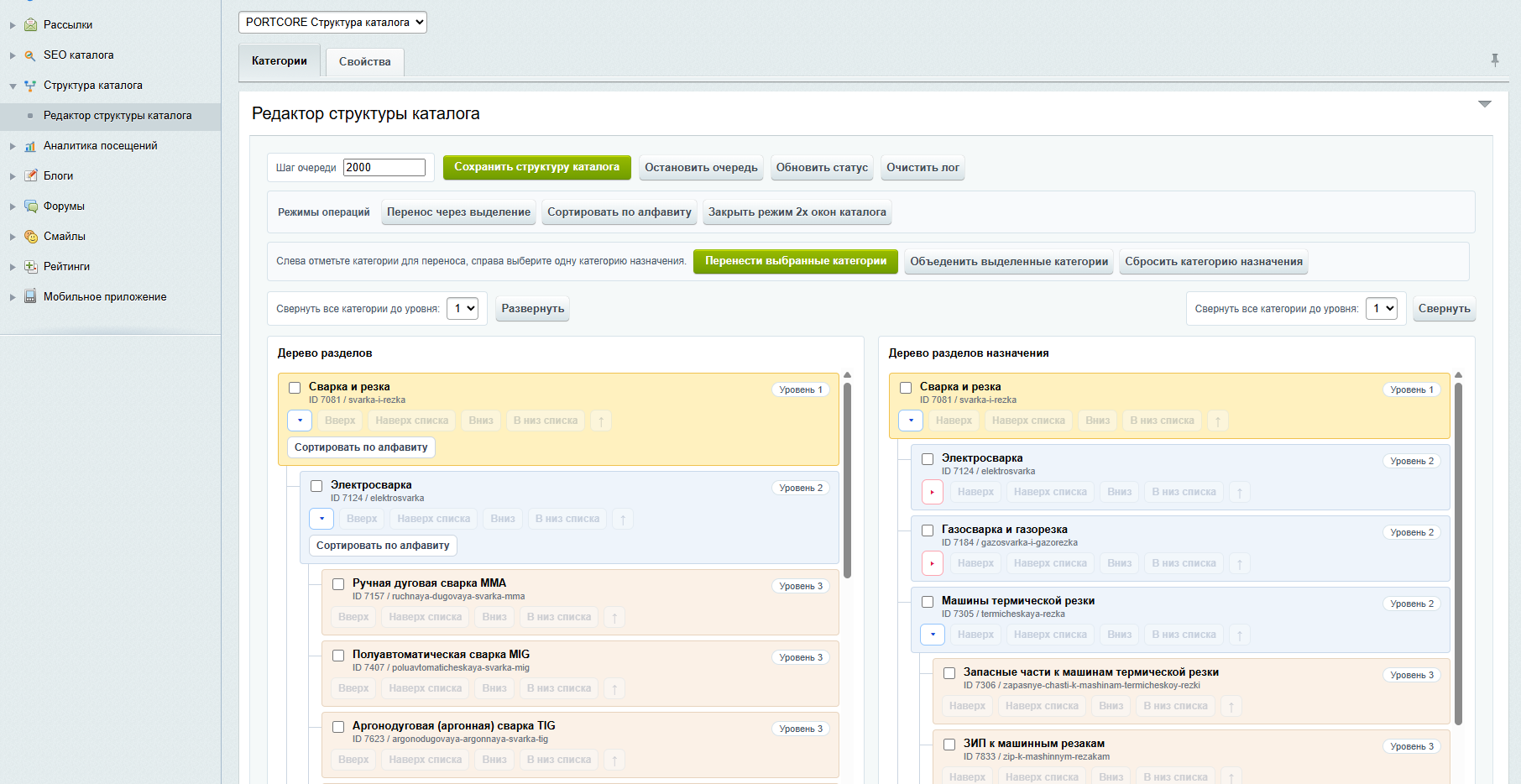
If you want to see where the idea ended up, the portcore.catalogstructure product detail shows the final interface and practical use cases.

Context

The initial issue was that the catalog could no longer be safely evolved by hand. There was no clarity on which properties were actually used, where structure was bloated and where smart-filter issues were misleading both SEO and content work.

I compared one-off cleanup work, a set of local debug scripts and a full module. One-off cleanup was temporary, scripts were too opaque for the team, so the product approach made more sense: build a module that turns diagnosis and restructuring into a governed workflow.

Solution

In the final implementation, the module visualizes the section tree, analyzes properties per branch and helps prepare merge/update operations without blind manual edits. That immediately made structural work both clearer and safer.

Among the most important product features were smart-filter diagnostics, analysis of real property usage, section-property-link tooling and workflows that encourage “inspect first, change later” instead of the other way around.

Business impact

The final result is a module that can be used internally and offered as a ready-made solution for Bitrix catalogs. The case creates a meaningful path into the product detail, where portcore.catalogstructure shows how those structure and filter problems are solved in practice.

Building the 1C exchange and catalog pipeline module for 1C-Bitrix portcore.exchange
Client Bitrix product module development
Period Case format: building a product module for staging, mapping and governed catalog publishing
Focus Design and development of a product exchange pipeline for 1C-Bitrix
Open case study

Building the 1C exchange and catalog pipeline module for 1C-Bitrix portcore.exchange

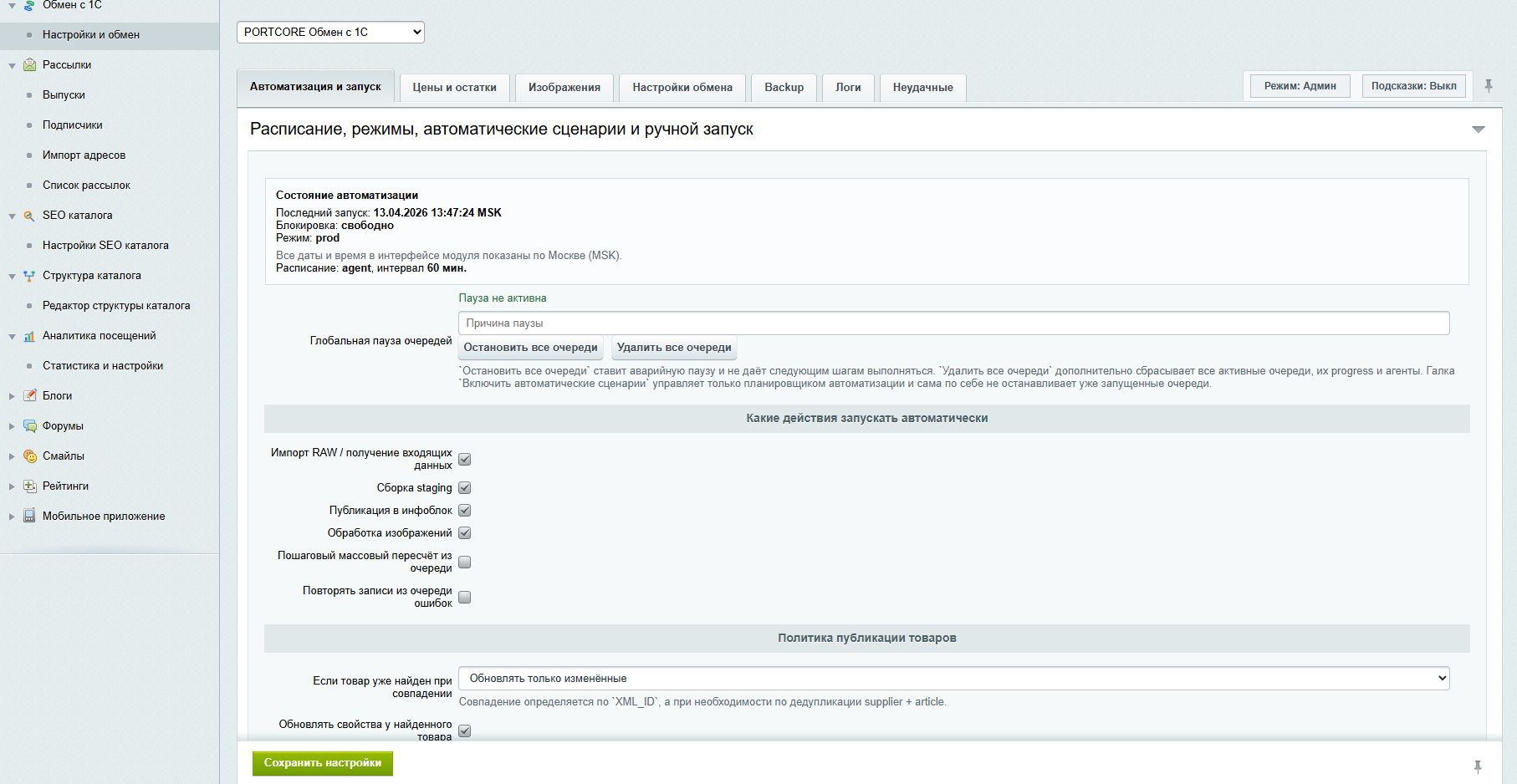
ProblemThe goal was to create a module that replaces opaque default 1C-Bitrix exchange with a governed pipeline for staging, mapping, logs, retries and predictable publishing.
Industry1C-Bitrix, 1C, large catalogs, exchange, ecommerce, distribution
OutcomeThe result was portcore.exchange: a product exchange workflow with RAW, staging, publish phases, retry logic and practical navigation across a large settings surface.

This case began with a familiar heavy-catalog problem: the standard 1C-Bitrix exchange was no longer sufficient for real publishing scenarios, input data was unstable and failures were difficult to investigate without manual intervention.

The options included extending the default mechanism, wrapping it in project-specific patches or building a standalone product module. The module path was chosen because the real need was not a patch, but a full pipeline with stages, queues, logs and long-term reusability.

If you want to see how this logic became a product, the portcore.exchange detail page shows both the module interface and its rollout scenarios for real Bitrix catalogs.

Context

The initial situation required more than “fixing exchange” - it required rethinking the entire model for catalog-data processing. The current flow was too fragile: direct publishing, weak observability, difficult failure analysis and a high regression cost on a live catalog.

I compared several paths: strengthen the default exchange, build a set of external handlers, or create a dedicated module with its own pipeline. The last option won because it enabled staged control of data and turned the integration into a product instead of endless one-project maintenance.

Solution

The implementation used a staged pipeline: RAW sessions, staging build, mapping, publish, image handling, retry queues and service-level backup/cleanup mechanics. This created transparency at each step and protected the live catalog from chaotic direct writes.

One of the strongest product features became the extensive hint system: practically every important field is explained, so even a large configuration surface stays easier to navigate, test and hand over for support.

Business impact

The final output was a standalone module that can be offered as a ready-made solution for Bitrix catalogs with heavy exchange scenarios. From an SEO and commercial-page perspective, this case acts as a meaningful introduction to the product and a strong reason to open the portcore.exchange detail page.

Building the catalog SEO module for 1C-Bitrix portcore.seo
Client Bitrix product module development
Period Case format: building a product SEO module for sections, products, redirects and re-indexing
Focus Design and development of a catalog SEO layer as a standalone product module
Open case study

Building the catalog SEO module for 1C-Bitrix portcore.seo

ProblemThe task was to solve a common Bitrix-catalog problem: SEO logic spread across templates, difficult URL migrations and fragmented control over metadata, canonical rules and indexing.
Industry1C-Bitrix, catalogs, SEO, migrations, organic growth
OutcomeThe result was portcore.seo, a module that unifies the catalog SEO layer and turns metadata, redirects, sitemap and IndexNow into a deployable product.

This case grew out of a typical SEO pain point for large Bitrix catalogs: metadata and canonical logic lived in too many places, migration redirects became messy fast and indexation control required constant manual intervention.

At the start, three models were considered: keep patching templates, build a scattered set of SEO utilities or design one unified module. The module approach proved most sensible because it created not just fixes, but a centralized product layer for catalog SEO.

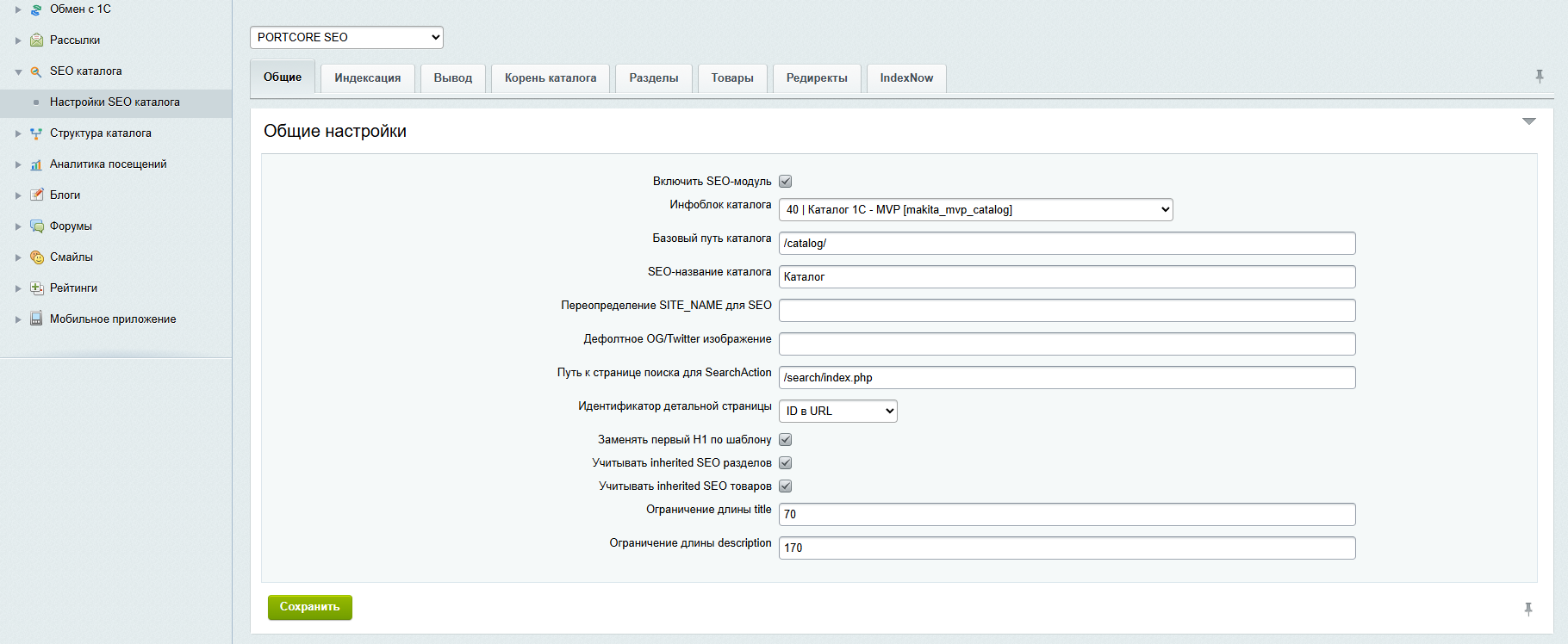
The portcore.seo detail page shows how that case evolved into a standalone solution for metadata, redirects, sitemap and IndexNow.

Context

The starting situation was awkward both for SEO and for engineering: different templates carried their own logic, URL migrations required manual oversight and every structural change in the catalog risked breaking metadata and canonical consistency.

I compared continued spot fixes, a bundle of internal tools and a full product module. The first two approaches were too project-specific, so the decision was made in favor of a dedicated SEO module with unified rules and repeatable integration.

Solution

In the final implementation, the module gained templates for root, sections and products, canonical/robots logic, JSON-LD, a redirect manager, sitemap manager and an IndexNow queue. This brought the catalog SEO layer into one place and removed duplicated logic across the project.

Several product-oriented features were shaped along the way: fallback logic, inherited SEO, smarter redirect rules, batch URL submission and workflows that let the SEO team govern the layer centrally instead of through endless template patches.

Business impact

The final output was not a pile of SEO fixes, but a standalone module that can be deployed into Bitrix catalogs as a ready-made solution. For product discovery, the case creates the right bridge into the portcore.seo detail page, where the full feature set and usage scenarios are shown.

Development of SaaS Platform GeoIP + Antifraud API - geoip.space
Client geoip.space
Period Pricing from $10/month; up to $30/month; Enterprise customization
Focus Geo API + Antifraud Scoring
Open case study

Development of SaaS Platform GeoIP + Antifraud API - geoip.space

ProblemPricing based on number of checks and SLA. Separate limits for real-time and batch processing. Enterprise: dedicated environment and compliance package.
IndustryFintech, E-commerce, SaaS, Adtech
OutcomeReduces fraud losses and false-positive blocks through explainable risk scoring.

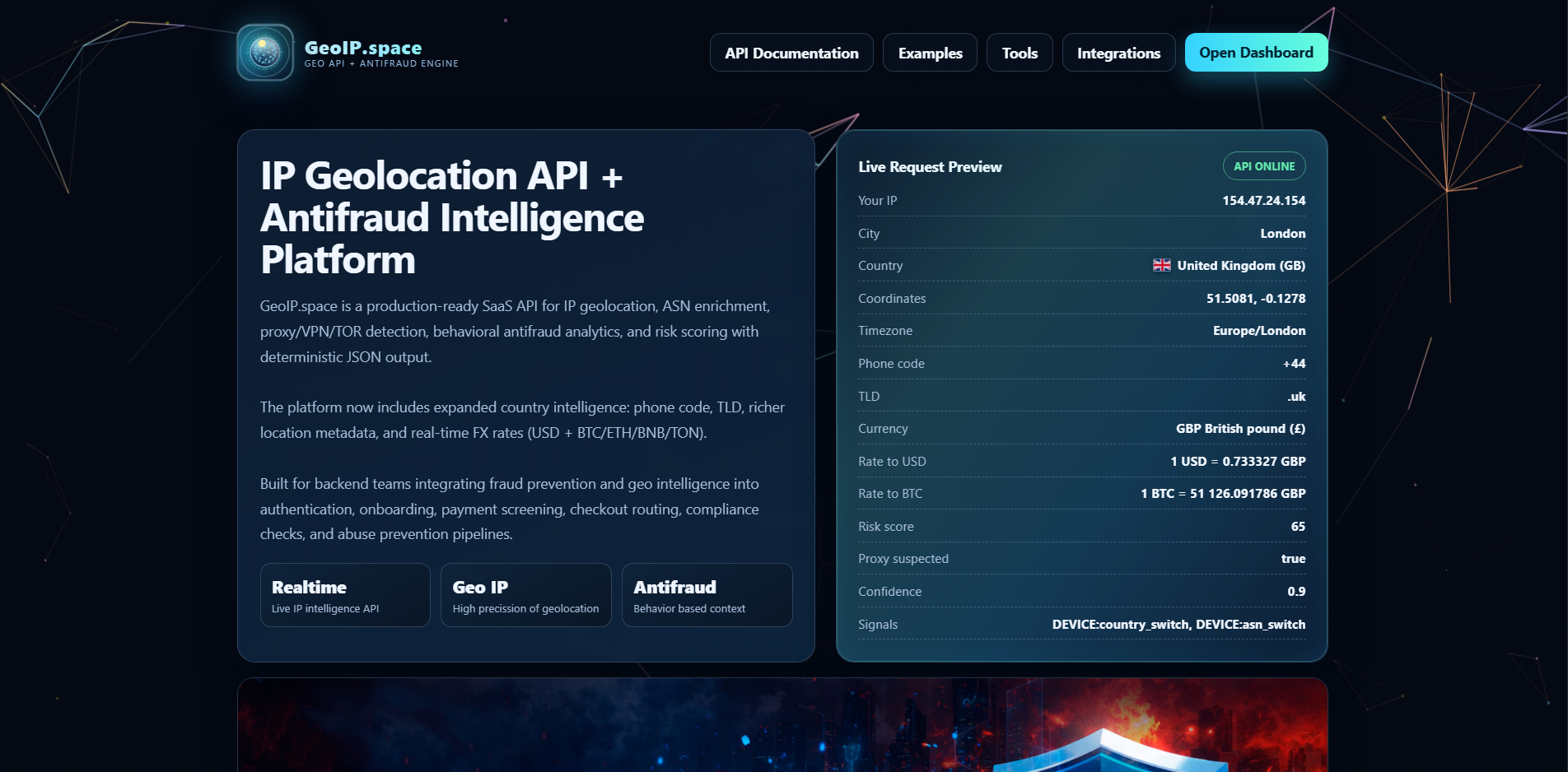
GeoIP + antifraud API for login, checkout, and risk routing: geo, ASN, proxy/VPN/tor signals, device context, and explainable scoring.

Context

  • Pricing based on number of checks and SLA.
  • Separate limits for real-time and batch processing.
  • Enterprise: dedicated environment and compliance package.

Solution

  • Integration with any backend via REST.
  • Webhook scenarios for SIEM/CRM/BI.
  • Support for feature flags to enable safe rollout.

Business impact

Optimized for authentication, onboarding, payout, and order-risk workflows where decision speed and traceability of causes are critical.

Development of an ANTIFRAUD TRACKER to Restrict Bot Access to the Offer

ProblemThe offer was receiving non-targeted bot traffic, increasing the risk of blocks, distorting analytics, and harming the return on ad spend.
IndustryAnti-fraud and Adtech
OutcomeDelivered a functional ANTIFRAUD TRACKER that identifies suspicious patterns, restricts bot access to the offer, and provides the team with a transparent decision-making framework.

Developed an ANTIFRAUD TRACKER to protect the offer from bots, cleanse traffic, and enhance the manageability of anti-fraud solutions.

Context

Bot traffic accumulated on the offer side, distorting the funnel, overloading infrastructure, and increasing the risk of partner-imposed restrictions. The challenge was to build a manageable anti-fraud system rather than a set of isolated blocks.

Solution

I decomposed entry points, collected signals, designed a risk scoring system, access restrictions, and manual validation scenarios. Implementation was iterative: logging, segmentation, rules, reporting, and calibration.

Business impact

The offer received cleaner traffic, a predictable operating mode, and transparent reasons for restrictions. The team became faster at adapting to new evasion patterns and better at controlling the quality of incoming traffic.

GeoIP + antifraud API - geoip.space
Client geoip.space
Period Starter from $10/mo; Growth from $30/mo; Free base plan; Enterprise custom
Focus Geo API + antifraud scoring
Open case study

GeoIP + antifraud API - geoip.space

ProblemPricing by checks volume and SLA.Separate limits for real-time and batch usage.Enterprise includes dedicated environment and compliance package.
IndustryFintech, e-commerce, SaaS, adtech
OutcomeReduces fraud losses and false-positive blocks with explainable risk scoring.

GeoIP + antifraud API for login, checkout and risk routing: geo, ASN, proxy/VPN/tor signals, device context and explainable scoring.

Context

  • Pricing by checks volume and SLA.
  • Separate limits for real-time and batch usage.
  • Enterprise includes dedicated environment and compliance package.

Solution

  • Integrates with any backend over REST.
  • Webhook flows for SIEM/CRM/BI pipelines.
  • Feature-flag rollout support for safe adoption.

Business impact

Best fit for auth, onboarding, payout and order-risk flows where decision speed and traceability are critical.

Content Generation Platform Development - postforge.ru
Client postforge.ru
Period ~13 RUB per generation; Enterprise customization
Focus AI-driven SEO publishing pipeline
Open case study

Content Generation Platform Development - postforge.ru

ProblemPayment based on output volume and editorial stages. Packages for single-brand and multi-site. Enterprise: brand guidelines, tone, and legal restrictions.
IndustryMedia, in-house marketing, B2B content teams
OutcomeDelivers consistent SEO throughput without content noise and with quality control.

AI platform for managed SEO production: demand clusters, content quality, publication scheduling, and transparent performance analytics.

Context

  • Payment based on output volume and editorial stages.
  • Packages for single-brand and multi-site setups.
  • Enterprise: brand guidelines, tone, and legal restrictions.

Solution

  • Integration with any CMS or backend.
  • External workflows via API/webhooks.
  • Support for moderation gates and human-in-the-loop processes.

Business impact

Ideal for teams aiming to scale SEO coverage in a controlled manner rather than merely increasing publication volume.

MVP Development for Analytical Admin Panel

ProblemThe team needed an MVP of an analytical admin panel that would quickly provide visibility into traffic, leads, and the effectiveness of key sections without lengthy BI development.
IndustryAnalytics and Internal Tools
OutcomeDelivered an MVP analytical admin panel featuring dashboards, traffic sources, logs, segmentation, and a basic funnel for operational management.

Developed an MVP analytical admin panel to provide the team with a functional tool for daily management of traffic, leads, and source quality.

Context

Before launch, data was fragmented: some metrics resided in logs, others in separate tables, and a unified view of traffic, bots, applications, and conversions was compiled manually. This slowed decision-making and response to anomalies.

Solution

I structured the MVP around operational scenarios: what the team needs to see daily, which questions should be resolved without developer involvement, and which events must be captured immediately. Based on this, I built dashboards, tables, filters, and basic attribution.

Business impact

The MVP provided the team with a functional control point: transparency into traffic, bots, funnel, and channel quality. Some manual data exports were replaced by daily operations through the admin panel.

Content generation platform - postforge.ru
Client postforge.ru
Period ~0.15$ for generation; Enterprise custom
Focus AI SEO publishing pipeline
Open case study

Content generation platform - postforge.ru

ProblemPricing by output volume and editorial stages.Packages for single-brand and multi-site teams.Enterprise includes brand style, tone and legal constraints.
IndustryMedia, in-house marketing, B2B content teams
OutcomeDelivers stable SEO throughput without content noise and with quality governance.

AI platform for governed SEO production: demand clustering, content quality controls, publish scheduling and transparent performance analytics.

Context

  • Pricing by output volume and editorial stages.
  • Packages for single-brand and multi-site teams.
  • Enterprise includes brand style, tone and legal constraints.

Solution

  • Integrates with any CMS or backend.
  • External workflow support via API/webhooks.
  • Moderation gates and human-in-the-loop stages.

Business impact

Built for teams that need controlled SEO coverage growth, not just higher publishing volume.

Refactoring a 1C-Bitrix Project: 1C Integration, Catalog, Filters, Desktop and Mobile

ProblemThe 1C-Bitrix project was hindering growth due to outdated 1C integration, a complex catalog, unstable filters, and desynchronization between desktop and mobile site versions.
IndustryE-commerce and Corporate Websites
OutcomeA comprehensive refactoring of the Bitrix project was completed: 1C integration was rebuilt, catalog and filter logic updated, and desktop and mobile versions aligned to a consistent standard.

I performed a refactoring of the 1C-Bitrix project, which involved redesigning the 1C integration, catalog, filters, and user interface for both desktop and mobile.

Context

The legacy version of the project limited growth: the 1C integration was fragile, the catalog accumulated technical debt, filters were unstable, and desktop and mobile versions evolved as separate products.

Solution

We began with a technical audit and mapping of critical scenarios, then progressively stabilized the integration layer, catalog logic, filters, and interface layers. This approach minimized the risk of disrupting business processes.

Business impact

The site became more stable and easier to develop: the 1C integration gained a more reliable architecture, the catalog and filters better supported product range growth, and the user experience became device-independent.

ANTIFRAUD TRACKER

ProblemPricing by active incidents and team size.Enterprise connectors are scoped separately.SLA and escalation policies are configurable.
IndustryAdtech, fintech, marketplaces, support/risk teams
OutcomeCuts time from detection to resolution and makes antifraud operations measurable.

ANTIFRAUD TRACKER for risk-ops teams: incident queues, SLA escalations, audit trails and CRM/SIEM/helpdesk integrations.

Context

  • Pricing by active incidents and team size.
  • Enterprise connectors are scoped separately.
  • SLA and escalation policies are configurable.

Solution

  • Connects to any backend via event ingestion.
  • Incident sync with CRM/SIEM/helpdesk.
  • API filters and role-based access for ops teams.

Business impact

Best for high-risk traffic operations: fast escalations, transparent decision history and false-positive cost control.

cpalnya.ru
Client cpalnya.ru
Period Commercial formats: review, sponsored feature, media support, bundled promotion
Focus CPA media platform + commercial placements
Open case study

cpalnya.ru

ProblemCommercial formats matched to the goal: editorial review, sponsored article, branded feature or multi-piece campaign.Supports promotion of your own products, services, affiliate programs, tools and offers.Useful for lau...
IndustryAffiliate marketing, adtech, digital products, SaaS, B2B services
OutcomeDelivers commercial reach inside the CPA market through media support, product reviews, awareness growth and more touchpoints with the target audience.

cpalnya.ru is a CPA and affiliate media platform built as a digital magazine: news, product reviews, sponsored stories, native campaigns and a growing social layer around the market audience.

Context

  • Commercial formats matched to the goal: editorial review, sponsored article, branded feature or multi-piece campaign.
  • Supports promotion of your own products, services, affiliate programs, tools and offers.
  • Useful for launches: warming the audience, explaining value and reducing objections through content.

Solution

  • Media support for products: publication planning, editorial framing and channel distribution.
  • Advertising placements and native integrations beyond simple banner inventory.
  • Product reviews, comparisons, feature breakdowns and market-fit explainers.
  • The social layer increases reach and repeat audience touchpoints around each publication.

Business impact

cpalnya.ru fits companies that need more than traffic: market-context trust, value explanation, visibility inside a niche audience and stronger commercial performance through media exposure.

Ultimate Guitar: High-Load Tablature Page Optimized to Save Every Kilobyte

ProblemUnder heavy load, every extra kilobyte degraded rendering speed and interactivity.
IndustryMusic Services
OutcomeBuilt a lightweight frontend pipeline with a strict performance budget. The page has been running on this code for nearly 10 years.

Developed a high-load tablature page with strict resource weight control and fast interactivity.

Context

Key challenge: high user traffic, low-end devices, and stringent requirements for fast first interaction.

Solution

Implemented a performance budget, identified the critical rendering path, and applied lazy initialization for heavy modules.

Business impact

The page achieved predictable speed and maintained interactivity under heavy load.

Joser Jewellery: Migration from Tilda to 1C-Bitrix, Catalog, Cart, and Pixel-Perfect Layout

ProblemRequired migration from a site builder to a managed platform without compromising interface quality.
IndustryJewelry e-commerce
OutcomeTeam assembled and migration completed: catalog, cart, checkout, interactive features, and pixel-perfect layout.

Successfully migrated the project from Tilda to 1C-Bitrix and implemented the catalog, cart, and order flow.

Context

Challenge: maintain visual quality while enhancing the manageability of e-commerce functions.

Solution

Assembled a role-based team, developed a phased migration plan, and delivered functionality on schedule.

Business impact

The project established a stable foundation for assortment growth and marketing activities.

Audit and Stabilization of a Corporate Portal on 1C-Bitrix

ProblemThe portal slowed down during peak hours, and releases broke related workflows.
IndustryCorporate Portals
OutcomeConducted an audit, eliminated bottlenecks, and restored release predictability.

Conducted an architecture and performance audit of the portal, then implemented a stabilization roadmap.

Context

Causes: heavy SQL queries, unmanaged caching, duplicated logic, and weak release control.

Solution

First addressed critical issues, then implemented structural code fixes and improvements to the release process.

Business impact

Critical pages accelerated, and the number of recurring incidents decreased.

Sales Automation in Bitrix24 Using Telegram Bots and Workflows

ProblemLeads were lost across channels, and SLA response times were not met.
IndustryB2B Sales
OutcomeImplemented a Telegram bot and CRM workflows: automated lead routing and SLA monitoring.

Developed a sales automation framework: the bot receives events and triggers appropriate CRM workflows.

Context

Before the project, leads were duplicated, assignment of responsible agents was delayed, and analytics lacked transparency.

Solution

Modeled the process as a finite state machine, adding triggers, deadlines, and escalation procedures.

Business impact

Reduced first response times and improved discipline in handling incoming requests.

AI Assistant for Presales: From Brief to Work Estimation

ProblemProject estimation was time-consuming and relied heavily on individual experts.
IndustryPresales
OutcomeDeveloped an AI framework for initial brief analysis and structured work estimation.

Implemented an AI module that analyzes briefs, identifies risks, and generates a draft work plan.

Context

Challenge: inconsistent estimation cycles, incomplete input data, and overloaded technical leads.

Solution

Standardized evaluation criteria and integrated AI with an internal database of templates and rules.

Business impact

Reduced initial estimation time and improved completeness of presales artifacts.

B2B Portal on 1C-Bitrix: Architecture, Roles, and Integrations

ProblemThe legacy portal lacked scalability in roles and workflows.
IndustryB2B Ecommerce
OutcomeRelaunched the B2B portal with a role-based model and robust integrations.

Built a new B2B portal where roles and business rules are embedded in the architecture.

Context

Previously, access rights conflicted and integrations broke after updates.

Solution

Decomposed domains, established an RBAC model, and implemented event-driven synchronization with accounting systems.

Business impact

New features are released faster, and integration failures are detected earlier.

Content SEO Platform for a Commercial Website: Automation and Quality Gates

ProblemContent was published irregularly and lost commercial focus.
IndustrySEO and Content
OutcomeLaunched a managed publication pipeline with control over structure and quality.

Developed an SEO framework that consistently produces articles and filters out weak publications.

Context

Before implementation, scaling content led to a decline in quality and thematic coherence.

Solution

Implemented a generation pipeline, deduplication, and checks for structure and relevance to commercial intents.

Business impact

The system became predictable: the business can track publication pace and content quality.

Support Telegram Bot: SLA Routing and Escalations

ProblemRequests were getting lost across channels, and SLA targets were regularly missed.
IndustrySupport
OutcomeImplemented a bot with request prioritization and SLA-based escalations.

Launched a support Telegram bot featuring dynamic forms and automatic routing.

Context

Before the project, issue data was incomplete, and assigning responsible agents was delayed.

Solution

Identified request types, integrated them with the ticketing system, and implemented SLA timers and escalations.

Business impact

The support team accelerated response times, delivering a predictable service experience to clients.

Technical Audit of Legacy Monolith and Safe Refactoring Roadmap

ProblemThe monolith slowed down releases and increased the cost of changes.
IndustryWeb Applications
OutcomeConducted an audit and developed a phased refactoring roadmap without product downtime.

Performed a monolith audit and developed a modernization strategy considering business constraints.

Context

Releases were unpredictable; any changes affected adjacent modules.

Solution

Identified critical areas, prioritized them, and began isolating hot domains.

Business impact

Releases became more stable, and the cost of changes decreased.

AI-Driven Code Quality Control in CI: Auto Review and Guardrails

ProblemManual code reviews did not scale, allowing defects to slip into releases.
IndustrySoftware Engineering
OutcomeImplemented AI checks in CI with release admission rules and a unified feedback format.

Integrated an AI layer that analyzes PRs and flags risky changes.

Context

Previously, reviews depended on individual engineers’ availability and were inconsistent.

Solution

Established a set of mandatory rules and embedded them into the pipeline as quality gates.

Business impact

Improved quality discipline and reduced defects in production.

Optimization of High-Load Search and Catalog Filters on 1C-Bitrix

ProblemSearch and filters degraded with assortment growth and peak traffic.
IndustryCatalog and Search
OutcomeRedesigned indexing and caching, accelerated response times, and reduced database load.

Implemented comprehensive optimization of search and catalog filters on 1C-Bitrix.

Context

Issue: Increased delays and timeouts in popular categories.

Solution

Rebuilt the index, filter structure, and caching of hot segments.

Business impact

Response times remained fast despite assortment growth and peak traffic.

Reliable Order Synchronization Between 1C and CRM Without Duplicates

ProblemOrders were duplicated during exchange, statuses conflicted, and manual reconciliation increased.
IndustryCRM and Accounting Integrations
OutcomeImplemented robust synchronization with idempotency, queuing, and conflict resolution controls.

Developed order exchange between 1C and CRM with transparent failure diagnostics.

Context

Previously, repeated events caused duplicates and conflicting statuses.

Solution

Introduced idempotency keys, processing queues, and conflict resolution rules.

Business impact

The integration became predictable, significantly reducing manual reconciliation.

Service Platform MVP in 8 Weeks: Launch and Evolution

ProblemWe needed to quickly validate the hypothesis and enter pilot phase without excessive development.
IndustryMVP and Product Launch
OutcomeDelivered a functional MVP in 8 weeks with measurable metrics and a growth plan.

Launched a service platform MVP within a tight deadline while managing quality and risks.

Context

Project risk: overspending time on non-essential features.

Solution

Scoped tightly, prioritized critical scenarios, and implemented short feedback iterations.

Business impact

The team gained a validated foundation and a production evolution roadmap.

Comprehensive Web Application Security Audit and Incident Runbook

ProblemLacked a comprehensive vulnerability map and clear incident response procedures.
IndustryWeb Application Security
OutcomeConducted audit, mitigated critical attack vectors, and implemented an incident response runbook.

Completed a full-cycle security audit: threat analysis, testing, prioritization, and remediation.

Context

Prior to the project, security controls were fragmented and poorly formalized.

Solution

Addressed critical vulnerabilities and documented response scenarios for the on-call team.

Business impact

The system became more resilient, and the team gained a repeatable incident response process.

AI-Powered Architecture Design Assistant: Accelerating Decision-Making

ProblemArchitectural decisions were made slowly, with rationale getting lost in email threads.
IndustryWeb Application Architecture
OutcomeImplemented an AI assistant to prepare solution options and risk memos ahead of reviews.

Developed an AI assistant that generates comparisons of architectural options and associated risks.

Context

Prior to implementation, discussions were fragmented and poorly documented.

Solution

Deployed decision templates, selection criteria, and AI analysis scenarios before the review committee.

Business impact

Architecture discussions became faster, with decision quality more consistently reproducible.

Bitrix Project Without SEO Losses: Redesign and Page Structure Migration

ProblemRedesign and migration posed risks of losing organic traffic and rankings.
IndustrySEO and Web Development
OutcomeExecuted migration to 1C-Bitrix with controlled redirects and indexing, avoiding critical drops.

Led redesign and structure migration with detailed SEO risk management.

Context

Risks included URL changes, page duplicates, and indexing errors post-launch.

Solution

Developed redirect map, updated internal linking, and implemented post-launch monitoring.

Business impact

The site retained visibility of key pages and gained a cleaner structure for growth.

Case studies with measurable business impact and practical delivery architecture

Each case shows not just the outcome, but the path to it: initial problem, systems approach, stack, delivery stages and post-launch metric control.

  • We break down architecture decisions so they can be reused in your own delivery context.
  • Focus on practical KPIs: delivery speed, risk reduction, lead quality growth and system stability.
  • Demonstrates real backend integration scenarios without marketing fluff.

If you need a similar result, send a request and we will prepare an implementation plan for your stack, constraints and business KPIs.