In the high-stakes environment of B2B SaaS and internal tooling development, launching an MVP within a compressed timeline and limited budget is a recurring challenge. The project in focus involved delivering a SaaS platform for enterprise workflow automation, targeting internal users with complex integration needs but a hard deadline driven by an upcoming compliance audit.
The initial phase was marked by a clear mandate: deliver core functionality that validates the product hypothesis while deferring non-critical features. This was not a theoretical exercise but a necessity dictated by contractual obligations and resource ceilings. The team faced a classic dilemma—how to balance feature completeness with engineering quality and deployment readiness.
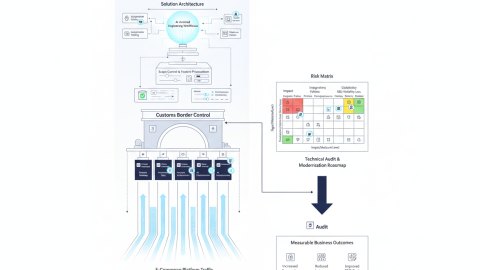
To address this, the architecture blueprint prioritized modularity and extensibility. The MVP was scoped to include only the essential modules: user authentication, core workflow engine, and a minimal reporting interface. Integration points with legacy systems were stubbed with mock services to avoid delays caused by external dependencies. This approach allowed parallel development streams and reduced integration risk.
Crucially, the team adopted a continuous integration pipeline with automated quality gates to maintain code health despite the accelerated pace. This ensured that technical debt did not accumulate unchecked, preserving the ability to iterate rapidly post-launch.

Scope Boundaries: Defining What’s In and What’s Out
Scope control was the linchpin of this MVP delivery. Early in the project, stakeholders convened to establish a strict feature prioritization matrix. Features were categorized into three buckets: must-have, nice-to-have, and future enhancements. This classification was not static; it evolved through weekly backlog grooming sessions informed by ongoing technical assessments and user feedback simulations.
One concrete example was the decision to exclude a sophisticated role-based access control (RBAC) system from the MVP. Although RBAC is critical for enterprise security, implementing it fully would have jeopardized the timeline. Instead, a simplified permission model was implemented, with plans to retrofit RBAC in subsequent releases. This trade-off was documented transparently and communicated to all stakeholders to manage expectations.
Another scope boundary involved the reporting interface. Instead of building a comprehensive analytics dashboard, the MVP included exportable CSV reports generated on demand. This pragmatic choice reduced front-end complexity and backend processing overhead, enabling the team to focus on core workflow reliability.
These scope decisions were reinforced by a rigorous change control process. Any proposed scope additions underwent impact analysis against budget and schedule constraints, with a bias toward deferral unless critical for compliance or user acceptance.
Success Metrics: Measuring What Matters
Defining success metrics upfront was essential to avoid scope creep and to align engineering efforts with business outcomes. The project team identified three primary KPIs:
- Time to First Workflow Completion: Measuring how quickly a user could configure and execute a workflow end-to-end.
- System Uptime and Response Time: Ensuring the MVP met SLA targets of 99.5% uptime and sub-second average response times for core APIs.
- User Adoption Rate: Tracking the percentage of internal users actively leveraging the MVP within the first 30 days post-launch.
These metrics were embedded into the monitoring and analytics framework from day one. For example, synthetic transactions simulated workflow executions to validate uptime and performance SLAs continuously. User adoption was monitored via integrated telemetry capturing feature usage patterns.
By focusing on these measurable outcomes, the team avoided the common pitfall of equating feature count with success. Instead, the MVP’s value was demonstrated through tangible operational improvements and user engagement.
Production Evolution: Controlled Rollout and Iterative Enhancement
Post-launch, the MVP entered a controlled rollout phase. The initial user base was limited to a pilot group within the organization, enabling close observation of system behavior and user feedback. This staged approach mitigated risk and allowed the team to validate assumptions before scaling.
During this phase, the architecture’s modular design proved its worth. The team was able to incrementally introduce enhancements such as the full RBAC system and advanced reporting modules without disrupting core workflows. Feature toggles and API versioning facilitated backward compatibility and smooth transitions.
Moreover, the continuous integration and deployment pipeline supported rapid bug fixes and performance optimizations, maintaining high system reliability. This iterative evolution was guided by the success metrics established earlier, ensuring that each release increment delivered measurable improvements aligned with business goals.
In parallel, the team documented lessons learned and refined the MVP definition process for future projects. This included enhanced stakeholder engagement protocols and more granular scope control mechanisms, contributing to a culture of disciplined delivery under constraints.
Practical Implementation Details and Engineering Decisions
The success of this MVP delivery hinged on several concrete engineering decisions:
- API-First Design: The MVP was architected with well-defined RESTful APIs, enabling decoupled front-end and back-end development and simplifying future integrations.
- Mocked External Dependencies: To avoid delays from legacy system integration, external services were mocked with realistic data, allowing parallel development and early testing.
- Automated Quality Gates: Static code analysis, unit tests, and integration tests were automated in the CI pipeline, preventing regressions and maintaining code quality despite rapid iterations.
- Feature Toggles: Critical for managing scope creep, feature toggles allowed incomplete or experimental features to be disabled in production, reducing risk.
- Incremental Rollout: Controlled user access and phased feature releases minimized impact on business operations and facilitated feedback-driven improvements.
These decisions collectively enabled the team to deliver a robust MVP that met business needs without exceeding budget or timeline constraints.
Common Anti-Patterns and How They Were Avoided
Several anti-patterns frequently derail MVP projects under constraints. This case study highlights how they were consciously avoided:
- Feature Creep: By enforcing strict scope boundaries and a formal change control process, the team prevented uncontrolled addition of features.
- Technical Debt Accumulation: Automated quality gates and code reviews ensured that expedient shortcuts did not compromise long-term maintainability.
- Integration Bottlenecks: Mocking external dependencies and decoupling components avoided delays caused by unavailable or unstable third-party systems.
- Insufficient Metrics: Defining clear success criteria upfront focused efforts on measurable outcomes rather than subjective progress indicators.
- Monolithic Releases: Incremental rollout and feature toggles allowed safe, iterative delivery rather than risky big-bang deployments.
Checklist for Budget-Constrained MVP Delivery in B2B SaaS and Internal Tooling
- Define a clear MVP scope with prioritized feature buckets.
- Establish measurable success metrics aligned with business goals.
- Design modular, API-first architecture to enable parallel development.
- Mock external dependencies to reduce integration risk.
- Implement automated quality gates in CI/CD pipelines.
- Use feature toggles to manage incomplete or experimental features.
- Plan for incremental rollout with controlled user access.
- Maintain transparent communication with stakeholders on scope and trade-offs.
- Monitor KPIs continuously and iterate based on data-driven insights.
- Document lessons learned to improve future MVP deliveries.
Conclusion
This real-world MVP delivery case underscores the critical importance of disciplined scope control, measurable success metrics, and phased production evolution in B2B SaaS and internal tooling projects constrained by tight budgets and deadlines. By making concrete architectural and process decisions—such as modular design, mocking dependencies, and automated quality gates—the team achieved a faster launch without sacrificing quality or future extensibility.
For organizations facing similar constraints, adopting this blueprint can significantly reduce delivery risk and accelerate time-to-value. To explore how tailored MVP definition and controlled rollout services can support your next project, visit our services page.
For further insights on related topics, consider our detailed guides on MVP delivery architecture in operations-heavy fintech, technical SEO audit and integration for operations-heavy businesses, and web performance engineering and rendering strategy under tight budgets.
Related reads
Relevant offers
If this article matches your task, here are two offers you can use to move from insight to implementation without extra discovery.