In a recent project for a content-driven commercial website, the engineering team faced a classic dilemma: launch an MVP rapidly while ensuring the site’s organic traffic did not erode due to slow performance and poor SEO health. The initial audit revealed a tangled web of issues—excessive JavaScript payloads, unoptimized media assets, and fragmented CMS integrations—that collectively inflated page load times and triggered slow website audit flags.
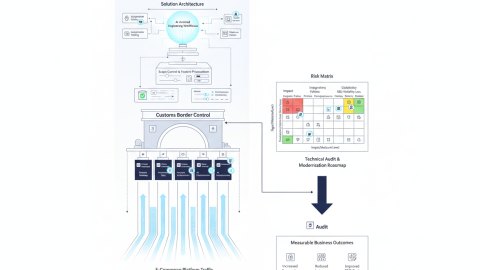
The audit process began with a comprehensive performance profiling session, combining real-user metrics and synthetic tests. Key indicators such as Time to First Byte (TTFB), Largest Contentful Paint (LCP), and Cumulative Layout Shift (CLS) were mapped against budget and timeline constraints. This diagnostic phase uncovered that the MVP’s rushed feature set had sidelined critical performance optimizations, creating a risk matrix where slow audits could delay launch and increase acquisition costs.

Case Example: Media Asset Overload
One concrete example involved a marketing-driven requirement to showcase high-resolution images on the homepage. The engineering team identified that these assets were neither lazy-loaded nor compressed adequately, causing a 40% increase in LCP. This single factor alone threatened to push the MVP release beyond the deadline due to repeated audit failures.
Priorities: Balancing Speed, Quality, and SEO Impact
Faced with these findings, the team established clear priorities: first, reduce critical rendering path delays; second, optimize content delivery without compromising the marketing narrative; and third, implement a controlled rollout to monitor organic traffic impact.
Prioritization was guided by a risk matrix that weighed the cost of delayed launch against potential traffic loss. For instance, deferring non-essential interactive features was favored over compromising core SEO metrics. This approach ensured that the MVP delivered measurable value quickly while maintaining a foundation for steady organic growth.
To align stakeholders, the team referenced insights from related MVP delivery blueprints, emphasizing the importance of early quality gates and performance budgets.
Quick Wins: Tactical Remediation for Immediate Impact
Implementing quick wins was critical to meet the tight deadline. The team focused on:
- Image Optimization: Automated compression pipelines and responsive image sets reduced payload sizes by 35%, directly improving LCP.
- Lazy Loading: Deferring offscreen images and non-critical scripts trimmed initial load times, improving Time to Interactive (TTI).
- Critical CSS Inlining: Extracting and inlining above-the-fold CSS eliminated render-blocking resources.
These tactical fixes were deployed in parallel with ongoing feature development, demonstrating how engineering teams can integrate performance remediation into MVP workflows without derailing timelines.
Additionally, the team leveraged lessons from AI-assisted engineering workflows to automate regression checks, ensuring that quick fixes did not introduce new issues.
Deep Fixes: Structural Improvements for Sustainable Performance
Beyond quick wins, the audit revealed architectural inefficiencies requiring deeper remediation. The CMS integration was refactored to enable server-side rendering (SSR) for key landing pages, significantly reducing client-side JavaScript execution time. This change was phased into the MVP rollout to minimize risk.
Moreover, the team introduced a content delivery network (CDN) edge caching strategy tailored to the website’s traffic patterns, reducing server load and improving global response times. This infrastructure upgrade was critical to support organic traffic growth post-launch.
To ensure these deep fixes aligned with business goals, the team maintained a continuous feedback loop with marketing and product owners, referencing the SEO-safe redesign and migration implementation plan as a governance framework.
Quality Control: Ensuring Reliable MVP Delivery and Traffic Stability
Quality control was embedded through automated performance audits integrated into the CI/CD pipeline. Each build triggered a suite of tests measuring key SEO and performance metrics against predefined budgets. Failures blocked deployments, enforcing discipline in maintaining MVP quality under pressure.
Post-launch, the team monitored organic traffic trends closely, correlating them with performance metrics to detect early signs of degradation. This observability-driven approach enabled rapid incident response and iterative optimization, safeguarding acquisition costs.
As a result, the MVP launched on schedule, within budget, and with a stable organic traffic baseline that grew steadily over subsequent months.
Conclusion and Next Steps
This case study underscores the importance of a structured risk matrix and remediation roadmap when delivering MVPs for content-driven commercial websites under tight constraints. By combining rapid tactical fixes with strategic architectural improvements and rigorous quality control, teams can achieve timely launches without sacrificing SEO and performance.
For organizations seeking to replicate this success, a thorough technical audit followed by prioritized remediation is essential. Our MVP definition and controlled rollout services specialize in guiding teams through this complex process, balancing engineering realities with business imperatives.
Explore how our tailored approach can help your project meet deadlines, control costs, and sustain organic growth in competitive markets.
Related reads
Relevant offers
If this article matches your task, here are two offers you can use to move from insight to implementation without extra discovery.
VPN/Proxy connection detection for websites
Lower junk-lead share and protect forms and analytics from manipulative traffic.
Antifraud rules for checkout and payment forms
I deploy a practical antifraud layer in checkout to reduce disputed payments and manual review overhead.