Before any security upgrade, enterprises must conduct a comprehensive audit to identify existing control deficiencies, particularly in cloud-native automation stacks underpinning Telegram partner networks. These stacks experience intense traffic surges during marketing peak campaigns and require resilient, well-monitored designs.
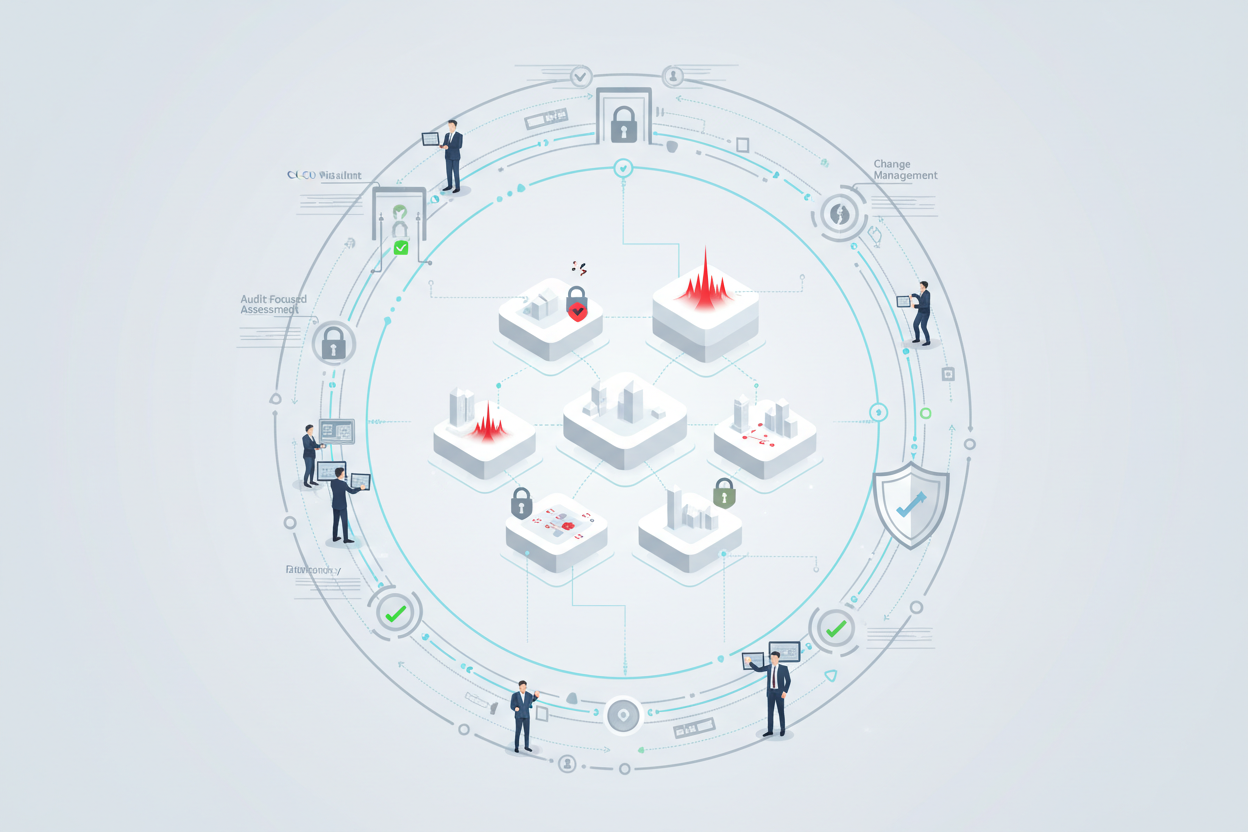
Key Audit Objectives for Cloud-Native Partner Networks
- Service Observability Coverage: Confirm all critical microservices and API endpoints expose telemetry (metrics, tracing, logs) for vulnerability and failure detection.
- Access Control & Authentication: Validate adherence to least privilege across service-to-service authentication and partner integrations.
- Change Management and Deployment Security: Evaluate CI/CD pipelines for effective release gating, automated security testing, and rollback capabilities.
- Incident Response Preparedness: Assess existing detection, alerting, and escalation mechanisms aligned with operational SLAs during peak loads.
Practical Implementation Checklist
- Inventory all services, APIs, and their integration points with Telegram partner systems.
- Evaluate telemetry gaps by verifying instrumentation coverage for 100% of critical paths.
- Review RBAC policies for service accounts managing partner communication.
- Document existing deployment practices for security gate enforcement.
- Simulate peak campaign conditions to identify security control bottlenecks.
This audit baseline forms the foundation for targeted risk mapping and prioritization of uplift activities.
Control Objectives: Defining Enterprise-Grade Security Goals for Cloud-Native Automation
Based on audit outcomes, establish clear control objectives tailored to the business impact and technical constraints of Telegram partner network automation stacks. Focus is on reducing release stress and increasing security observability.
Primary Control Objectives
- End-to-End Observability Integration: Embed uniform telemetry standards, leveraging structured logging, distributed tracing, and real-time metrics aggregation with an emphasis on high-risk service surfaces.
- Strict Authentication and Authorization: Enforce zero-trust principles with token-based service identity management, incorporating API gateway controls for partner interactions.
- Automated Security Gatekeeping: Implement automated policies in CI/CD for static and dynamic security testing, dependency vulnerability scanning, and immutable infrastructure deployment.
- Resilience in Incident Detection and Recovery: Ensure precise alert thresholds and automated failover strategies to maintain service continuity during high-load campaign events.
Enforcement and Measurement
- Define KPIs such as Mean Time to Detection (MTTD), Mean Time to Recovery (MTTR), and release verification success rates.
- Integrate security control validation into release retrospectives to continuously improve the development lifecycle.
Risk Mapping: Prioritizing Security Efforts in High-Pressure Campaign Environments
Risk mapping translates audit data and control objectives into actionable priority matrices, ensuring the uplift focuses on areas with the highest business impact during enterprise scaling.
Risk Categorization Framework
- Service Criticality: Classify services by their role in partner transaction processing and campaign-triggered workflows.
- Exposure Level: Identify external-facing APIs and integration points susceptible to unauthorized access or data leakage.
- Change Frequency: Gauge the velocity of deployments to spot services where rapid releases increase risk exposure.
- Historical Incident Data: Include past outages and security events trends to inform remediation priorities.
Implementation Steps
- Map dependency graphs of automation services with partner API endpoints.
- Overlay telemetry blind spots and known vulnerabilities with traffic volume data during peak campaigns.
- Assign risk scores incorporating business impact and technical complexity.
- Develop a prioritization roadmap focusing immediate uplifts on high-risk, high-impact services.
Technical Validation: Concrete Upgrade Actions to Harden Cloud-Native Systems
Executing the security control uplift requires meticulous technical implementations that empower teams to maintain rapid release cycles without compromising enterprise-grade security.
Step 1: Enhanced Observability Implementation
- Deploy uniform OpenTelemetry instrumentation across microservices for centralized telemetry collection.
- Configure alerting rules tailored to anomaly detection, SLA violations, and security events.
- Use service mesh capabilities to enforce telemetry collection and identity validations transparently.
Step 2: Strengthen Authentication and Authorization Controls
- Implement mutual TLS and JWT-based service identity schemes within internal and partner-facing channels.
- Enforce API gateway policies with fine-grained access control and rate limiting for external integrations.
- Automate the rotation and lifecycle management of service secrets and tokens.
Step 3: CI/CD Pipeline Integration for Security Validation
- Integrate static application security testing (SAST) and software composition analysis (SCA) tools into the build pipeline.
- Execute automated chaos tests simulating security failure scenarios under peak load.
- Employ canary deployments combined with telemetry-driven rollback triggers for safer releases.
Step 4: Incident Detection and Automated Recovery Protocols
- Implement automated alert escalation paths leveraging runbook automation for on-call engineers.
- Establish circuit breakers and rate limiting to contain cascading failures during campaign surges.
- Automate failover and recovery using infrastructure-as-code policies and health probes.
For concrete examples of microservice orchestration and migration with SLAs, see our detailed blueprint on Microservice Orchestration with SLA.
Reporting: Creating Transparent Security Performance Dashboards for Release Teams and Leadership
Comprehensive reporting consolidates audit findings, risk statuses, and validation outcomes into dashboards that reduce cognitive load on engineering teams during peak campaign stress.
Essential Security Reporting Features
- Security Control Compliance Status: Visualize pass/fail rates of security gates integrated into deployment workflows.
- Real-Time Observability Metrics: Display latency, error ratios, and security alert summaries grouped by services and integration points.
- Incident and Change Impact Reports: Correlate deployment rollouts with incident timelines for root cause analysis.
Implementation Recommendations
- Leverage existing observability platforms with customized dashboards reflecting security control KPIs.
- Create automated email or chat notifications for anomaly thresholds crossing.
- Conduct weekly cross-team reviews to align on security posture evolution and adjust roadmap priorities.
Explore integration strategies for multi-tenant SaaS admin panels to optimize cloud cost and threat intelligence reporting (Integration Architecture for Multi-Tenant SaaS Admin Panels).
Outcome: Measurable Benefits in Lowering Release Stress and Securing Enterprise-Scale Telegram Automation
By systematically auditing, mapping, and upgrading security controls in Telegram partner network automation stacks, enterprises realize significant operational and business advantages:
- Reduced Release Anxiety: Improved observability and automated security gating bring predictable, verifiable releases even amid high-load peak campaigns.
- Business Risk Mitigation: Early detection and containment of security incidents lower liability and preserve partner trust.
- Engineering Efficiency Gains: Clear governance frameworks and runbooks minimize firefighting and support faster incident triage.
- Scalable Enterprise Readiness: A hardened knowledge base governance framework lays a foundation for seamless onboarding of new enterprise customers and partners.
For a deeper dive into transforming delivery flow bottlenecks and optimizing engineering processes aligned with business needs, review our insights here: Engineering Process Bottleneck Removal in Delivery Flow.
Call to Action: Partner with Expert Architects for Enterprise-Grade Cloud-Native Security Upgrades
Scaling cloud-native Telegram partner network automation requires not only technical excellence but strategic governance to secure fierce business campaigns. Our specialized architecture and security uplift services deliver tailored frameworks and implementation roadmaps that lower engineering release stress while enhancing operational observability.
Contact our team for a consultation and learn how to embed a robust knowledge base governance framework into your cloud-native stacks and reduce risks before enterprise onboarding.
Explore Our Services
Advanced Governance Frameworks: Establishing Policy as Code for Continuous Compliance
Beyond technical controls, embedding governance deeply into the development lifecycle ensures security policies evolve alongside accelerating release cadences.
Defining Policy as Code
- Translate enterprise security policies into machine-readable rules enforceable during code merges and deployments.
- Utilize policy languages or frameworks that allow declarative descriptions of access controls, resource limits, and environment constraints.
- Integrate these policies directly into CI/CD pipelines for automated compliance validation.
Concrete Steps for Implementing Policy as Code
- Inventory critical security and operational policies relevant to Telegram partner networks and cloud-native environments.
- Collaborate with security and compliance teams to codify policies supporting zero-trust and least privilege principles.
- Choose a policy enforcement mechanism compatible with existing DevOps tooling, such as admission controllers or pre-merge gates.
- Develop test suites simulating policy violation scenarios to validate rules before production rollout.
- Establish feedback loops integrating policy violations as tickets or alerts to foster continuous improvement.
- Provide documentation and training for engineering teams on creating compliant deployment manifests.
Anti-Patterns to Avoid
- Implementing policies solely as advisory checks without blocking enforcement, which risks drift and gaps.
- Hardcoding exceptions that bypass automated checks, undermining the governance objectives.
- Lack of version control and audit trails for policy updates, complicating compliance reviews.
Scalable Secret Management: Protecting Sensitive Credentials in Dynamic Cloud-Native Environments
Robust secret management is fundamental to securing communication channels, API access, and credentials in cloud-native Telegram partner automations.
Best Practices Checklist for Secret Management
- Centralized Vaults: Store secrets within dedicated, encrypted vault solutions that offer fine-grained access and audit capabilities.
- Automatic Rotation: Enable periodic and event-driven secret rotation to mitigate risks from credential exposure.
- Environment Segregation: Isolate secrets per environment (development, staging, production) to limit blast radius.
- Dynamic Injection: Inject secrets into running containers or functions dynamically at runtime rather than baking into images or code.
- Granular RBAC: Apply least privilege access controls at both human and service identity levels.
- Audit Logging: Track secret access events for forensic analysis and compliance reporting.
Implementation Example for Secret Rotation
- Define rotation policies aligned with organizational security standards (e.g., every 30 days).
- Configure automation workflows that generate new credentials and update dependent services without downtime.
- Test rotation procedures in non-production environments to verify seamless transitions.
- Integrate notification mechanisms to alert security teams of rotation events and anomalies.
Resilience Engineering: Building Fault-Tolerant Telegram Partner Networks
Ensuring continuous service availability during peak loads and unexpected failures is key to sustaining business campaigns and partner trust.
Effective Resilience Patterns
- Redundancy: Deploy critical services in multiple availability zones or regions with active-active or active-passive failover configurations.
- Graceful Degradation: Implement fallback logic so non-essential features can be temporarily disabled under resource constraints.
- Load Shedding: Design systems to reject requests upfront when under extreme load rather than cascading failures.
- Bulkheading: Isolate failure domains by splitting large monoliths or resource pools into smaller, independent units.
- Chaos Engineering: Regularly inject failures into production-like environments to validate fault tolerance and recovery mechanisms.
Checklist for Resilience Engineering
- Inventory critical partner services and classify their availability requirements.
- Design multi-zone deployment strategies with health probes and automatic failover.
- Implement global rate limiting policies at API gateways to control traffic surges.
- Integrate circuit breakers within service meshes to isolate failing downstream calls.
- Run scheduled chaos experiments simulating network partitions, instance crashes, and resource exhaustion.
- Document incident scenarios and runbooks for rapid response during outages.
Post-Implementation Review and Continuous Improvement
Security uplift is an ongoing process requiring periodic reassessment and adaptation to emerging threats and business changes.
Review Checklist
- Conduct quarterly security audits comparing implemented controls against updated policy requirements.
- Review observability data trends to detect shifting risk patterns or gaps in monitoring coverage.
- Analyze incident reports to identify root causes and common failure points.
- Engage stakeholders across engineering, security, and business teams to gather feedback on operational effectiveness.
- Prioritize backlog items and policy amendments based on impact and evolving compliance mandates.
- Update training materials and knowledge base articles to reflect current best practices and lessons learned.
Example Improvement Cycle
- Plan: Define objectives for the next quarter's security and resilience enhancements.
- Execute: Implement prioritized fixes and upgrades using automated pipelines with embedded testing.
- Evaluate: Measure KPI improvements via dashboard analytics and incident metrics.
- Adjust: Refine policies and technical controls based on evaluation outcomes and external threat intelligence.
- Communicate: Share progress reports with leadership and partner networks to maintain transparency and confidence.
Through disciplined governance, engineering rigor, and continuous feedback, enterprises can sustain a secure and scalable Telegram partner network automation ecosystem aligned with aggressive business objectives.
Related reads
Relevant offers
If this article matches your task, here are two offers you can use to move from insight to implementation without extra discovery.
AI document extraction pipeline
I build an AI pipeline that extracts structured data from files, requests and attachments without manual copy-paste.
Calculator or configurator on Bitrix
I build a calculator or configurator that helps produce qualified leads, not just interface clicks.