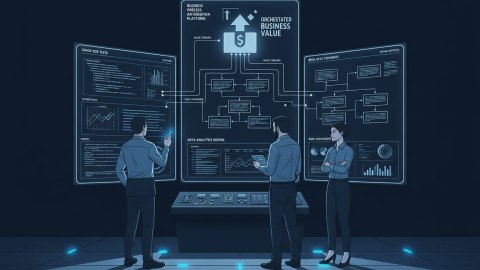
As the founder leading our platform transformation, I recognized early that microservice orchestration for warehouse status synchronization is not just a technical challenge — it directly impacts e-commerce order accuracy and partner confidence. Legacy modules imposed limited observability, creating unpredictable API behavior that strained SLAs and trust.
The strategy was crystal clear: create an orchestration layer embracing observability and alerting from day one, enabling proactive SLA governance and repair workflows. Precision in event processing means fewer lost or duplicated stock updates and better order fulfillment rates.

Market Gap: Legacy Limitations in Observability Threaten SLA Guarantees
In many B2B e-commerce ecosystems, warehouse status changes flow through multiple microservices controlling inventory, order allocation, and shipment. However, legacy systems frequently suffered from sparse telemetry — often only error logs with limited correlation capabilities. This created blind spots that delayed incident detection or resulted in SLA breaches unnoticed until customer impact.
Our gap analysis revealed three critical bottlenecks:
- Limited event tracking: No comprehensive event lineage or out-of-order processing indicators.
- Inconsistent SLA metrics: Latency and error ratio metrics were coarse, increasing uncertainty for partners.
- No alerting cutovers: Transitioning to new orchestration APIs risked service disruption without staged checkpoints.
Addressing these was vital to reduce operational toil, increase partner trust, and ensure SLA commitments could be measured and met.
Geo Differentiation: Tailoring Migration Across Distributed Warehouses and Regional Microservices
Operating a geographically distributed warehouse network added complexity that influenced our migration blueprint. Regional microservices exhibit distinct latency patterns and failure modes due to network variability and compliance constraints.
Key geo-specific considerations included:
- Data locality for event processing: Ensuring that regional updates passed through nearby orchestration services to reduce latency.
- Observability endpoint distribution: Deploying alerting agents regionally to detect local SLA degradation faster.
- Regulatory alignment: Observability data retention policies adjusted to region-specific compliance.
This nuanced approach avoided simplistic centralized designs which often fail to capture regional SLA nuances, ensuring a resilient, observability-native orchestration fabric.
Pricing Impact: Justifying Investment with Predictable SLA Improvements and Partner Retention
From a founders’ lens, any migration effort must translate into clear business metrics. Deploying an observability-backed orchestration platform meant upfront costs in engineering and on infrastructure monitoring, but the tradeoff was measurable SLA improvement in real deployments.
We built a pricing impact model focusing on:
- Reduced incident-related refunds and SLA penalties.
- Improved partner renewal rates driven by predictable API behavior.
- Operational cost savings from faster incident triage enabled by granular observability.
These factors aligned shareholder interests with product and engineering teams, justifying the migration investment based on demonstrable gains.
Adoption Plan: Migration Checklist with Cutover Checkpoints for Observability and Alerting
Our migration adopted a staged rollout with rigorous cutover checkpoints, blending engineering discipline with real-world operational needs. The key phases and checklist points were:
Phase 1: Baseline Assessment and SLA Definition
- Audit current event orchestration pipelines and identify telemetry gaps.
- Define SLA metrics (latency, success rate, error thresholds) aligned with partners.
- Deploy lightweight instrumentation agents in legacy modules.
Phase 2: Parallel Observability-Enabled Orchestration Implementation
- Build new orchestration service with integrated event tracing and SLA dashboards.
- Set up alerting rules based on latency percentiles and error rate thresholds.
- Establish audit logging for event lineage verification.
Phase 3: Controlled Cutover with Shadow Traffic and Analysis
- Run new orchestration in shadow mode processing all warehouse events.
- Compare success rates, latencies, and event duplication against legacy platform.
- Use alerting to highlight deviations exceeding SLA tolerance.
Phase 4: Incremental Traffic Migration and SLA Validation
- Redirect low-risk warehouse regions to new platform sequentially.
- Closely monitor SLA compliance with real-time alerts.
- Fix anomalies before increasing traffic volume.
Phase 5: Full Migration and Legacy Decommissioning
- Switch over fully with rollback capability reserved during initial windows.
- Archive migration and SLA performance metrics for retrospective analysis.
- Decommission legacy telemetry agents.
This checklist approach minimizes disruption and puts observability and SLA governance at the forefront of migration.
Roadmap: From Legacy Chaos to Predictable SLA-Stabilized Orchestration
Our technology roadmap, informed by startup agility and founder pragmatism, centered on milestones that ensured continuous operational visibility and partner confidence. The roadmap focused on:
- Quarter 1: Observability baseline deployment and SLA agreement with key partners.
- Quarter 2: New orchestration service alpha rollout and initial alert rule tuning.
- Quarter 3: Shadow traffic validation and incremental regional migrations.
- Quarter 4: Full migration, SLA stabilization, and legacy system decommissioning.
The key outcome was a microservice orchestration environment that bolsters order accuracy with data-driven alerts and complete event observability—a feat unattainable in our initial legacy state.
Founder's Technical Reflection
From the founder’s desk, it’s clear that focusing on SLA-driven service orchestration without native observability is like navigating in the dark. The structured migration with cutover checkpoints ensured we could catch drift early, measure success in hard SLA metrics, and confidently grow partner trust.
Engineers on our team benefited immensely from this clear blueprint — the migration wasn’t a leap of faith but a guided journey emphasizing measurable progress and operational transparency.
Further Reading to Expand Your Architecture Practice
- Cloud Cost Optimization Action Plan for Workflow Robotization
- Data Reconciliation for Payment Status Observability
- Integration Architecture for Multi-Tenant SaaS Admin Panels
If your organization faces similar microservice orchestration challenges, I invite you to explore our professional services—we specialize in aligning complex migrations with strategic observability and SLA governance to transform operational predictability.
Related reads
Relevant offers
If this article matches your task, here are two offers you can use to move from insight to implementation without extra discovery.
Sales SLA dashboard and analytics
I build a sales management dashboard so SLA and processing quality are visible without manual reporting.
AI document extraction pipeline
I build an AI pipeline that extracts structured data from files, requests and attachments without manual copy-paste.