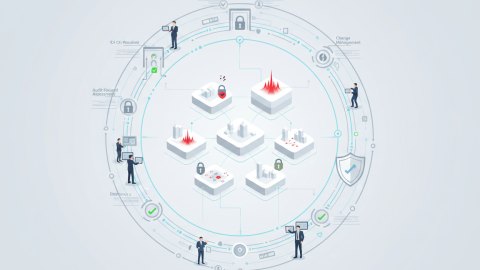
Authentication forms the cybersecurity perimeter for SaaS integration points. Given the multi-tenant nature of these environments, threat actors often exploit weak tenant isolation and privilege escalation pathways to compromise sensitive administrative functions.
Best Practices for Tenant-Aware Authentication
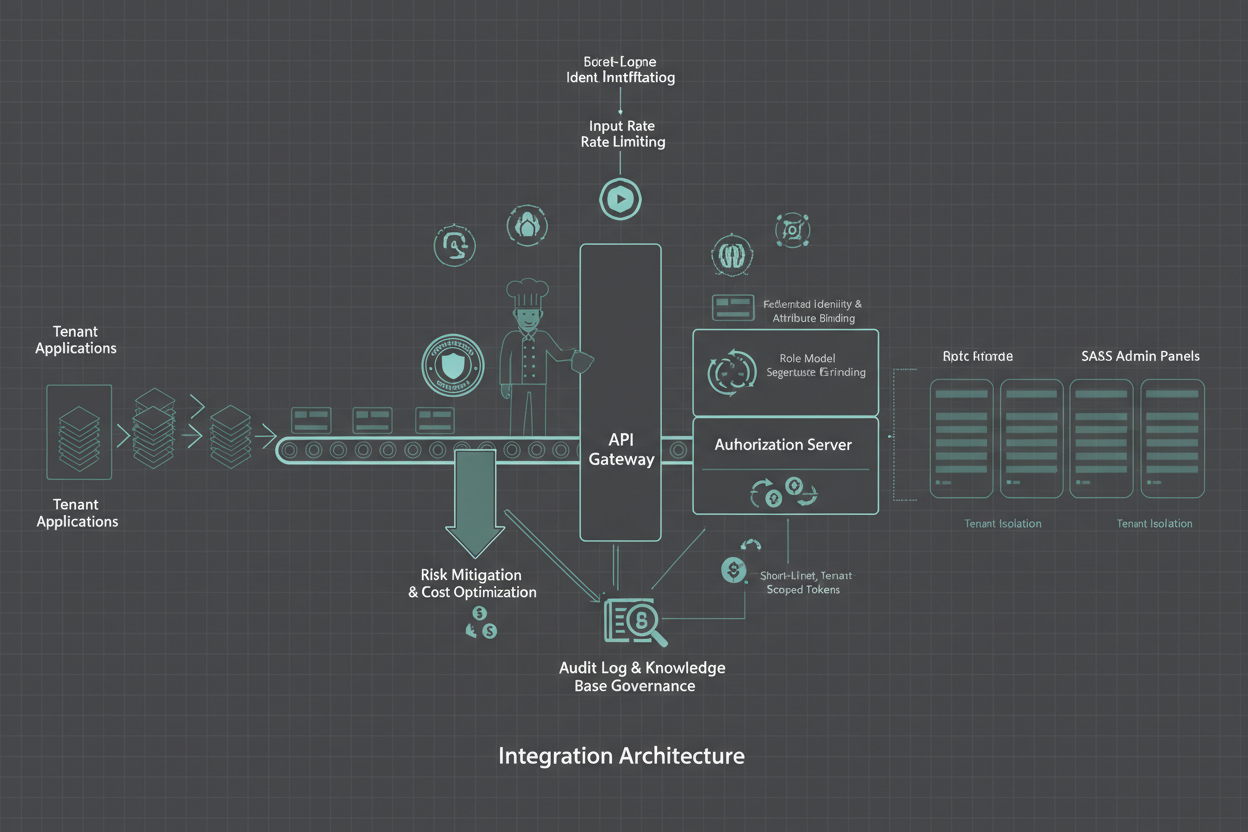
- Federated Identity & Attribute Binding: Implement identity federation supporting tenant-scoped claims rather than global credentials to reduce lateral movement risk inside the SaaS ecosystem.
- Role Model Segregation: Rigorously enforce role-based access control (RBAC) scoped by tenant boundaries to limit admin panel privileges and reduce attack surface.
- Multi-Factor Enforcement: Enforce mandatory multi-factor authentication (MFA) on admin and privileged API endpoints, especially for integration-related credentials.
Implementation Detail: Securing API Tokens
Use short-lived tokens with tenant-scoped scopes, combined with real-time validation against a centralized authorization server. Rotate and revoke tokens automatically upon anomalous behavior detection or policy violations.
Request Validation: Guarding Against Injection and Abuse in SaaS Integrations
Unchecked data inputs and malformed requests can become vectors for injection attacks or trigger inefficient resource consumption, inflating cloud costs and triggering security alerts.
Integration Request Validation Checklist
- Schema Enforcement: Use strict JSON schema validation at API gateways to prevent injection and malformed payloads.
- Tenant Identification: Require tenant ID in every request header or payload segment, validating for expected formats per tenant provisioning data.
- Input Rate Limiting: Enforce request throttling and circuit breakers per tenant and IP source to limit abuse-related billing spikes and denial of service scenarios.
Anti-Pattern Alert
A common error is permitting globally scoped API keys without tenant identifiers or input schema, which facilitates abuse and complicates audit trails.
Geo Enrichment to Enhance Threat Context and Latency Optimization
Enriching integration traffic with geographic data enables more granular threat intelligence decisions and provides metrics to optimize SaaS platform regional performance, directly impacting cloud expense management.
Practical Steps for Geo Enrichment
- Map incoming IPs to known geographic regions and reflect this in request metadata for backend processing.
- Apply region-based routing policies to segregate tenant traffic through optimal cloud regions to reduce latency and egress costs.
- Flag requests originating outside predefined tenant operation zones for enhanced logging and anomaly detection.
Case Study Spotlight
A multi-tenant SaaS provider observed a 20% cloud egress cost spike traced to cross-region data flows in integration calls. Geo enrichment enabled rerouting to align tenant location policies, reducing unexpected billing.
Error Handling Framework to Mitigate Incident Costs and Support Audit Readiness
Robust error handling is vital not only for uptime but also for forensic readiness in compliance audits and to prevent cascading failures that escalate cloud costs unexpectedly.
Recommended Error Handling Strategies
- Granular Error Codes: Use tenant-aware, HTTP-standard error codes supplemented with custom, machine-readable error codes providing failure context for automation.
- Retry Policies: Apply exponential backoff with tenant-specific retry limits to prevent runaway resource consumption and cascading failures.
- Comprehensive Logging: Correlate errors with request and tenant context, geo enrichment info, and authentication traces in centralized log management systems.
Implementation Example: Automated Incident Flagging
Integrate error logs with incident response dashboards capable of triggering alerts when error thresholds per tenant or integration point exceed predefined limits, enabling proactive SLA governance.
Deployment Checklist: Ensuring Secure, Cost-Efficient Integration Rollouts
Each deployment iteration of multi-tenant SaaS integrations requires a checklist approach to harden security, optimize cloud spend, and maintain consistent support knowledge base updates.
Multi-Tenant SaaS Integration Deployment Checklist
- Security Hardening: Verify tenant-specific authentication tokens and RBAC policies are active and audited.
- Validation Automation: Integrate request validation schemas and rate limiting rules into Continuous Integration (CI) pipelines.
- Geo Routing Configuration: Confirm regional routing rules and geo enrichment tagging are deployed and active.
- Error Handling Integration: Ensure error codes and retry mechanisms conform to new release requirements with verified logging pipelines.
- Knowledge Base Update: Sync integration operational and troubleshooting documentation into internal knowledge base repositories to ensure support consistency and audit readiness.
- Cloud Cost Monitoring: Enable granular cloud resource usage tracking segmented by tenant and integration components to spot anomalies.
- Threat Intelligence Review: Conduct a post-deployment threat surface analysis focusing on tenant isolation vectors and API abuse scenarios.
Lessons Learned: Refactoring for Threat Resilience and Cost Efficiency
A SaaS provider refactored their integration layer by replacing monolithic API keys with fine-grained tenant tokens and implemented geo-aware routing. The outcome was a 30% decrease in incident recovery times and a measurable 15% reduction in cloud billing over three months.
Summary and Next Steps
Integration architecture in multi-tenant SaaS admin panels demands a threat-intelligence lens combined with operational rigor to enhance security, maintain audit readiness, and optimize cloud costs. Securing authentication, validating requests with tenant context, geo-enriching for threat insight and performance, robust error handling, and disciplined deployment practices are pillars of a resilient system.
For technical leadership seeking to elevate their SaaS platform’s operational posture while controlling cloud expenses, our detailed SaaS architecture consulting services provide tailored audit readiness and integration optimization roadmaps with actionable threat intelligence insights.
Explore related expertise in cloud cost optimization action planning, resilient API architecture for audit programs, and our SaaS platform modernization projects for practical examples and deeper insights.
Related reads
Relevant offers
If this article matches your task, here are two offers you can use to move from insight to implementation without extra discovery.
AI assistant for business processes
I implement AI assistants with safety controls, knowledge grounding and response-quality governance.
Traffic analytics module rollout for 1C-Bitrix
Transparent visit, bot, GEO and suspicious-IP analytics inside Bitrix with a clear foundation for future risk workflows.