In the fast-paced logistics sector, integrating bots for sales support and internal operations is no longer optional—it’s imperative for competitive agility. Yet, the challenge lies in orchestrating these bots to seamlessly connect CRM systems and lead sources without inflating acquisition costs or missing tight deadlines. This article unfolds a visionary release runbook, grounded in a real-world case, that guides architects and engineers through preparation, execution, validation, monitoring, and next steps.

Preparation: Defining Context and Constraints
Our case involves a mid-sized logistics provider aiming to deploy bots that automate lead qualification and internal task routing. The primary goal was to lower customer acquisition cost (CAC) while maintaining operational efficiency. Constraints included a tight budget capped at 20% of the projected sales uplift value and a three-month deadline for rollout.
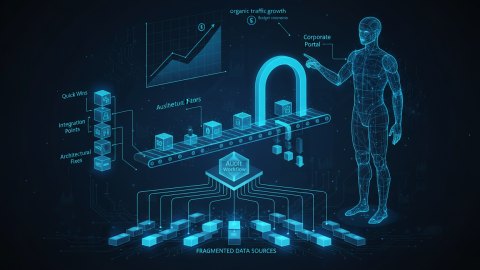
Key architectural decisions focused on:
- Ensuring tight CRM and lead-source integration to avoid data silos and duplication.
- Designing lightweight bot workflows that minimize infrastructure overhead.
- Implementing measurable KPIs upfront, such as lead conversion rate uplift and internal task resolution time.
Early stakeholder alignment emphasized the need for a phased rollout with clear rollback points to mitigate release risks. This approach echoes principles outlined in our engineering process audit initiatives, where bounded contexts reduce complexity and improve observability.
Execution: Building and Integrating the Bot Architecture
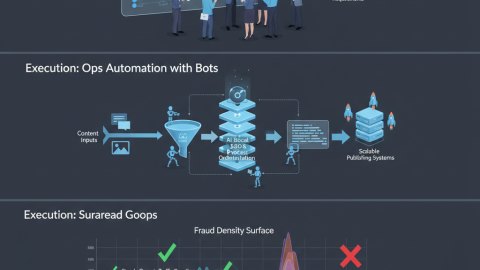
The implementation began with a modular bot design, separating sales support functions from internal operational tasks. This separation allowed parallel development streams and simplified testing. The bots interfaced with the CRM via RESTful APIs, ensuring real-time lead data synchronization.
Lead-source integration was architected to funnel inbound inquiries from multiple channels into a unified queue, where the bot applied rule-based qualification before routing leads to sales reps. Internally, bots automated task assignments based on lead priority and operational workload, reducing manual handoffs.
To stay within budget, the team leveraged existing cloud infrastructure and prioritized serverless components for bot hosting, minimizing upfront costs and scaling expenses with usage. This cost-conscious design was critical given the tight financial constraints.
Throughout development, continuous integration pipelines enforced code quality and automated deployment, enabling rapid iteration and early detection of integration issues. This practice aligns with the principles discussed in our legacy-to-cloud SaaS migration playbook, emphasizing backlog recovery and staged rollout strategies.
Validation: Testing and KPI Measurement
Validation focused on both functional correctness and business impact. Functional tests verified CRM synchronization accuracy, lead qualification logic, and internal task routing fidelity. Load testing simulated peak inquiry volumes to ensure bot responsiveness under stress.
Business KPIs were tracked from day one, including:
- Lead conversion rate improvements, benchmarked against historical data.
- Reduction in average lead response time.
- Internal task resolution speed and error rates.
Initial results showed a 15% uplift in lead conversion and a 25% reduction in task resolution time within the first month post-release, validating the architectural choices and integration quality.
Monitoring: Sustaining Performance and Risk Mitigation
Post-release monitoring employed dashboards that surfaced bot health metrics, CRM sync status, and lead funnel analytics. Alerts were configured for synchronization failures, task backlog growth, and KPI deviations.
Operational transparency enabled rapid troubleshooting and continuous improvement cycles. The team adopted a governance-centric approach to observability, inspired by our security control uplift framework, ensuring that bot operations complied with internal policies and audit requirements.
Next Steps: Scaling and Optimization
With the initial release stabilizing, the visionary roadmap includes:
- Expanding bot capabilities to include predictive lead scoring using historical CRM data.
- Integrating additional lead sources to broaden the sales funnel.
- Automating feedback loops from sales outcomes to refine bot qualification rules.
- Conducting periodic architecture audits to identify bottlenecks and optimize resource allocation.
These steps will further reduce acquisition costs and enhance operational agility, reinforcing the strategic value of bot integration in logistics.
Conclusion
Deploying bots for sales support and internal operations in logistics under tight budget and deadline constraints demands a disciplined, visionary approach. By prioritizing modular architecture, tight CRM and lead-source integration, measurable KPIs, and governance-centric monitoring, organizations can achieve significant operational uplift and cost reduction.
For teams embarking on similar journeys, a thorough web application architecture audit is indispensable to uncover hidden risks and optimize integration points. Explore our comprehensive services to accelerate your bot deployment with expert guidance and proven methodologies.
Related reads
Relevant offers
If this article matches your task, here are two offers you can use to move from insight to implementation without extra discovery.
API integration blueprint
I design the API integration blueprint before development starts so the team does not ship guesswork.
Calculator or configurator on Bitrix
I build a calculator or configurator that helps produce qualified leads, not just interface clicks.