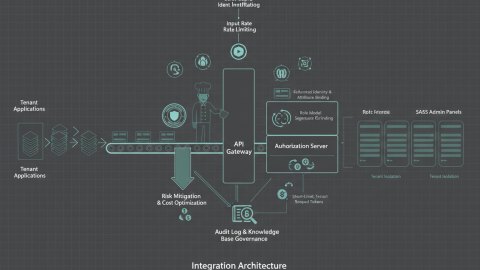
Many organizations leverage AI agents to enhance support and sales processes within their 1C-Bitrix deployments. However, the integration of these agents, especially during major release cycles, introduces security and access control complexities. A failure in access control can expose sensitive customer data or disrupt critical business functions. A common challenge involves inconsistent webhook payload standards from different AI agent providers, leading to unreliable delivery and processing. Securing these integrations requires a robust, automated runbook to ensure continuous operation and rapid rollback capabilities.
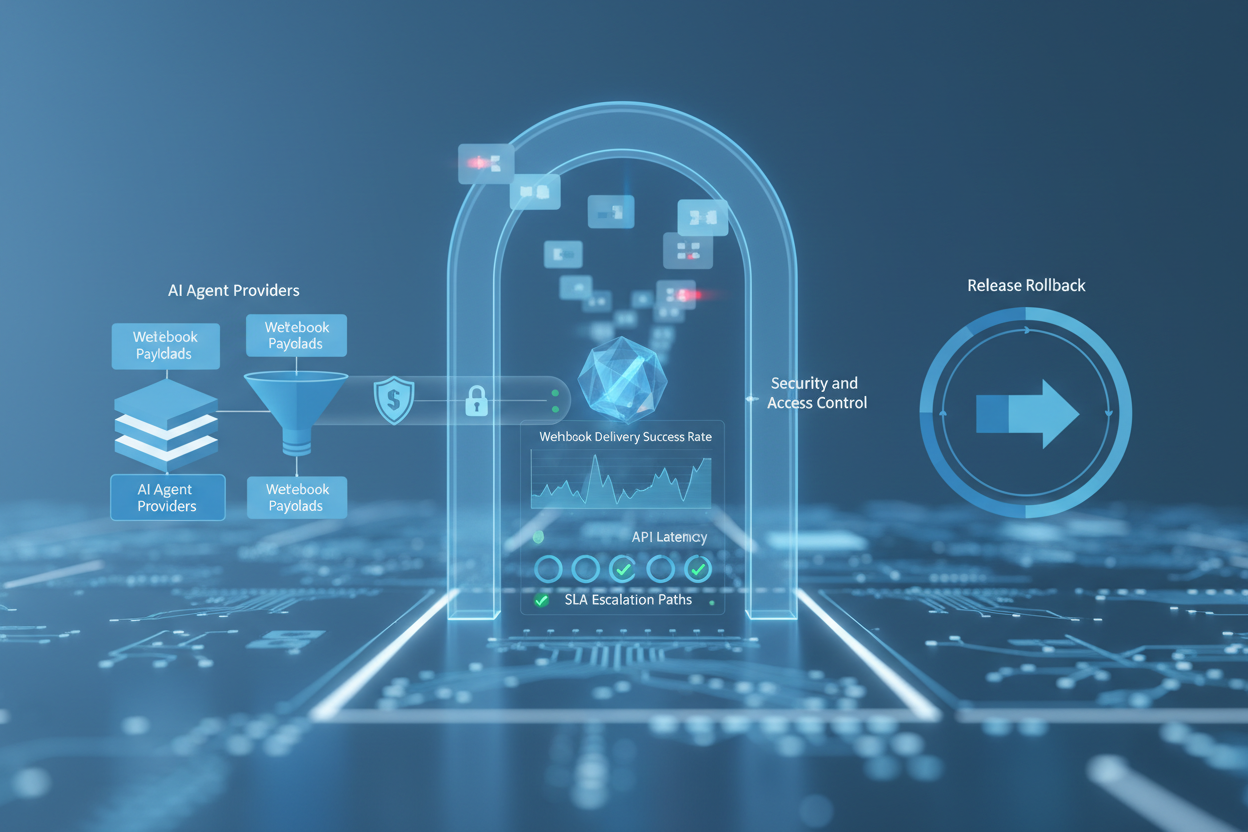
The Risk Landscape
- Data Exposure: AI agents require access to CRM data to personalize interactions. Improperly configured access can lead to data leaks.
- Service Disruption: Faulty agent integrations can disrupt critical business processes within 1C-Bitrix.
- Release Instability: New agent versions or configuration changes can introduce vulnerabilities or instability.
- Provider Variability: Non-uniform webhook events and payload standards from providers can trigger escalation.
Detection Logic: Real-Time Monitoring and Alerting
Effective security and access control rely on proactive monitoring and alerting. A system must detect anomalies in agent behavior, access patterns, and webhook delivery. The detection logic should be automated to ensure timely responses to potential threats.
Key Metrics to Monitor
- Webhook Delivery Success Rate: Track the percentage of successfully delivered webhooks from AI agents.
- API Latency: Monitor the response time of APIs used by AI agents to identify performance bottlenecks or denial-of-service attempts.
- Authentication Failures: Track the number of failed authentication attempts associated with AI agents.
- Authorization Errors: Monitor instances where agents attempt to access resources they are not authorized to use.
- Data Modification Anomalies: Detect unusual patterns in data modification activities performed by AI agents.
Alerting Thresholds and Escalation
Alerting thresholds should be established based on historical data and acceptable risk levels. When a threshold is breached, an alert should be triggered, and an escalation path should be initiated. The escalation path should define the steps to be taken to investigate and resolve the issue.
Example alerting logic:
if (webhookDeliverySuccessRate < 99.9%) {
 triggerAlert("Webhook delivery failure");
 escalateToTeam("Support Team");
}
Architecture: Layered Security with Rollback Checkpoints
The architecture should incorporate multiple layers of security to protect against various threats. This includes authentication, authorization, data encryption, and intrusion detection. Critical to the design: automated rollback. Here's a conceptual diagram:
Components Overview
- AI Agent Gateway: A central point for managing all AI agent integrations. It handles authentication, authorization, and request routing.
- Authentication Service: Verifies the identity of AI agents using API keys, OAuth tokens, or other authentication mechanisms.
- Authorization Service: Enforces access control policies, determining whether an agent is authorized to access a specific resource.
- Data Encryption: Encrypts sensitive data at rest and in transit to prevent unauthorized access.
- Intrusion Detection System: Monitors network traffic and system logs for suspicious activity.
- Release Management Platform: Facilitates controlled deployments and rollback to previous stable states with defined checkpoints. 1C-Bitrix specific deployment procedures must be accounted for.
Rollback Checkpoints
During release operations, create deployment rollback checkpoints. Consider /blog/general/ci-cd-optimization-1c-bitrix-reliability-and-release-management-programs-documentation-portal-redesign-for-developer-onboarding-partner-network-automation-operating-model/ for optimizing Bitrix deployments.
- Pre-Deployment Backup: Create a full backup of the 1C-Bitrix database and related configurations.
- Configuration Snapshots: Capture the current state of key configuration files, such as access control policies and integration settings.
- Code Versioning: Use version control to track changes to AI agent code and related scripts.
Code Samples: Implementing Access Control Policies
Access control policies can be implemented using various technologies, such as role-based access control (RBAC) or attribute-based access control (ABAC). RBAC defines roles and assigns permissions to those roles. ABAC defines access control rules based on attributes of the user, resource, and environment.
Example RBAC implementation:
// Define roles
const ADMIN_ROLE = "admin";
const SUPPORT_ROLE = "support";

// Define permissions
const READ_CUSTOMER_DATA = "read_customer_data";
const MODIFY_CUSTOMER_DATA = "modify_customer_data";

// Assign permissions to roles
const rolePermissions = {
 [ADMIN_ROLE]: [READ_CUSTOMER_DATA, MODIFY_CUSTOMER_DATA],
 [SUPPORT_ROLE]: [READ_CUSTOMER_DATA]
};

// Verify user's permissions
function hasPermission(userRole, permission) {
 return rolePermissions[userRole] && rolePermissions[userRole].includes(permission);
}

// Example usage
if (hasPermission(user.role, READ_CUSTOMER_DATA)) {
 // Allow access to customer data
}
For managing the AI Agent Gateway, consider a layered architecture similar to /blog/general/automated-crm-erp-data-sync-ai-moderation-and-smart-routing-systems-migration-of-legacy-crm-erp-connectors-to-unified-api-layer-crm-erp-sync-reliability-handbook/ to unify CRM/ERP data sync with a stable API layer.
Validation: Testing and Automated Rollback Verification
After implementing security and access control measures, it is crucial to validate their effectiveness. This involves conducting thorough testing and verifying the automated rollback procedures.
Testing Strategies
- Penetration Testing: Simulate real-world attacks to identify vulnerabilities in the system.
- Access Control Audits: Review access control policies to ensure they are correctly configured and enforced.
- Webhook Delivery Testing: Simulate webhook events to verify that they are delivered successfully and processed correctly.
- Performance Testing: Assess the impact of security measures on system performance.
Automated Rollback Verification
Test automated rollback procedures regularly to ensure they function as expected. This involves simulating a failure scenario and verifying that the system can be restored to a previous stable state.
- Simulate Failure: Introduce a controlled failure into the system, such as a corrupted configuration file.
- Initiate Rollback: Trigger the automated rollback procedure.
- Verify Restoration: Verify that the system is restored to its previous state and that all critical functions are operational.
Summary: Maintaining Secure and Reliable AI Agent Integrations in 1C-Bitrix
Securing AI agent integrations within a 1C-Bitrix environment requires a comprehensive approach that encompasses detection logic, layered architecture, robust access control policies, and thorough validation. By implementing these measures, organizations can minimize the risk of data exposure, service disruption, and release instability. Key to success is a well-defined operations runbook with clear SLA escalation paths, ensuring prompt and effective response to security threats. Near real-time webhook reliability can be achieved focusing on robust system architecture.
To implement these strategies effectively, comprehensive security and access control planning is essential. We offer specialized architecture services to assist you in designing and implementing robust security frameworks tailored to your specific business needs, including AI agent integrations.
Related reads
Relevant offers
If this article matches your task, here are two offers you can use to move from insight to implementation without extra discovery.
Bitrix or website integration with marketplace API
I integrate marketplace APIs with your website or Bitrix so synchronization stops relying on manual workarounds.
Subscription billing setup
I set up a working subscription model so sales and renewals stop living in spreadsheets and manual reminders.