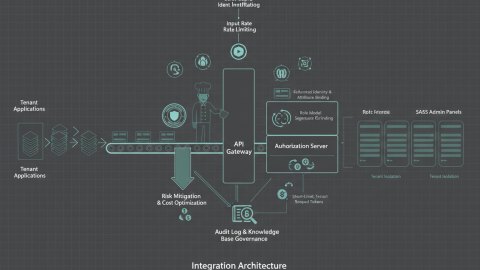
In CTO-as-a-Service engagements, especially those involving the migration of legacy CRM/ERP connectors to unified API layers, performance bottlenecks in support escalation workflows can severely impact client satisfaction and project timelines. We must assume that every component, internal or external, is potentially compromised. This article outlines a zero-trust approach to cloud performance optimization specific to Telegram bot support escalations, accounting for the constraint of long approval cycles common in enterprise clients and its effect on repeat-sales performance in e-commerce flows. We address securing this pipeline by implementing strict identity and access management controls and continuous validation mechanisms.

Incident Timeline: From Anomaly to Impact
Consider an incident where a sudden surge in e-commerce transactions triggers a cascade of support requests. The initial alert stems from increased latency in API calls to the legacy CRM, impacting order fulfillment times. The Telegram bot, designed to escalate critical issues, becomes overwhelmed, resulting in delayed notifications to support personnel. This delay leads to missed SLAs and potential revenue loss.
Incident Timeline Example:
- T0:00 - E-commerce transaction volume spikes by 300%.
- T+0:05 - API latency to legacy CRM increases from 50ms to 500ms.
- T+0:10 - Telegram bot begins experiencing rate limiting errors.
- T+0:15 - Support escalation notifications are delayed by several minutes.
- T+0:30 - First customer complaints regarding order delays are received.
Detection Moment: Identifying the Compromise
Early detection is paramount. However, in a zero-trust environment, we can not assume that any detection mechanisms are inherently trusted. Thus, we should require multiple, uncorrelated, detection streams. Detection relied on a combination of:
- Real-time monitoring dashboards: Tracking API latency, error rates, and Telegram bot message queues.
- Automated anomaly detection: Alerting on deviations from established baselines for key performance indicators (KPIs).
- Synthetic transactions: Regularly simulating support escalations to proactively identify potential issues. Focus on frequent testing of common operations used by e-commerce flows, like product order, shipment or invoice requests.
Anti-pattern: relying solely on infrastructure metrics without correlating them to business KPIs. Monitor the customer impact (e.g., abandon rates in checkout) to prioritize investigations.
Geo Trace Reconstruction: Security Validation Across Geographies
Even though the primary problem manifested itself within the Cloud infrastructure that serves the Telegram bot, the potential root causes were global. A geo trace reconstruction effort was initiated to identify dependencies in different geographical regions.
- Network latency analysis: Pinpointing network bottlenecks between the e-commerce platform, CRM, and Telegram bot servers (or functions).
- Database query performance: Assessing the impact of increased load on CRM database response times in different regions.
- API endpoint health checks: Monitoring the availability and performance of external APIs used by the Telegram bot.
Specifically, in a zero-trust model, the following practices are implemented:
- All lateral movement is forbidden. The principle of least privilege applies across all components.
- Every API call requires multi-factor authentication (MFA).
- Geo-fencing restricted access to the network. Any new regions needed new authorization.
Fix Rollout: Prioritized Remediation Steps
Given the constraint of potentially long approval cycles, the fix rollout should be staged to provide value quickly. Prioritize fixes that yield immediate improvements while minimizing risk.
- Rate Limiting Adjustment: Temporarily increase the Telegram bot's rate limits to prevent message queue buildup.
- Connection Pooling Optimization: Adjust connection pool settings for the CRM API to handle the increased transaction volume. Use short 'keep-alive' settings to quickly recover failing connections.
- Queue Prioritization: Implement a priority queue for support escalations based on customer tier and order value.
- As part of a stable connector replacement effort, review Automated CRM/ERP data sync handbook for a detailed overview of stability and security guidelines.
Anti-pattern: Attempting a full system overhaul during an incident. Focus on incremental improvements that address the immediate performance bottleneck. Remember the goal of repeat sales and prioritize improvements that directly reduce customer impact.
Long-Term Controls: Hardening the System
After mitigation with a staged rollout, establish long-term controls to prevent recurrence and enhance overall system security.
- API Gateway Integration: Introduce an API gateway to provide rate limiting, authentication, and traffic shaping capabilities.
- Enhanced Monitoring and Alerting: Implement comprehensive monitoring dashboards and configure alerts for critical performance metrics.
- Automated Scaling: Implement autoscaling capabilities for the Telegram bot and CRM API infrastructure.
- Code review process: Before deployment, the code is checked using secure development guidelines.
Zero-Trust reinforcement: Implement strict identity and access management (IAM) policies. Regularly rotate API keys and use short-lived tokens for authentication. Enforce multi-factor authentication for all administrative accounts.
Lessons Learned: Iterative Improvement with Zero Trust
Key takeaways include the importance of continuous monitoring, proactive threat detection, and a staged approach to incident response. The constraint of long approval cycles necessitates a focus on incremental improvements and clear communication with stakeholders. AI agent automation can help streamline support triage during high-load events.
Anti-pattern: Failing to conduct a post-incident review. Use each incident as an opportunity to identify weaknesses in the system and refine incident response procedures. As explored in Bitrix24 Telephony Integrations guidance, robust schema validation can prevent cascading failures.
By adopting a zero-trust approach to cloud performance optimization, organizations can build more resilient and secure systems, even in the face of complex CTO-as-a-Service engagements and external dependencies. This ultimately contributes to improved client satisfaction and increased repeat-sales performance in e-commerce flows.
To discuss how we can help you architect and implement these strategies, please visit our Services page.
Related reads
Relevant offers
If this article matches your task, here are two offers you can use to move from insight to implementation without extra discovery.