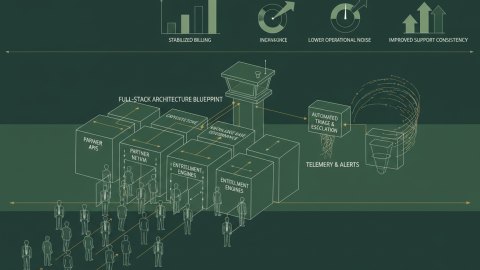
Many organizations are leveraging cloud services to power automated workflows, particularly for customer support using Telegram bots and internal process management with Bitrix24. While automation offers significant benefits, uncontrolled resource consumption can lead to substantial cost overruns. This is especially true when operational silos between sales, support, and product teams hinder a unified approach to optimization, potentially threatening enterprise deal success because of perceived technical risks.
We address this issue by presenting a cloud cost optimization action plan specifically designed for companies using Telegram support bots integrated with Bitrix24 for sales and operations workflows. The goal is to provide a pragmatic framework for reducing costs while maintaining, or even improving, the efficiency of these critical processes.

Market Context: The Rise of the Conversational Enterprise
The market for conversational enterprise solutions is booming. Companies are increasingly turning to platforms like Telegram and Bitrix24 to automate customer interactions, streamline internal processes, and gain a competitive edge. However, this rapid adoption often outpaces the development of robust cost management strategies. Successful enterprise adoption requires predictability of delivery commitments and reducing operational silos that undermine deal confidence.
Threat Landscape: Untamed Cloud Sprawl and Inefficient Resource Utilization
The primary threat is uncontrolled cloud resource usage. Common anti-patterns include:
- Over-provisioning: Allocating more resources (CPU, memory, storage) than are actually needed.
- Zombie Resources: Idle or underutilized resources that continue to incur costs.
- Inefficient Code: Poorly written bot logic and Bitrix24 workflows that consume excessive resources.
- Lack of Monitoring: Inadequate visibility into resource utilization and cost drivers.
- Absent Shutdown Policies: Inability to automatically terminate resources during idle hours or low-demand periods.
These issues collectively lead to wasted cloud spend and reduced profitability. Failure to address them can significantly impact the ROI of automation initiatives.
Technical Breakdown: Key Areas for Cloud Cost Optimization
The following areas offer significant opportunities for cost reduction without compromising performance:
1. Telegram Bot Optimization
- Code Profiling & Optimization: Identifying and eliminating performance bottlenecks in bot code.
- Message Handling: Reducing the number of API calls by batching requests and caching frequently accessed data.
- Resource Allocation: Right-sizing the compute resources allocated to the bot based on actual usage.
- Webhooks: Efficient utilization of webhooks to minimize polling frequency.
2. Bitrix24 Workflow Robotization
- Workflow Analysis: Identifying and eliminating redundant or unnecessary steps in workflows.
- Script Optimization: Improving the efficiency of scripts and business rules within Bitrix24.
- Data Management: Optimizing data storage and retrieval to reduce I/O costs.
- API Usage: Minimizing unnecessary API calls to Bitrix24.
3. Infrastructure Optimization
- Instance Right-Sizing: Choosing the appropriate instance types based on workload requirements.
- Auto-Scaling: Automatically scaling resources up or down based on demand.
- Reserved Instances: Utilizing reserved instances for predictable workloads.
- Storage Optimization: Selecting the most cost-effective storage options (e.g., tiered storage).
- Network Optimization: Reducing data transfer costs by optimizing network configurations.
4. Observability and Cost Monitoring
- Real-time Monitoring: Implementing comprehensive monitoring to track resource utilization and costs.
- Cost Allocation: Properly attributing costs to specific bots, workflows, and teams.
- Anomaly Detection: Identifying and investigating unexpected cost spikes.
- Reporting: Generating regular reports on cost trends and optimization opportunities. For executive ROMI reporting automation, correlating multi-system data including bot activity provides valuable data in financial terms. For details on data reconciliation procedures, see our related article at Executive ROMI Reporting.
Implementation Walkthrough: Step-by-Step Optimization Process
This action plan outlines specific steps for Telegram and Bitrix24 cost optimization.
Step 1: Assessment & Analysis
- Inventory: Identify all Telegram bots and Bitrix24 workflows used across sales and ops.
- Resource Mapping: Map each bot and workflow to the cloud resources it consumes (CPU, memory, storage, network).
- Performance Profiling: Use profiling tools to identify performance bottlenecks in bot code and workflow scripts.
- Cost Analysis: Analyze cloud billing data to identify the primary cost drivers for each bot and workflow. Consider using the Data Quality Monitoring approach for CTO-as-a-Service, specifically tailoring deliverable process audits.
Step 2: Optimization Implementation
- Code Optimization: Refactor bot code to improve efficiency and reduce resource consumption.
- Workflow Redesign: Streamline Bitrix24 workflows to eliminate unnecessary steps and API calls.
- Resource Right-Sizing: Adjust instance types and resource allocations based on actual usage patterns.
- Auto-Scaling Configuration: Implement auto-scaling to dynamically adjust resources based on demand.
- Storage Optimization: Migrate data to lower-cost storage tiers where appropriate.
Step 3: Monitoring & Continuous Improvement
- Implement Monitoring: Set up real-time monitoring to track resource utilization, costs, and performance metrics.
- Establish Thresholds: Define performance and cost thresholds for each bot and workflow.
- Automate Alerts: Configure alerts to notify you of any anomalies or threshold breaches.
- Regular Reviews: Conduct regular reviews of cost and performance data to identify further optimization opportunities. Improve your delivery readiness; refer to Delivery Process Audit Report for insights and repeatability.
Case Study: Reducing Costs in a Sales Lead Qualification Bot
A company implemented a Telegram bot to automatically qualify sales leads. Initial analysis revealed that the bot was making excessive API calls to Bitrix24 to retrieve customer data, even for repeat interactions. By implementing data caching and optimizing the bot's code, the company reduced API calls by 40% and lowered its cloud costs by 25%.
Metrics: Measuring Optimization Success
Track the following metrics to gauge the effectiveness of your cloud cost optimization efforts:
- Total Cloud Spend: Overall reduction in cloud costs.
- Cost Per Bot/Workflow: Cost associated with each Telegram bot and Bitrix24 workflow.
- Resource Utilization: CPU, memory, and storage utilization for each bot and workflow.
- API Call Volume: Number of API calls made to Telegram and Bitrix24.
Significant and lasting cost reduction validates process investment and provides fuel for further optimization.
Conclusion
Optimizing cloud costs for Telegram support bots and Bitrix24 workflow robotization is essential for maximizing the ROI of automation investments. By systematically implementing the steps outlined in this action plan, organizations can achieve significant cost savings while improving the efficiency of their sales and operational workflows. Don't let cloud costs spiral out of control – take proactive steps to optimize your resources and ensure predictable cloud spend.
Ready to take control of your cloud costs? Contact us today to explore how our expertise can help you optimize your cloud infrastructure and achieve significant savings. Learn more about our offerings at our services page.
Related reads
Relevant offers
If this article matches your task, here are two offers you can use to move from insight to implementation without extra discovery.