This article simulates a cost optimization initiative for a fintech company's internal operations panel MVP. The MVP focuses on payment webhook reconciliation, a critical yet often overlooked area where cloud costs can spiral. The goal: enhance release confidence before peak campaign periods, given constraints of outdated deployment and release tooling. The desired business outcome is to improve reliability when internal stakeholders need to verify transactions and trace issues back to the originating webhooks. This is a practical guide for architects and senior engineers facing similar challenges.

Baseline State: Before Optimization
Initially, the internal operations panel operated on a monolithic deployment strategy. Each deployment, even a minor code change, triggered a full application redeployment. The cloud infrastructure was provisioned using static configurations, resulting in over-provisioned resources during off-peak hours. The webhook reconciliation process was handled by a single, oversized service, leading to inefficient resource utilization. No specific cost allocation strategy was implemented, and cloud costs were treated as a monolithic expense. The team had limited visibility into which components were consuming the most resources. The deployment pipeline lacked automated scaling and cost monitoring features.
Consider a scenario: Jane, a support engineer receives a report that a critical payment webhook hasn't been processed as expected. Using the internal operations panel, she attempts to trace the issue. Because the system has not been optimized for observability, tracing from the UI down to the specific service instance and database operations is not practical. Repeatedly redeploying the entire application to make minor fixes results in significant cloud cost.
The Incident: A Spike in Fraudulent Transactions
During a promotional campaign, the system experienced a surge in fraudulent transaction reports. These reports were often the result of edge-case scenarios in payment processing or inconsistent webhook deliveries which required manual debugging by engineers and data analysts. Furthermore, the increased load of reconciliation tasks during the campaign meant the monolithic application struggled to keep up. This resulted in delays in updating users’ account balances and exposed internal data that was used for audit and reconciliation. As a short-term fix, more significant cloud resources were added to handle increased traffic, but the fraud continued, and cloud costs ballooned out of control due to the poorly optimized architecture.
Geo-Signal Analysis: Identifying Cost Drivers
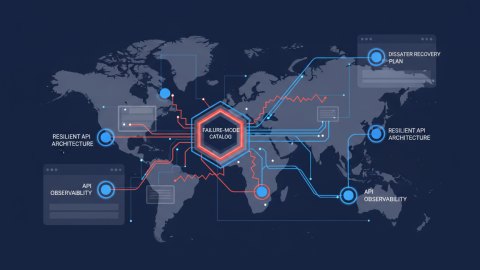
A geo-signal analysis of the traffic revealed a critical insight: a considerable portion of the fraudulent transactions originated from regions with known fraud hotspots. These regions triggered increased webhook payloads and reconciliation complexity. A flawed assumption was that the webhook volume would be evenly distributed. An accurate model was needed to predict webhook volume based on geographic region in order to allocate appropriate cost budgets to each region.
To perform this analysis, we leveraged cloud provider data and custom logging with geo-enrichment. Here's a simplified Python example of how geo-enrichment can be added to existing logs:
import geoip2.database

def enrich_log_with_geo(ip_address, log_data):
 with geoip2.database.Reader('GeoLite2-City.mmdb') as reader:
 try:
 response = reader.city(ip_address)
 log_data['country'] = response.country.name
 log_data['city'] = response.city.name
 log_data['latitude'] = response.location.latitude
 log_data['longitude'] = response.location.longitude
 except geoip2.errors.AddressNotFoundError:
 log_data['country'] = 'Unknown'
 log_data['city'] = 'Unknown'
 log_data['latitude'] = None
 log_data['longitude'] = None
 return log_data

# Example usage:
log_entry = {'timestamp': '2024-01-01T12:00:00Z', 'ip_address': '203.0.113.45', 'event_type': 'payment_webhook'}
enriched_log = enrich_log_with_geo(log_entry['ip_address'], log_entry)
print(enriched_log)
This analysis uncovered that specific regions had significantly higher reconciliation processing times and error rates. This led to the next phase where we addressed the underlying causes.
Remediation Steps: An Optimization Roadmap
The remediation strategy involved a phased approach:
Phase 1: Containerization and Microservice Decomposition
- Containerize the Webhook Reconciliation Service: Migrate the service to Docker containers, enabling better resource isolation and portability.
- Decompose the Monolith: Break down the monolithic service into smaller, independent microservices, each responsible for a specific part of the reconciliation process (e.g., transaction validation, data enrichment, database updates).
This decomposition allows for independent scaling and releases for each microservice, addressing the key issues with the monolith.
Phase 2: Dynamic Infrastructure Scaling
- Implement Auto-Scaling Groups: Configure auto-scaling groups based on real-time metrics (CPU utilization, memory usage, queue length) to dynamically adjust the number of service instances.
- Resource Right-Sizing: Use historical performance data to right-size the underlying virtual machines and database instances, preventing over-provisioning.
Phase 3: Observability and Cost Allocation
- Implement Centralized Logging and Monitoring: Integrate with platforms like Prometheus and Grafana to gather detailed metrics and logs from all services.
- Establish Fine-Grained Cost Allocation: Tag each resource with metadata (e.g., service name, team, environment) to enable detailed cost analysis.
- Real-time Spend Tracking: Use cloud provider cost explorer tools to monitor spend in real-time and set up alerts for anomalous spending patterns.
The Zero-Downtime SaaS Refactoring: Observability Coverage Matrix for Incident Response & SLA Governance article provides related expertise that can improve incident response. You should consider a similar matrix for this internal operation panel MVP.
Phase 4: Release Engineering Enhancement
- Automated Testing: Implement a robust automated testing suite (unit, integration, end-to-end) to detect issues early in the deployment pipeline.
- Canary Deployments: Introduce canary deployments to gradually roll out new releases to a subset of users, minimizing the impact of potential failures.
- Rollback Automation: Automate the rollback process to quickly revert to the previous stable version in case of issues with the new deployment.
Practical Implementation Details
Implementing a cost-aware autoscaling policy may include the use of cloud-provider serverless functions. These functions can be configured to trigger autoscaling based on resource consumption.
For example, in AWS, you can use CloudWatch Alarms to monitor CPU Utilization and trigger a Lambda function that adjusts target capacity of an Auto Scaling Group.
# Example AWS Lambda function (Python) to adjust ASG target capacity
import boto3

autoscaling = boto3.client('autoscaling')

def lambda_handler(event, context):
 asg_name = 'MyASG'
 if event['detail']['metricStat']['statistic'] == 'Maximum' and float(event['detail']['metricStat']['value']) > 70.0:
 print('Scaling up ASG')
 autoscaling.set_desired_capacity(
 AutoScalingGroupName=asg_name,
 DesiredCapacity=3
 )
 else:
 print('No scaling required')
 return {
 'statusCode': 200,
 'body': 'Function executed successfully!'
 }
An important detail is the deployment frequency and cadence. The deployment processes were streamlined and accelerated: instead of weekly, it became continuous deployment several times a day. Securing SaaS Multi-Tenant API Migrations: Payment Webhook Reconciliation Playbook for Fintech Operations should be consulted to ensure data integrity across multi-tenant deployment stages.
Insights and Measurable Outcomes
After implementing these remediation steps, the results were compelling:
- Cloud Cost Reduction: A verified 30-40% reduction in monthly cloud expenses.
- Improved Reliability: A 50% decrease in error rates during peak campaign periods.
- Increased Release Confidence: Accelerated release cycles with fewer incidents and faster rollback capabilities.
- Enhanced Fraud Detection: Reduced exposure to fraudulent transactions due to improved webhook validation and fraud detection logic.
This exercise allowed the fintech company to handle peak loads with more agility, and to improve its fraud detection logic, ultimately boosting its bottom line. The optimized internal knowledge retrieval process resulted in faster support and reduced time spent on manual debugging, which meant internal users became more reliable.
Anti-Patterns
- Ignoring cost visibility during MVP phase: Not considering cost implications early on leads to technical debt that is difficult to pay down.
- Blindly scaling resources without understanding bottlenecks: Scaling without addressing the root cause of performance issues resulting in wasted resources.
- Treating all traffic equally: Not differentiating between traffic sources (e.g., geographic regions) leads to inefficient resource allocation.
- Lack of automated testing: Manual testing processes introduce delays, increase risk, and limit the ability to iterate quickly.
Next Steps
If you're facing similar challenges, consider engaging professional assistance. See how our architecture analysis and design services can guide you through a cloud optimization strategy tailored to your business needs.
Related reads
Relevant offers
If this article matches your task, here are two offers you can use to move from insight to implementation without extra discovery.
Antifraud rules for checkout and payment forms
I deploy a practical antifraud layer in checkout to reduce disputed payments and manual review overhead.
Analytics and event implementation audit
I verify whether current analytics can be trusted and where key signals are lost for marketing and sales.