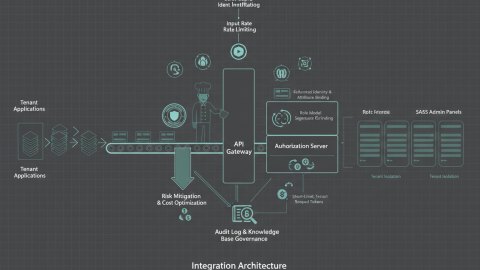
Migrating a fintech platform to a Software-as-a-Service (SaaS) multi-tenant architecture introduces significant complexity, particularly when dealing with payment webhooks. The shared nature of multi-tenancy demands robust security measures to prevent data breaches, maintain compliance (e.g., PCI DSS), and ensure accurate financial reporting. This playbook outlines operational best practices for securing your API integration during such a migration, focusing on payment webhook reconciliation.
Problem: High-cardinality telemetry from numerous tenants can generate noisy alerts, obscuring critical security events related to payment processing. This can lead to missed fraudulent transactions and delayed incident response. The goal is to increase API consumer trust and cut down on integration tickets by improving data trust.

Incident Timeline: A Hypothetical Security Breach
Imagine a scenario where a vulnerability arises during the SaaS migration, specifically impacting the payment webhook processing logic. Here's a potential incident timeline:
- T-0: A new feature deployment introduces a subtle flaw in the webhook processing code, affecting tenants A, B, and C. This flaw allows for the potential manipulation of webhook data.
- T+1 hour: An attacker exploits this flaw in Tenant A to successfully inject a fraudulent transaction, diverting funds to a rogue account.
- T+2 hours: The attacker repeats the process with Tenant B, slightly modifying their technique to bypass initial detection mechanisms.
- T+6 hours: Anomalies in Tenant C's transaction volume trigger a generic alert from the monitoring system. However, the alert is dismissed as 'noisy' due to the high volume of legitimate transactions across all tenants.
- T+24 hours: Tenant A reports a discrepancy in their financial reconciliation, leading to a manual investigation.
Detection Moment: Narrowing Down the Scope
The key to faster incident response resides in having proactive and granular detection mechanisms. Refine alerting strategies to be tenant-aware:
- Tenant-Specific Thresholds: Instead of relying on global thresholds, establish baseline transaction volumes and success rates for each tenant. Deviations from these baselines trigger alerts.
- Webhook Payload Validation: Implement strict validation rules for incoming webhook payloads. Reject any payloads that do not conform to the expected schema or contain suspicious data (e.g., unusually large transaction amounts, invalid currency codes).
- Correlation Analysis: Correlate webhook events with other system logs (e.g., user login attempts, API access patterns) to identify suspicious activity.
- Real-time Monitoring: Use real-time dashboards to visualize key metrics related to payment webhook processing, such as transaction volume, success rate, and latency.
Implementation Checklist: Enhanced Detection
- Implement per-tenant anomaly detection for payment transactions.
- Enforce strict webhook payload validation.
- Correlate webhook events with other security logs.
- Create real-time dashboards for webhook monitoring.
Geo Trace Reconstruction: Identifying the Source of the Attack
Once an incident is detected, quickly identify the source of the attack for rapid mitigation. The following steps are essential:
- IP Address Analysis: Trace the IP addresses from which the malicious webhooks originated. Cross-reference these IP addresses with threat intelligence feeds to identify known malicious actors. Be aware of VPNs and proxies.
- Request Header Inspection: Examine the request headers associated with the malicious webhooks. Unusual or spoofed headers can provide clues about the attacker's techniques.
- Log Aggregation: Aggregate logs from all relevant systems (e.g., API gateways, web servers, application servers) to create a complete picture of the attack.
- Forensic Analysis: If necessary, engage a forensic analysis team to conduct a deeper investigation of the compromised systems.
Implementation Checklist: Geo Traceability
- Enhance logging to include detailed IP address and request header information.
- Integrate with threat intelligence feeds for real-time IP address reputation analysis.
- Implement a centralized log aggregation system.
- Establish a process for engaging a forensic analysis team.
Fix Rollout: Containing the Breach and Restoring Service
After identifying the root cause and source of the attack, rapidly contain the breach, remediate the vulnerability, and restore service to affected tenants.
- Isolate Affected Tenants: Immediately isolate the compromised tenants to prevent further damage. This may involve temporarily disabling their access to the payment processing system.
- Patch the Vulnerability: Deploy a patch to fix the vulnerability in the webhook processing code. Ensure the patch is thoroughly tested in a staging environment before deploying it to production.
- Rollback Malicious Transactions: Identify and rollback any fraudulent transactions that were injected into the system.
- Restore Service: Restore service to the affected tenants after verifying that the vulnerability has been fixed and all fraudulent transactions have been rolled back.
Review /blog/general/security-access-control-ai-agent-automation-for-support-and-sales-1c-bitrix-release-safety-with-rollback-checkpoints-operations-runbook-with-sla-escalation-paths/ on rollback automation.
Implementation Checklist: Breach Containment and Remediation
- Establish a clear process for isolating affected tenants.
- Implement a robust patch management system.
- Develop procedures for rolling back fraudulent transactions.
- Create a communication plan to keep tenants informed throughout the incident response process.
Long-Term Controls: Preventing Future Incidents
Prevent similar incidents from recurring by implementing robust long-term controls:
- Security Code Reviews: Conduct regular security code reviews of all payment processing code.
- Penetration Testing: Perform periodic penetration testing to identify vulnerabilities in the system.
- Web Application Firewall (WAF): Deploy a WAF to protect against common web attacks, such as SQL injection and cross-site scripting.
- Intrusion Detection System (IDS): Implement an IDS to detect and respond to malicious activity.
- Data Loss Prevention (DLP): Implement DLP measures to prevent sensitive data from leaving the organization.
- Regular Vulnerability Scanning: Automated scanning to detect known vulnerabilities.
Consider exploring SLA-Driven Observability for proactive monitoring.
Implementation Checklist: Prevention Controls
- Schedule regular security code reviews.
- Contract for periodic penetration testing.
- Deploy and configure a WAF.
- Implement and configure an IDS.
- Implement DLP measures.
- Automate vulnerability scanning.
Lessons Learned
Thorough post-incident review identifies opportunities to improve security posture.
- Granular Alerting is Critical: Reduce the noise, and allow for efficient detection of critical events.
- Automation is Indispensable: Manual intervention during incident response is far too slow. Automate containment, remediation, and communication.
- Real-time Visibility: Implement real-time dashboards to monitor key metrics.
- Security Mindset: Promote a security-first mindset.
High-Frequency Webhook Integration like described at /blog/general/high-frequency-webhook-driven-integration-architectures-observability-redesign-with-service-level-dashboards-observability-coverage-matrix-by-service-tier/ can give better insights if implemented carefully.
Ready to fortify your B2B payment integration infrastructure? Contact us at /services/ to architect a more secure and reliable system.
Related reads
Relevant offers
If this article matches your task, here are two offers you can use to move from insight to implementation without extra discovery.