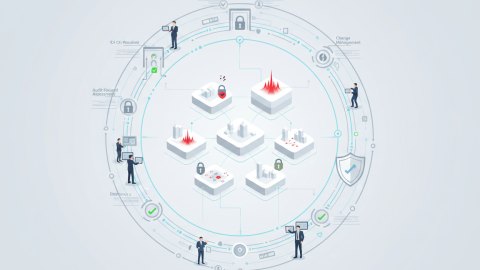
In my experience, many organizations treat security as an afterthought. They focus on features and functionality first, only to bolt on security measures later. This reactive approach often results in a patchwork of solutions, leading to vulnerabilities and increased maintenance costs. I've seen firsthand how this can create a fragile system that's constantly playing catch-up with emerging threats. The alternative – security-by-design – offers a much more proactive and effective strategy.

Migration Playbook: From Reactive to Proactive
The shift involves a fundamental change in mindset. Instead of asking, "How can we secure this feature?" the question becomes, "How can we design this feature to be secure from the start?" This requires integrating security considerations into every stage of the product development lifecycle, from initial planning and design to implementation, testing, and deployment. A structured playbook helps ensure this mindset permeates the entire organization.
Key elements of a migration playbook include defined roles and responsibilities, threat modeling methodologies, secure coding standards, and automated security testing procedures. For many, especially in B2B, the real challenge is in operationalizing the shift; how does a team used to shipping features fast, now build secure ones?
Checklist: Kickstarting Security-By-Design
- Define Security Champions: Empower individuals within each team to champion security best practices.
- Implement Threat Modeling: Use tools like STRIDE or PASTA to identify potential vulnerabilities early on.
- Establish Secure Coding Standards: Adopt industry-recognized standards such as OWASP's Secure Coding Practices.
- Automate Security Testing: Integrate static analysis, dynamic analysis, and vulnerability scanning into the CI/CD pipeline. For similar considerations, explore DevOps and CI/CD for High-Load Products: Myth vs. Reality.
- Provide Security Training: Equip developers, testers, and operations staff with the knowledge and skills they need to build and maintain secure systems.
Legacy Flow: Identifying Vulnerabilities and Attack Vectors
Before implementing security-by-design, a thorough assessment of existing systems is crucial. This involves identifying potential vulnerabilities and attack vectors that could be exploited. A common anti-pattern is to assume that existing security measures are sufficient without proper validation. The goal isn't to just fix security holes, but to understand *why* those holes existed in the first place.
For example, I once worked with a company that had a legacy e-commerce platform. A penetration test revealed several vulnerabilities, including SQL injection flaws and cross-site scripting (XSS) vulnerabilities. These vulnerabilities stemmed from a lack of input validation and output encoding. By identifying these root causes, the company was able to develop a more comprehensive security strategy.
New Geo Engine: Integrating Security at the Core
Imagine a new geo-location engine being developed. Instead of building the entire engine and then attempting to secure it, security is baked in from the ground up. This begins with a detailed threat model that considers how attackers might try to compromise the system. For instance, what happens if a user provides invalid coordinate data? How can API endpoints be protected against unauthorized access? What are data exfiltration risks and how can they be mitigated?
Implementation Steps: Strengthening the Foundation
- Input Validation: Implement robust input validation to prevent malicious data from entering the system. All API calls need to be validated.
- Access Control: Implement strict access control policies to ensure that only authorized users can access sensitive data and functionality.
- Encryption: Encrypt all sensitive data at rest and in transit to protect it from unauthorized access.
- Logging and Monitoring: Implement comprehensive logging and monitoring to detect and respond to security incidents in a timely manner. For more information, consider reading about Observability: balancing metrics and achieving operational excellence.
- Secure API Design: Prioritize security in API design to prevent common vulnerabilities such as injection attacks and authentication bypasses.
Testing Matrix: Validating Security Controls
Rigorous testing is essential to ensure that security controls are effective. This involves a combination of automated and manual testing techniques. Security testing should not be a one-time event but rather an ongoing process that is integrated into the CI/CD pipeline. It is vital to test the engine under a variety of conditions, including high load and simulated attacks to ensure resilience, and to review test results with stakeholders.
Anti-Pattern: Neglecting Edge Cases
One common mistake is to focus on common use cases and neglect edge cases. Attackers often exploit edge cases to bypass security controls. Test cases should include both positive and negative scenarios, as well as boundary conditions and error handling.
Rollout Phases: Minimizing Risk During Deployment
The rollout of a new system or feature can introduce new security risks. A phased rollout can help mitigate these risks by allowing you to monitor the system closely and identify any potential issues before they impact a large number of users. Smaller batches can be easier to rollback should a severe issue surface.
Best Practices for Phased Rollouts
- Start with a small group of users: Begin by rolling out the new system to a small group of internal users or beta testers.
- Monitor closely: Monitor the system closely for any signs of security issues or performance problems.
- Gradually increase the rollout: Gradually increase the rollout to a larger group of users, monitoring the system closely at each stage.
- Have a rollback plan: Have a plan in place to quickly rollback the changes if any issues are discovered.
Post-Launch Review: Continuous Improvement
Security is not a one-time project but a continuous process. After launching a new system or feature, it's important to conduct a post-launch review to identify any areas for improvement. This review should involve the entire team and include a review of security metrics, vulnerability scan results, and incident reports. By continuously improving security practices, organizations can build more resilient digital products.
The most effective security strategies are adaptive; as the threat landscape changes, so too must your defenses. I've advised clients to allocate a portion of their R&D budget to ongoing security research and training. In the process, you should consider strategies for Product Architecture for B2B: A Focus on Continuous Value Delivery.
Conclusion: Invest in Security-By-Design for Long-Term Resilience
Security-by-design is an investment that pays dividends in the long run. By integrating security considerations from the outset, organizations can build more resilient, trustworthy, and cost-effective digital products. It is often far cheaper to design security in at the beginning than to remediate vulnerabilities later. If you're interested in exploring how I can help you implement security-by-design principles in your organization, please contact me.
Related reads
Relevant offers
If this article matches your task, here are two offers you can use to move from insight to implementation without extra discovery.