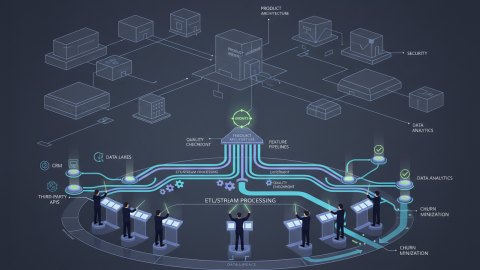
Product architecture, at its core, dictates not just what a product does, but how it evolves and adapts to user needs and market demands. In the B2B space, where customer lifetime value is paramount, a well-defined architecture is the foundation for both user retention and expansion of perceived value. I've found that focusing on these key pillars during the initial architectural design yields significantly higher returns over time.
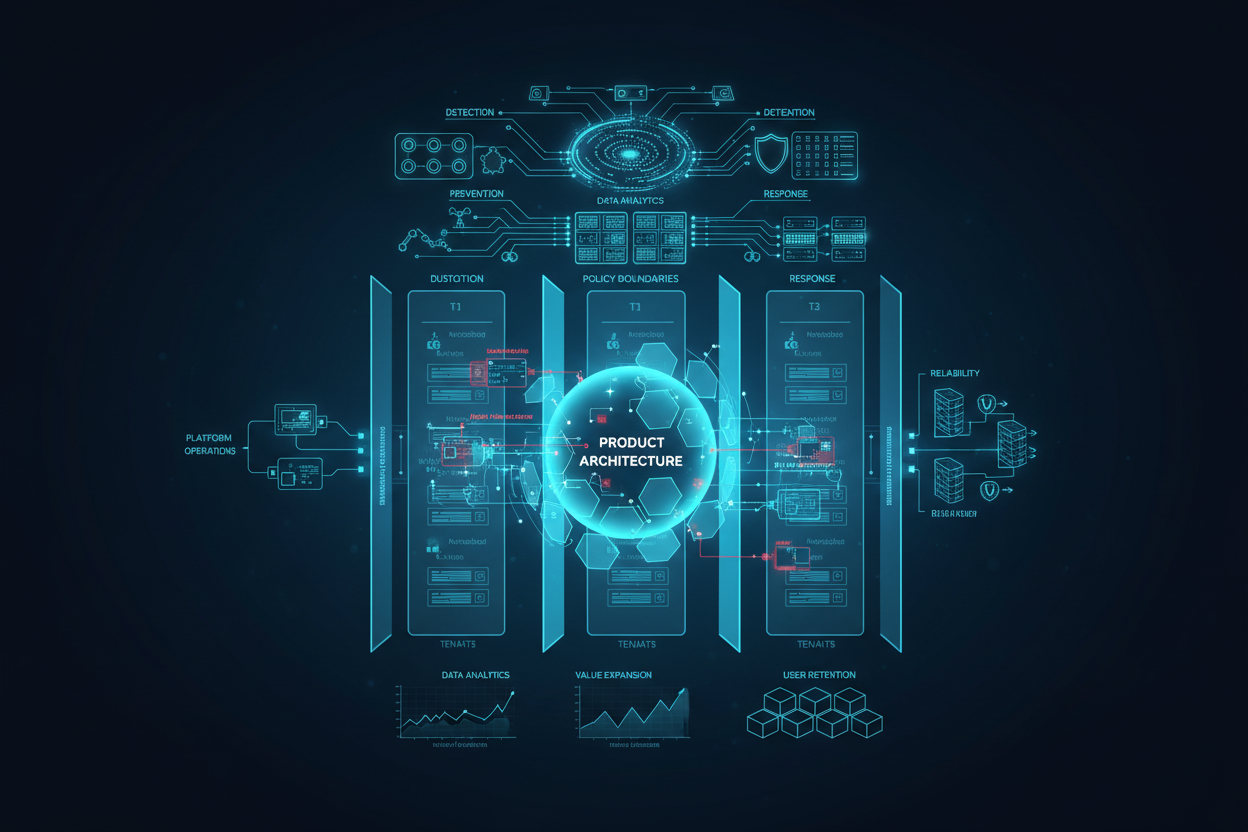
Case Study: Reactive Redesign vs. Proactive Architecture
Let's consider a hypothetical case study involving a SaaS platform offering project management tools for engineering teams. They initially prioritized rapid feature delivery to capture market share, neglecting the underlying architecture's impact on user experience and scalability. This led to a series of avoidable issues.
Baseline State: Feature-Rich but Fragile
The platform boasted an impressive array of features: Kanban boards, Gantt charts, resource allocation, and time tracking. However, these features were built in isolation, resulting in inconsistent user interfaces, performance bottlenecks, and a lack of seamless integration between modules. The architecture resembled a collection of independent applications rather than a cohesive suite. This is a common anti-pattern I've seen repeatedly.
The Fraud Incident: Exposing Architectural Weakness
A sophisticated fraud incident targeted a specific vulnerability in their user authentication module. The incident exploited a lack of robust input validation and insecure session management practices. More concerning was the lateral movement the attackers could achieve within the platform once initial access was gained, exposing the deep architectural flaws that allowed easy data breaches, highlighting inter-module trust issues. Remember, security isn't a feature, it's a systemic property of the architecture. You may want to consider /services/ for an architecture review for your product at this time.
Geo Signal Analysis: Uncovering Hidden Patterns
Following the incident, a thorough analysis using Geo-Intelligence technology (/blog/general/event-driven-geo-intelligence-myths-reality/) revealed that unusual login attempts originated from geographically disparate locations, often coinciding with known botnet activity. This highlighted the absence of geographic access controls and real-time threat intelligence integration within the architecture. Addressing similar vulnerabilities is key in a constantly growing threat landscape.
Remediation Steps: A Targeted Architectural Overhaul
The remediation effort necessitated a multi-pronged approach:
- Centralized Authentication and Authorization: Implementing a single sign-on (SSO) solution, eliminating redundant authentication mechanisms across modules, and enforcing multi-factor authentication (MFA).
- API Gateway: Introducing an API gateway to serve as a single point of entry for all requests, enabling centralized security policies, rate limiting, and request validation. Consider looking at /blog/general/crafting-enterprise-integration-playbooks-strategic-architecture/ for common API gateway architectures.
- Microservices Architecture: Refactoring the monolithic application into smaller, independent microservices, each responsible for a specific business function. This improved isolation, fault tolerance, and scalability.
- Data Encryption: Encrypting sensitive data at rest and in transit, employing robust key management practices, and adhering to industry-standard encryption algorithms.
- Geo-Based Access Control: Implementing geo-fencing and dynamic access policies based on the user's location, leveraging Geo-Intelligence data.
- Automated Threat Detection and Response: Integrating security information and event management (SIEM) systems to monitor network traffic, detect suspicious activity, and automatically trigger incident response workflows. Anomaly detection is critical.
Addressing the weaknesses one by one is an easy strategy, but thinking of it as a new architectural problem made the result simpler than expected.
Insights: Proactive Planning Prevents Reactive Crisis
The incident served as a stark reminder that a reactive, feature-driven approach to product architecture is unsustainable. A proactive, security-conscious architecture, designed with user retention and value expansion in mind, is essential for building resilient and competitive B2B products. It also taught me a lesson in thinking outside the box and questioning existing architecture assumptions.
Key Architectural Considerations for Growth and Retention
Here are some crucial architectural considerations to keep in mind when building or refining a B2B product:
1. Modularity and Extensibility
- Microservices Architecture: Decompose your application into independent, loosely coupled microservices. This allows for independent scaling, deployment, and updates, minimizing the impact of failures on other parts of the system. Each service encapsulates a specific business function, making it easier to maintain and evolve.
- Plugin Architecture: Design your product with a plugin architecture that allows for easy integration of third-party services and custom extensions. This enables users to tailor the product to their specific needs, enhancing its value and stickiness. Think of it as a feature factory.
- API-First Design: Treat your product as a platform and expose its functionality through well-defined APIs. This allows for seamless integration with other systems, fostering interoperability and creating ecosystem opportunities.
2. Performance and Scalability
- Horizontal Scalability: Design your architecture to scale horizontally, meaning you can add more resources (e.g., servers) to handle increasing load. This is more cost-effective and resilient than vertical scaling (increasing the resources of a single server).
- Caching Strategies: Implement robust caching strategies to reduce latency and improve performance. Use both client-side and server-side caching, and consider using a content delivery network (CDN) for static assets. How you cache data is a direct reflection on how you access the data itself.
- Load Balancing: Distribute traffic evenly across multiple servers using load balancers. This prevents any single server from becoming a bottleneck and ensures high availability.
3. Security and Compliance
- Zero-Trust Security Model: Implement a zero-trust security model, which assumes that no user or device is inherently trusted, regardless of its location or network. This requires strict identity verification, continuous monitoring, and granular access controls.
- Data Encryption: Encrypt all sensitive data at rest and in transit, and use strong key management practices. Comply with relevant data privacy regulations, such as GDPR and HIPAA.
- Regular Security Audits: Conduct regular security audits and penetration testing to identify and address vulnerabilities.
4. Observability and Monitoring
- Centralized Logging: Collect logs from all components of your system and centralize them in a searchable repository. This makes it easier to troubleshoot issues and identify security threats. Read about /blog/general/observability-balancing-metrics-operational-excellence/ for more information.
- Real-time Monitoring: Implement real-time monitoring of key metrics, such as CPU usage, memory consumption, and network latency. This allows you to identify performance bottlenecks and proactively address issues before they impact users.
- Alerting Systems: Configure alerts to notify you when critical metrics exceed predefined thresholds. This ensures that you are aware of potential problems and can take action quickly.
5. User Experience and Onboarding
- Intuitive User Interface: Design a user interface that is intuitive and easy to use. Reduce cognitive load by minimizing clutter and providing clear instructions.
- Streamlined Onboarding: Create a streamlined onboarding process that guides new users through the key features of the product. Provide helpful tutorials and documentation.
- Personalized Experience: Personalize the user experience based on their role, industry, and usage patterns. This makes the product more relevant and engaging.
Final Thoughts
Product architecture is a strategic investment that directly impacts user retention and value expansion. By prioritizing modularity, performance, security, observability, and user experience, you can build a B2B product that is not only functional but also adaptable, resilient, and valuable for your customers. A proactive approach, informed by real-world use cases and a commitment to continuous improvement, is the key to long-term success. Let's architect your product for enduring growth. Reach out to /services/ to explore how I can help you build a future-proof architecture.
Related reads
Relevant offers
If this article matches your task, here are two offers you can use to move from insight to implementation without extra discovery.
GeoIP API for websites
I integrate GeoIP API into forms, auth and backend validation to improve traffic quality and lead routing.
Sales SLA dashboard and analytics
I build a sales management dashboard so SLA and processing quality are visible without manual reporting.