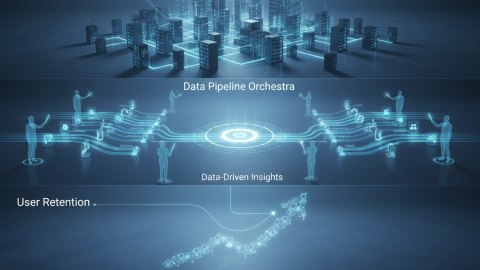
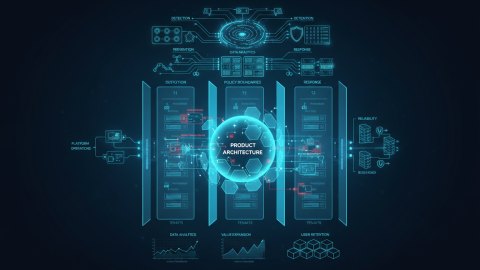
This document outlines a practical approach to product architecture, focusing on how to engineer systems for both rapid growth and sustained user retention. The key is building a scalable and adaptable foundation that can accommodate new features, integrate with existing systems, and respond to evolving user needs without sacrificing performance or stability.
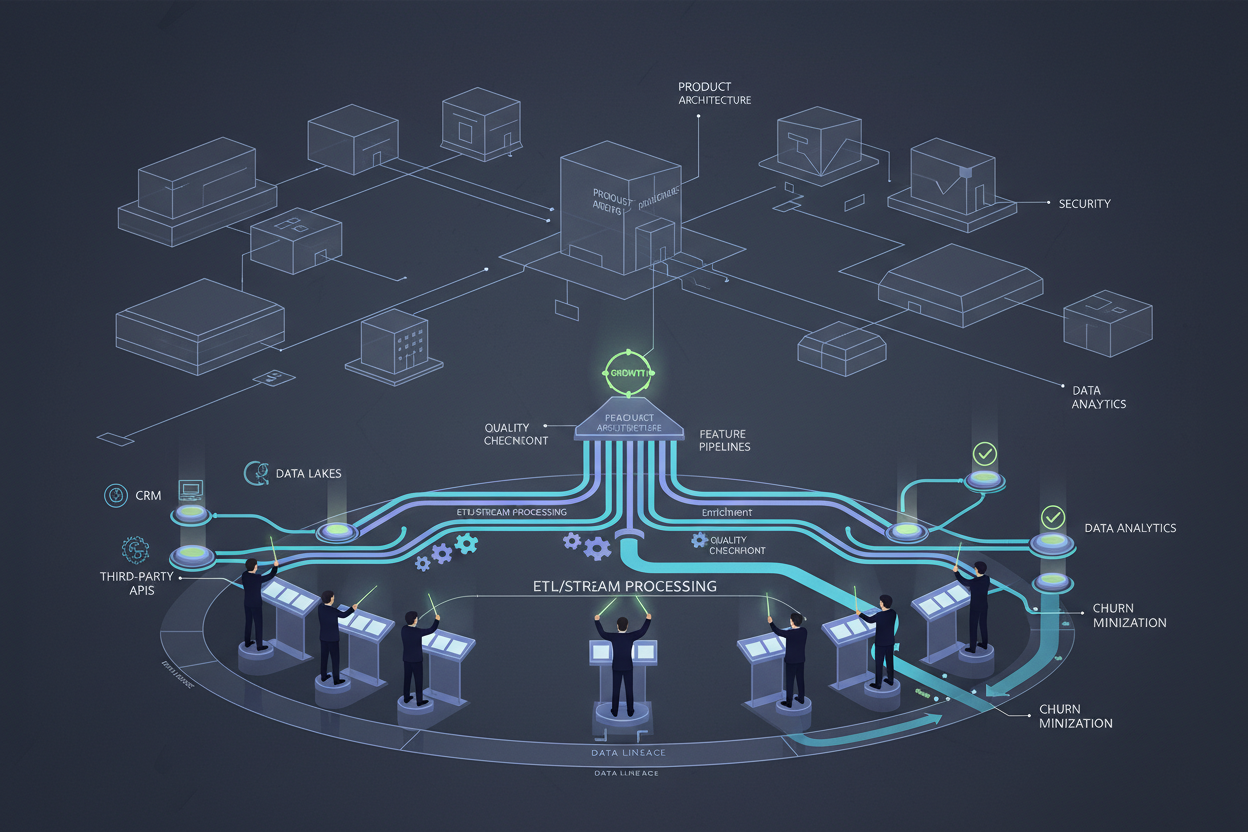
Checklist: Key Architectural Considerations
Before diving into implementation, ensure the following aspects are thoroughly considered:
- Scalability: Can the system handle a 10x increase in users and data volume without significant performance degradation?
- Modularity: Is the architecture composed of independent modules that can be updated and scaled independently?
- Observability: Are key performance indicators (KPIs) easily accessible and monitored?
- Integration: Can the system seamlessly integrate with existing business systems and third-party services? (Remember, no specific service names are included)
- Fault Tolerance: Is the system designed to withstand failures of individual components without impacting overall functionality?
- Security: Are appropriate security measures in place to protect sensitive data and prevent unauthorized access?
- Personalization Is the platform built for customer-specific service delivery and/or pricing that aligns with user roles/groups
Failing to address these points early can lead to costly rework and missed opportunities down the line.
Environment Checks: Assessing Your Current State
Before making any architectural changes, it's crucial to understand the current state of your system. This involves a thorough assessment of the existing infrastructure, codebase, and operational processes.
Infrastructure Audit
Start by auditing your existing infrastructure. What components are in use? What are their performance characteristics? Identify potential bottlenecks and areas for improvement.
Codebase Review
Next, review the codebase. Is it well-structured and maintainable? Are there any areas of technical debt that need to be addressed? Codebase maturity level needs to be evaluated against system goals.
Operational Process Evaluation
Finally, evaluate your operational processes. How are deployments handled? How is monitoring and alerting configured? Are there any manual steps that can be automated?
Example: During a preliminary audit, I identified a monolithic database as a single point of failure. This became the focus of an effort to adopt database sharding. Similarly, inefficient data access patterns were flagged during code review, prompting an investigation on query optimization.
Risk Rule Setup: Identifying Potential Threats
Once there are good insights into the environment, it is essential to establish risk rules and potential failure modes. This proactive approach allows for building defenses and mitigation strategies *before* problems arise.
Defining Failure Scenarios
Start by defining potential failure scenarios. For example:
- Database outage
- Network connectivity loss
- Unexpected traffic spike
- Security breach
- Regression after a deployment
Establishing Risk Rules
For each failure scenario, establish risk rules. These rules define the conditions that trigger an alert or other automated response. For instance a risk rule could trigger an alert upon consistently high memory for container A:
if (container_A.memory_usage > 90%) {
 sendAlert("High memory usage on container A");
}
Implementing Mitigation Strategies
Develop mitigation strategies to address each failure scenario. This might involve implementing redundancy, failover mechanisms, or traffic shaping policies.
This requires a shift from reactive troubleshooting to proactive risk mitigation.
Integration Steps: Connecting Disparate Systems
Seamless integration with existing business systems is crucial for a B2B product. This involves careful planning and execution to ensure data flows smoothly between different components.
API Design Principles
When designing APIs, adhere to the following principles:
- RESTful Design: Use RESTful principles to create consistent and predictable APIs.
- Versioning: Implement API versioning to avoid breaking changes.
- Authentication and Authorization: Secure the APIs with appropriate authentication and authorization mechanisms.
- Rate Limiting: Implement rate limiting to prevent abuse and ensure fair usage.
Data Transformation and Mapping
Data often needs to be transformed and mapped between different systems. Use appropriate data transformation tools and techniques to ensure data consistency and accuracy.
Consider these approaches when building cross-system dataflow:
- Data normalization: Reduce redundancy to achieve integrity.
- Schema validation: Verify data against schema constraints.
- Data enrichment: Enhance available resources with existing data.
Error Handling and Retries
Implement robust error handling and retry mechanisms to handle transient errors and ensure data delivery reliability.
Example: I worked on integrating a payment processing system with an accounting platform. This involved implementing a message queue to handle asynchronous communication and ensure that transactions were reliably processed, even in the event of network outages.
Want to discuss your payment processing or accounting platform needs? Explore available services and architect a system delivering reliability for years to come.
Monitoring Controls: Measuring Performance and Identifying Issues
Comprehensive monitoring is essential for identifying performance bottlenecks and proactively addressing issues. This involves collecting and analyzing key performance indicators (KPIs) from various system components.
Key Performance Indicators (KPIs)
Focus on monitoring the following KPIs:
- Response Time: Measure the time it takes to respond to user requests.
- Error Rate: Track the number of errors occurring in the system.
- CPU Usage: Monitor CPU utilization to identify potential bottlenecks.
- Memory Usage: Track memory consumption to prevent memory leaks and out-of-memory errors.
- Disk I/O: Monitor disk I/O operations to identify storage-related performance issues.
Alerting and Notifications
Configure alerts and notifications to be triggered when KPIs exceed predefined thresholds.
Log Analysis
Analyze logs to identify patterns and anomalies that may indicate underlying issues. Centralized log management can significantly aid in troubleshooting.
Consider automating executive reports generation to increase efficiency, as discussed in Architecting CI/CD Pipelines for High-Load Systems: A Field Guide.
Anti-Patterns to Avoid
Certain architectural patterns can hinder growth and retention. Here are some anti-patterns to avoid:
- The Big Ball of Mud: A system with no clear structure and dependencies.
- Premature Optimization: Optimizing code before identifying actual bottlenecks.
- Not Invented Here Syndrome: Re-implementing functionality that already exists.
- Ignoring Security: Failing to address key security vulnerabilities.
Operationalizing User-Centricity
A growth-oriented product architecture must be inherently user-centric. Consider these checkpoints:
- Feedback integration: Design feedback loops into the product to capture user sentiment and identify areas for improvement.
- Personalization engine: Implement mechanisms to deliver targeted, relevant experiences.
- Behavioral Analytics: Track user behavior to understand how features are used and where users drop off.
For example, a B2B SaaS platform could monitor feature usage to identify power users and proactively offer specialized training or support.
Conclusion: Building a Foundation for Sustainable Growth
Engineering product architecture for growth and retention requires a holistic approach that considers scalability, integration, monitoring, and security. By adopting a proactive approach and addressing potential risks early on, one can build a foundation for sustainable success. I have seen first-hand how attention to the points described can improve revenue stability and long-term customer satisfaction.
Ready to engineer your product for growth and longevity? Contact me to discuss your specific needs and how I can help you build a robust and adaptable B2B system. Consider services to get there faster.
Reflect on the advantages of user retention as described in Product architecture: optimizing for user retention and value expansion.
Related reads
Security Considerations in Detail
Security is not merely a feature; it's a fundamental aspect of a robust product architecture, especially in B2B environments where data confidentiality and integrity are paramount.
Authentication and Authorization
Implement strong authentication and authorization mechanisms to control access to sensitive data and functionality.
- Multi-Factor Authentication (MFA): Enforce MFA to add an extra layer of security beyond passwords.
- Role-Based Access Control (RBAC): Define roles with specific permissions to limit access based on user responsibilities.
- Principle of Least Privilege: Grant users only the minimum level of access required to perform their tasks.
I recall working on a project where we transitioned from simple password-based authentication to MFA using a TOTP (Time-based One-Time Password) algorithm. This significantly reduced the risk of unauthorized access.
Data Encryption
Protect sensitive data at rest and in transit with encryption.
- Encryption at Rest: Encrypt data stored in databases and file systems.
- Encryption in Transit: Use HTTPS for all communication to encrypt data transmitted over the network.
- Key Management: Implement a secure key management system to protect encryption keys.
Vulnerability Management
Establish a comprehensive vulnerability management program to identify and address security vulnerabilities.
- Regular Security Audits: Conduct regular security audits to identify potential weaknesses.
- Penetration Testing: Perform penetration testing to simulate real-world attacks and uncover vulnerabilities.
- Patch Management: Keep all software components up-to-date with the latest security patches.
Security Logging and Monitoring
Implement security logging and monitoring to detect and respond to security incidents.
- Centralized Logging: Collect logs from all system components in a central location.
- Security Information and Event Management (SIEM): Use a SIEM system to analyze logs and detect security threats.
- Incident Response Plan: Develop an incident response plan to handle security incidents effectively.
Data Governance and Compliance
Data governance ensures data quality, integrity, and accessibility, while compliance adheres to regulatory requirements.
Data Lineage
Track the origin, movement, and transformation of data throughout its lifecycle. This is especially critical for compliance with regulations like GDPR.
Data Quality Checks
Implement automated data quality checks to identify and correct errors or inconsistencies in data.
Compliance Automation
Automate compliance tasks to reduce manual effort and ensure consistency. Consider tools to automatically generate compliance reports.
Architecture Review Checklist
Before implementing any significant architectural changes, run through this checklist:
- Scalability: Can the architecture handle anticipated growth in users and data?
- Performance: Does the architecture meet performance requirements?
- Security: Are security measures adequate?
- Maintainability: Is the architecture easy to maintain and evolve?
- Cost: Is the architecture cost-effective?
- Observability: Are monitoring and logging in place?
- Integrability: Does it integrate well with existing systems?
- Compliance: Does it comply with relevant regulations?
- User-centricity: Does it prioritize user needs and feedback?
Practical Application: Refactoring a Monolith
Imagine that I'm working with a legacy monolithic application experiencing performance bottlenecks and hindering innovation. Refactoring to a microservices architecture could be a solution, but it requires careful planning and execution.
- Identify Bounded Contexts: Decompose the monolith into smaller, independent services based on business capabilities (e.g., user management, product catalog, order processing).
- Data Decoupling: Each microservice should have its own database. This prevents tight coupling and allows for independent scaling and technology choices.
- API Gateway: Implement an API gateway to handle external requests and route them to the appropriate microservices.
- Gradual Migration: Migrate functionality incrementally, starting with non-critical components. Use techniques like the Strangler Fig pattern to gradually replace the monolith with microservices.
- Monitoring and Observability: Implement comprehensive monitoring and logging to track the performance and health of each microservice.
This refactoring can be complex, but it results in a more scalable, maintainable, and resilient system. I successfully led a similar refactoring effort, and the results were a 40% improvement in response time and a significant reduction in deployment cycle time.
Relevant offers
If this article matches your task, here are two offers you can use to move from insight to implementation without extra discovery.
AI knowledge assistant
I connect an AI assistant to the team knowledge base so staff can find precise answers and procedures faster.
SaaS admin panel launch
I build an admin panel for internal and customer SaaS operations so growth does not depend on manual admin work.