In the B2B landscape, trust is paramount. Each digital interaction must reinforce reliability and security. This means injecting Security-By-Design (SbD) principles from the very beginning, rather than bolting them on as an afterthought. This document offers an executive overview of implementing SbD, designed for architects and decision-makers.
Security-By-Design isn’t merely a checklist; it's a shift in mindset. Instead of treating security as an add-on module, it becomes a foundational element that shapes every aspect of product development. Security must be baked in, not bolted on.

MVP Flow: Embedding Security in the Minimum Viable Product
When designing your MVP (Minimum Viable Product), the temptation is to prioritize speed to market above all else. However, neglecting security even at this early stage can create vulnerabilities that are difficult and costly to fix later. A secure MVP demonstrates a commitment to safeguarding user data and building a foundation of trust from day one.
Security Considerations for the MVP:
- Authentication and Authorization: Implement robust authentication mechanisms from the start. Multi-factor authentication (MFA), while perhaps not the default for internal prototypes, should be considered for any user data touching external interfaces.
- Data Encryption: Encrypt sensitive data both at rest and in transit. Don't store plaintext passwords!
- Input Validation: Rigorously validate all user inputs to prevent injection attacks.
- Secure Configuration: Ensure default configurations are secure. Minimize attack surface by disabling unnecessary features and services.
- Vulnerability Scanning: Incorporate automated vulnerability scanning into your CI/CD pipeline, even for the MVP. This doesn't have to be exhaustive, but basic scans can catch common issues early.
Mini-Case: Security in an Early-Stage B2B SaaS Platform
Consider a B2B SaaS platform aimed at streamlining supply chain logistics. The MVP was designed primarily to validate core functionality – order tracking and reporting. Initially, the focus was speed. I made the decision to integrate a basic, but secure, authentication system with role-based access control, and added input sanitization to prevent trivial injection attacks. This effort represented a small upfront investment that averted significant rework. Had input validation not been present from the outset, demonstrating compliance with future regulations in the supply chain industry would have been impossible.
Scaling Strategy: Security Evolves with Your Product
As your product scales, your security measures must scale with it. What worked for the MVP might not be sufficient to protect a larger, more complex system. This phase requires a more comprehensive approach to security, encompassing both technical and organizational aspects.
Scaling Security: Key Steps
- Threat Modeling: Conduct regular threat modeling exercises to identify potential vulnerabilities. Threat models should ideally be automated and tied to CI/CD pipelines, so new builds are automatically scanned and checked.
- Security Audits: Engage external security experts to conduct penetration testing and security audits.
- Security Awareness Training: Train your development team and other employees on secure coding practices and security best practices.
- Incident Response Plan: Develop a detailed incident response plan to handle security incidents effectively. Document processes and test regularly. The plan should be easily accessible, and have documented escalation paths.
- Implement a Security Information and Event Management (SIEM) System: Collecting logs is not enough, you must do active threat hunting in log data, and have automated incident creation workflows.
Anti-Patterns:
- Assuming Security is "Done": Security is an ongoing iterative process, not a one-time fix.
- Ignoring Alerts: A SIEM system generating constant alerts is useless if alerts are not triaged, prioritized, and remediated. Automate as much as possible, but ensure humans are doing the final assessment.
- Lack of Segmentation: A flat network topology allows attackers to move laterally easily. Implement network segmentation to limit the impact of breaches.
Remember the importance of regular reviews, such as described in Security-By-Design: Embedding Trust in B2B Digital Products.
Resilience Design: Building Security into Your Architecture
Resilience is not just about preventing failures; it's about minimizing the impact of failures when they do occur. In the context of security, this means designing your architecture to be resilient to attacks and breaches.
Resilience Strategies:
- Defense in Depth: Implement multiple layers of security controls. If one layer fails, others are in place to protect the system.
- Least Privilege: Grant users and applications only the minimum level of access required to perform their tasks.
- Secure Defaults: Configure systems with secure defaults. Avoid relying on users to configure security settings correctly.
- Immutable Infrastructure: Use immutable infrastructure to prevent configuration drift and ensure consistency across environments. This minimizes the attack surface.
- Regular Backups: Maintain regular backups of critical data and systems. Test your backup and recovery processes regularly.
Practical Implementation Details:
- Container Security: Secure your container images and runtime environment. Use image scanning tools to identify known vulnerabilities.
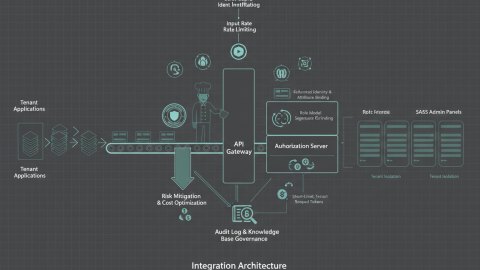
- API Security: Secure your APIs with authentication, authorization, and rate limiting. Consider using a Web Application Firewall (WAF) to protect against common web attacks.
- Database Security: Encrypt sensitive data in your database. Use database firewalls to prevent unauthorized access.
- Secrets Management: Store sensitive information, such as API keys and passwords, securely using a secrets management solution.
Focus on creating robust and fault-tolerant systems, as I discussed in Reliability Engineering for High-Availability Microservices: A Decision Framework.
SLA Considerations: Security and Service Level Agreements
Your Service Level Agreements (SLAs) should explicitly address security. Customers need assurance that you are committed to protecting their data and maintaining the security of your systems.
SLA Security Components:
- Data Security: Clearly define your data security policies and procedures. State how you protect customer data from unauthorized access, disclosure, or loss.
- Availability: Specify the availability of your systems and the measures you take to ensure uptime. Downtime impacts not just business operations, but the ability to patch vulnerabilities.
- Incident Response: Outline your incident response plan, including the steps you take to respond to security incidents and notify customers.
- Compliance: Disclose any relevant compliance certifications and attestations (e.g., ISO 27001, SOC 2).
- Audit Rights: Consider granting customers the right to audit your security controls.
Negotiate SLAs that reflect your commitment to security and provide appropriate remedies for security breaches. Clear and transparent SLAs build trust and manage customer expectations. SLAs benefit from operational observability practices, as detailed in Achieving operational excellence through observability: a Threat-Centric journey, leading to better-informed updates and fewer surprises when incidents occur.
Wrap-Up: Security as a Business Enabler
Security-By-Design is an investment, not an expense. By embedding security into your product development lifecycle, you can minimize vulnerabilities, build trust with your customers, and gain a competitive advantage. In the B2B world, security is not just a technical requirement; it's a business imperative.
Start with a solid foundation during the MVP phase, scale your security measures as your product grows, design your architecture for resilience, and include security considerations in your SLAs. A proactive approach to security can prevent costly breaches and protect your brand reputation. I hope this executive brief has provided pragmatic insights.
Ready to build security into your next digital product? Explore our services to see how we can help you architect a secure and resilient B2B system.
Related reads
Relevant offers
If this article matches your task, here are two offers you can use to move from insight to implementation without extra discovery.
GeoIP API for websites
I integrate GeoIP API into forms, auth and backend validation to improve traffic quality and lead routing.
SEO content pipeline for commercial intent
I configure content-factory workflows with quality gates, deduplication and service-driven CTA.