In the B2B world, reliability isn't just a nice-to-have—it's a core business requirement. High-load environments demand CI/CD strategies that go beyond simple automation. I’m sharing insights into building resilient systems capable of handling peak traffic and maintaining consistent performance.
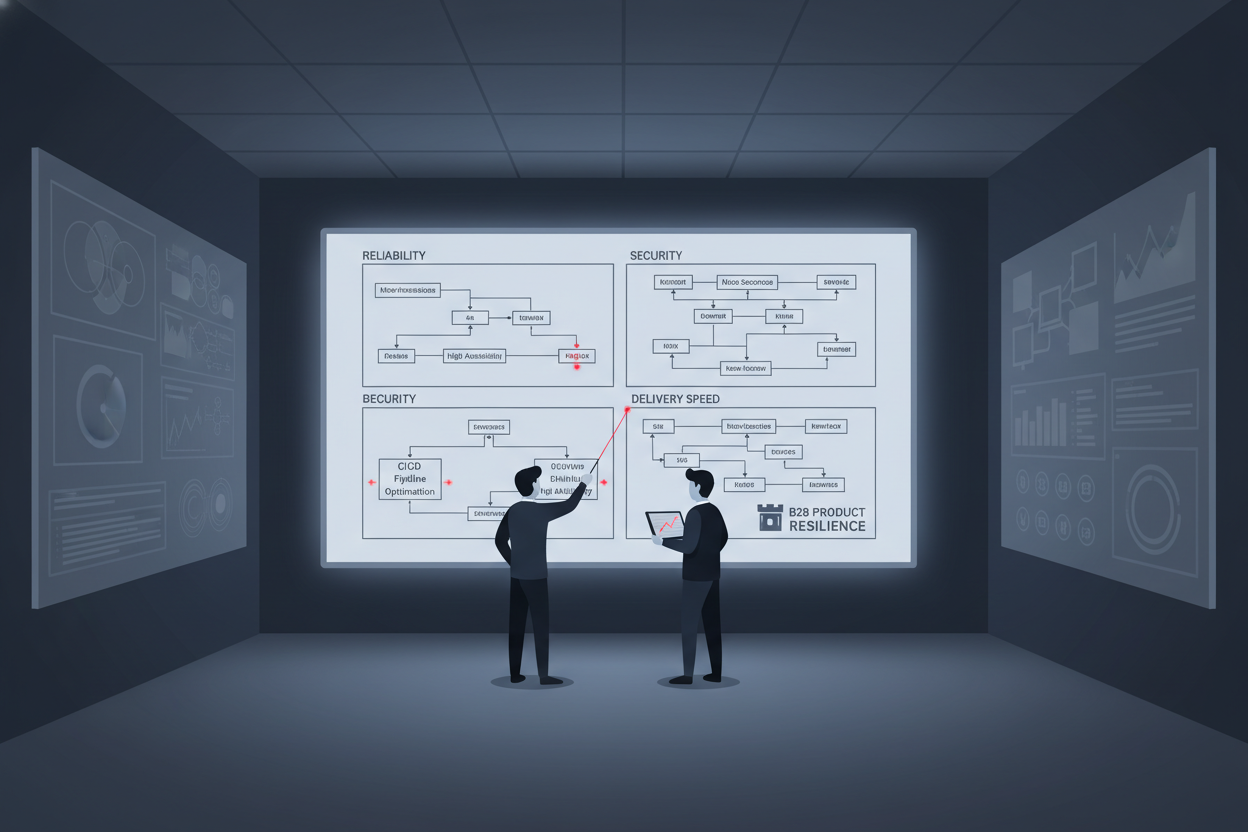
The Blue Team's Guide to High-Load DevOps
Think of your DevOps team as a 'blue team' constantly defending against potential disruptions. This means proactive monitoring and strategic planning. Key elements include:
- Infrastructure as Code (IaC): Define and manage your infrastructure through code, enabling rapid scaling and consistent deployments.
- Automated Testing: Implement comprehensive test suites including unit, integration, and end-to-end tests. Crucially, include performance and load testing within your pipelines.
- Continuous Monitoring: Real-time visibility into system health and performance is critical.
Without these foundations, you're essentially flying blind. For further information on building a solid foundation, check out Architecting CI/CD Pipelines for High-Load Systems: A Field Guide.
Checklist: Blue Team Readiness
- IaC implementation complete and validated.
- Automated test suites in place (unit, integration, performance).
- End-to-end monitoring dashboards configured and actively reviewed.
Effective Alert Triage in High-Load Environments
Alerts are inevitable, especially under high load. Triage is the process of prioritizing and categorizing incoming alerts to quickly respond to the most critical issues. The challenge is to avoid alert fatigue, where the sheer volume of alerts overwhelms the team.
- Define Clear Severity Levels: Categorize alerts based on impact. For example, a complete system outage is a critical alert, while a minor performance degradation might be a warning.
- Automate Alert Routing: Direct alerts to the appropriate team members based on the affected service or component.
- Implement Runbooks: Provide clear, step-by-step instructions for resolving common issues.
Anti-Pattern: Alert Overload
Avoid generating excessive alerts that are unactionable or redundant. Fine-tune thresholds and implement aggregation to reduce noise.
Streamlining the Investigation Workflow
When an alert triggers, a rapid and efficient investigation is crucial. Here's a structured approach:
- Incident Commander: Appoint a designated individual to lead the investigation.
- Centralized Communication: Use a dedicated channel (e.g., a Slack channel) to coordinate communication and share updates.
- Root Cause Analysis: After resolving the immediate issue, conduct a thorough root cause analysis to prevent recurrence.
Example: Rapid Incident Response
Imagine a scenario where a B2B SaaS platform experiences a sudden spike in API request latency. The monitoring system triggers a critical alert. The incident commander immediately assembles the relevant engineers, who use real-time dashboards to identify a specific database query as the bottleneck. A temporary fix is implemented to mitigate the issue, followed by code optimization to permanently resolve the root cause.
Leveraging Geo Pivots for Targeted Analysis
Understanding the geographical distribution of traffic and users can be incredibly valuable in diagnosing and resolving issues. 'Geo pivots' involve filtering and analyzing data based on geographic location.
- Identify Regional Outages: Quickly determine if an issue is isolated to a specific geographic region.
- Optimize Content Delivery: Improve performance by routing users to the nearest available server.
- Detect Suspicious Activity: Identify potential security threats based on unusual traffic patterns from specific locations.
This strategy helps isolate problems specific to a location which assists in a proper alert triage and investigation workflow.
Proactive Prevention Through Automation Scripts
Automation is your best friend when it comes to preventing future incidents. Here are some key areas to focus on:
- Automated Rollbacks: Implement mechanisms to automatically revert to a previous stable version in case of a failed deployment.
- Self-Healing Infrastructure: Configure systems to automatically detect and recover from failures.
- Automated Capacity Scaling: Dynamically adjust resources based on demand.
To maximize impact and minimize churn, check Product architecture: engineering growth and minimizing churn.
Strategic Prevention: Building Resilient Products
The most effective way to handle high load is to design systems that are inherently resilient. Key considerations include:
- Microservices Architecture: Decompose applications into smaller, independent services that can be scaled and deployed independently.
- Asynchronous Communication: Use message queues to decouple services and improve responsiveness.
- Database Sharding: Distribute data across multiple databases to improve scalability and performance.
Steps to Building a Resilient Architecture
- Identify Critical Components: Determine the most important parts of your system and prioritize their resilience.
- Implement Redundancy: Ensure that there are multiple instances of each critical component.
- Conduct Regular Failover Testing: Simulate failures to verify that systems can recover gracefully.
Conclusion: Towards a Culture of Resilience
Mastering CI/CD for high-load B2B products requires a holistic approach that encompasses proactive monitoring, efficient incident response, and strategic prevention. By adopting the strategies, along with the concepts covered in Product Architecture for B2B: A Focus on Continuous Value Delivery, I've outlined here, you can build systems that are capable of handling peak traffic, with minimal downtime and while preserving consistent business value.
Are you ready to elevate your CI/CD strategy and build truly resilient B2B products? Let's discuss how our services can help you achieve your goals.
Related reads
Relevant offers
If this article matches your task, here are two offers you can use to move from insight to implementation without extra discovery.
Conversion architecture audit
I audit the website as a decision funnel: offers, CTA, structure, proof and route to contact.
Personal account module on 1C-Bitrix
I build a Bitrix personal account around your business logic: requests, documents, statuses, notifications and access control.