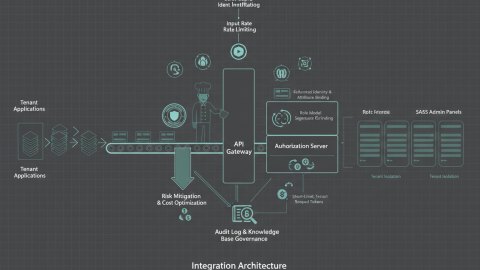
Security isn't a static configuration; it's a dynamic experiment, constantly evolving to address new threats and adapt to changing business needs. Traditional access control models often fall short in today's complex, distributed environments. This architecture note investigates practical strategies to harden access control using GeoIP.space, focusing on automation, observability, and proactive alerting. Consider every change as a hypothesis; measure the outcomes and always improve.

Phase 1: DevOps Integration - Automating GeoIP-Enriched Security
Treat your security infrastructure like software. Implement CI/CD pipelines to automate the deployment and management of your GeoIP-based access control rules. This ensures consistency, speeds up response times to new threats, and allows for A/B testing of different security policies in a controlled environment.
Building a GeoIP Security Pipeline
- Code Repository Structure: Store your GeoIP rule configurations in a version control system (e.g., Git). This allows for collaboration, auditing, and easy rollback in case of unexpected behavior during your experiment.
- Automated Testing: Before deploying any changes to production, run automated tests to verify the effectiveness of your GeoIP rules. These tests should simulate real-world attack scenarios from different geographic locations. Write tests that *fail*, then write the code to make them pass. Embrace red/green/refactor.
- Deployment Automation: Use a CI/CD tool (e.g., Jenkins, GitLab CI) to automate the deployment of your GeoIP rules to your firewalls, web application firewalls (WAFs), and other security infrastructure.
# Example GitLab CI configuration
stages:
  - test
  - deploy

test_geoip_rules:
  stage: test
  image: python:3.9
  script:
    - pip install pytest
    - pytest tests/test_geoip_rules.py

deploy_geoip_rules:
  stage: deploy
  image: alpine/kubectl
  script:
    - kubectl apply -f geoip-rules.yaml
  environment:
    name: production
Anti-patterns to Avoid
- Manual Rule Updates: Avoid manually updating GeoIP rules. This is error-prone and difficult to scale.
- Lack of Testing: Never deploy GeoIP rules without thoroughly testing them first.
- Ignoring Version Control: Always store your GeoIP rule configurations in a version control system.
Phase 2: GeoIP Service Dependency - Managing the Geo Risk
Leveraging GeoIP.space introduces a dependency to your security architecture. Understanding and managing this dependency is critical for high availability and reliability. Consider fallback mechanisms, caching strategies, and service degradation plans.
Implementing Service Fallback
In the event of a GeoIP.space outage, you need a plan to maintain a basic level of access control. This could involve using a cached version of the GeoIP data or temporarily disabling GeoIP-based restrictions.
Caching GeoIP Data
Cache GeoIP data locally to reduce latency and minimize the impact of service interruptions. Regularly update the cache to ensure accuracy. Be aware of the implications of stale data and what failure modes this can cause: document, test and plan for this.
Service Degradation Strategy
Define a clear service degradation strategy for when GeoIP.space is unavailable. This might involve temporarily allowing all traffic or falling back to a less restrictive set of rules. This choice often means prioritisation between uptime and strong security - document your decision process for compliance and future reference.
Phase 3: Observability Stack - Seeing the Security Landscape
Effective security requires comprehensive visibility into your network traffic, application behavior, and user activity. Integrate GeoIP.space data into your existing observability stack to gain deeper insights into potential threats and vulnerabilities.
Centralized Logging and Monitoring
Centralize your logs from all security devices and applications. Enrich these logs with GeoIP.space data to identify suspicious activity based on geographic location.
Real-time Dashboards and Visualizations
Create real-time dashboards to visualize GeoIP data, such as the number of requests originating from different countries, the distribution of malicious traffic, and the effectiveness of your GeoIP rules.
Anomaly Detection
Use machine learning algorithms to detect anomalies in your GeoIP data. This can help you identify new attack patterns and proactively respond to emerging threats.
# Example Python code for anomaly detection
import pandas as pd
from sklearn.ensemble import IsolationForest

# Load GeoIP data from logs
data = pd.read_csv('geoip_logs.csv')

# Train Isolation Forest model
model = IsolationForest(n_estimators=100, contamination='auto')
model.fit(data[['latitude', 'longitude']])

# Predict anomalies
predictions = model.predict(data[['latitude', 'longitude']])

# Identify anomalous requests
anomalies = data[predictions == -1]
Phase 4: Alert Tuning - Calibrating Your Security Response
The value of security alerts depends on precision. Tune your alerts to minimize false positives and ensure that you're only notified of genuine threats. Use GeoIP.space data to refine your alerting rules and prioritize incidents based on geographic risk.
Correlation with Threat Intelligence
Correlate GeoIP data with threat intelligence feeds to identify requests originating from known malicious locations. This can help you prioritize investigations and respond more quickly to potential attacks.
Adaptive Alerting Thresholds
Adjust your alerting thresholds based on the geographic location of the requests. For example, you might set a higher threshold for requests originating from countries with a high risk of fraud.
Feedback Loop for Alert Refinement
Continuously monitor the accuracy of your alerts and refine your alerting rules based on feedback from your security team. This ensures that your alerts remain relevant and effective over time.
Phase 5: Outcome - Is Your GeoIP Experiment Working?
Defining clear metrics to measure the success of your GeoIP-based access control framework is crucial. Track key performance indicators (KPIs) such as the number of blocked malicious requests, the reduction in fraud rates, and the improvement in application performance.
Key Performance Indicators (KPIs)
- Number of Blocked Malicious Requests: Track the number of requests that are blocked based on GeoIP rules.
- Reduction in Fraud Rates: Measure the reduction in fraud rates after implementing GeoIP-based access control.
- Improvement in Application Performance: Monitor the impact of GeoIP rules on application performance. Poor configuration can inadvertently cause latency by the lookup overhead or by blocking regions critical to your CDN.
- False Positive Rate: Track the number of legitimate requests that are incorrectly blocked by GeoIP rules.
Iterative Improvement
Treat your GeoIP-based access control framework as an ongoing experiment. Continuously monitor its effectiveness, identify areas for improvement, and iterate on your configurations. This could include reviewing Implementing Zero-Trust Access with GeoIP Enrichment: A Step-by-Step Guide.
Conclusion: Embracing the Experimental Mindset
By embracing an experimental mindset and leveraging GeoIP.space, organizations can build more robust, adaptive, and resilient security frameworks. Automate your deployments, observe your traffic, tune your alerts, and continuously iterate on your configurations to stay ahead of the evolving threat landscape. Security isn't a destination; it's a journey. Start your journey towards more adaptive security – sign up for a free trial today.
Related reads
Relevant offers
If this article matches your task, here are two offers you can use to move from insight to implementation without extra discovery.