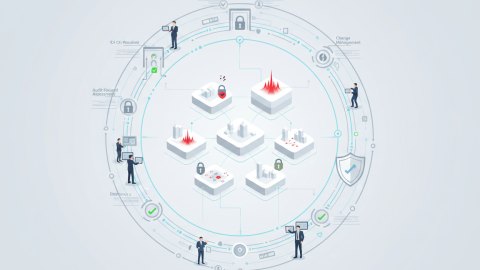
In today's digital landscape, establishing and maintaining trust is paramount. Users, partners, and stakeholders need assurance that their interactions are secure and legitimate. A robust digital trust framework is built upon verifiable signals, and IP-intelligence provides a critical layer of validation by adding context to every interaction. This playbook outlines the operational steps required to integrate IP-intelligence effectively, transforming raw data into actionable insights that bolster your security posture and enhance fraud prevention.

Step-by-Step Lab: Integrating IP-Intelligence
This lab guides you through integrating IP-intelligence data into your existing system. We'll focus on enriching your existing data streams with location, threat, and proxy information.
1. Data Source Identification
Identify the data sources providing the IP addresses you need to analyze. Examples include:
- Web server logs
- Application logs
- Firewall logs
- Authentication logs
- Transaction records
Ensure these logs contain the originating IP address for each event. Without it, you cannot apply the IP-intelligence data effectively.
2. Enrichment Pipeline Development
Create a pipeline that takes these IP addresses and enriches them with data from your IP-intelligence provider. This may involve batch processing or real-time lookups. Consider these factors:
- Latency: Real-time lookups can introduce latency. Optimize your queries and caching strategies.
- Throughput: Ensure your pipeline can handle the volume of requests. Consider scaling options if necessary.
- Error Handling: Implement robust error handling to prevent data loss or corruption.
3. Data Storage and Indexing
Store the enriched data in a format suitable for analysis. Consider these options:
- Data Warehouse: For historical analysis and reporting.
- Real-Time Database: For immediate decision-making (e.g., blocking fraudulent transactions).
- Security Information and Event Management (SIEM): For centralized security monitoring.
Index the data appropriately for efficient querying.
4. Rule Definition and Implementation
Define rules based on the enriched IP-intelligence data. Examples include:
- Blocking connections from known malicious IPs.
- Flagging transactions originating from high-risk countries.
- Requiring multi-factor authentication for users connecting through proxies.
- Throttling requests from IPs exhibiting suspicious activity.
Implement these rules in your security controls and application logic.
Environment Setup: Preparing Your Infrastructure
A well-prepared environment is crucial for a successful integration. This section outlines the necessary steps.
1. Network Configuration
Ensure your network allows outbound connections to your IP-intelligence provider's API endpoints. Configure firewalls and proxies accordingly. Consider using a dedicated network segment for IP-intelligence processing to isolate it from other sensitive systems.
2. API Key Management
Securely store and manage your API keys. Avoid hardcoding them in your application code. Use environment variables or a dedicated secrets management system. Regularly rotate your API keys to minimize the impact of potential breaches.
3. Infrastructure Scaling
Anticipate potential increases in traffic and scale your infrastructure accordingly. Use cloud-based services to dynamically adjust resources based on demand. Monitor resource utilization and performance metrics to identify bottlenecks and optimize your infrastructure.
4. Data Privacy Compliance
Be aware of data privacy regulations (e.g., GDPR, CCPA) when handling IP address data. Anonymize or pseudonymize data where possible. Obtain consent where required. Implement appropriate data retention policies. Document your data processing activities and ensure transparency.
Sample Payloads: Crafting and Processing Requests
Understanding the structure of requests and responses is vital for effective integration.
1. Request Construction
Construct your API requests according to your IP-intelligence provider's documentation. Include the IP address you want to analyze, along with any relevant parameters. Be sure to use the correct API endpoint and authentication method.
2. Response Parsing
Parse the API response and extract the relevant data. Common fields include:
- Location: Country, region, city, latitude, longitude.
- Threat Information: Is the IP address associated with known malware, botnets, or spam?
- Proxy Information: Is the IP address a proxy, VPN, or Tor exit node?
- ASN (Autonomous System Number): The organization responsible for the IP address block.
- Connection Type: Residential, business, or mobile
Handle missing or invalid data gracefully. Implement error handling to prevent your application from crashing or malfunctioning.
3. Example Payload (Illustrative)
Assuming a made-up JSON-based API response:
{
  "ip": "203.0.113.45",
  "country": "US",
  "is_proxy": false,
  "threat_level": "low",
  "longitude": -77.0369,
  "latitude": 38.8951
}
Your code should handle accessing these fields safely, checking for null values or unexpected datatypes. Good coding practices are essential. See how /blog/cross-platform-system-design-ip-intelligence-integration can help you in choosing architecture for your pipeline.
Risk Evaluation: Scoring and Prioritization
Not all risks are created equal. Prioritize based on a scoring system that reflects the potential impact.
1. Scoring Model
Develop a scoring model that assigns weights to different IP-intelligence attributes. For example:
- Known malicious IP: High score.
- IP address in a high-risk country: Medium score.
- IP address using a proxy: Low score (unless combined with other indicators).
Adjust the weights based on your specific risk tolerance and business requirements. Review these periodically.
2. Threshold Definition
Define thresholds for triggering different actions. For example:
- Score above 80: Block the connection.
- Score between 50 and 80: Require multi-factor authentication.
- Score below 50: Monitor the activity.
3. Continuous Monitoring
Continuously monitor your scoring model and thresholds. Adjust them as needed based on real-world observations and evolving threat landscapes. Track your decisions and outcomes to improve model accuracy and reduce false positives. Read /blog/experimental-observability-geoip-app-monitoring for inspiration .
4. Sample Risk Evaluation Implementation (Illustrative)
function evaluateRisk(ipData) {
 let score = 0;
 if (ipData.threat_level === "high") {
 score += 80;
 }
 if (ipData.country === "RU" || ipData.country === "CN") {
 score += 40;
 }
 if (ipData.is_proxy) {
 score += 20;
 }
 return score;
}

let riskScore = evaluateRisk(ipDataFromAPI);

if (riskScore > 80) {
 blockConnection();
} else if (riskScore > 50) {
 requireMFA();
} else {
 monitorActivity();
}
This is a simplified example. A real-world implementation would involve more sophisticated scoring and decision-making logic.
Logging Strategy: Auditing and Analysis
Comprehensive logging is essential for auditing, incident response, and continuous improvement. A well-defined logging strategy will strengthen digital trust.
1. Data to Log
Log all relevant data, including:
- IP address.
- Enriched IP-intelligence data.
- Risk score.
- Action taken (e.g., blocked, allowed, challenged).
- Timestamp.
- User ID (if applicable).
- Transaction ID (if applicable).
2. Log Storage and Retention
Store logs securely and retain them for an appropriate period based on regulatory requirements and business needs. Consider using a centralized logging system to facilitate analysis and correlation. Implement access controls to prevent unauthorized access to log data.
3. Analysis and Reporting
Regularly analyze log data to identify trends, anomalies, and potential security incidents. Generate reports to track key metrics and demonstrate compliance. Use log data to improve your risk scoring model and security controls.
4. Alerting
Configure alerts to notify you of suspicious activity. For example:
- Sudden increase in blocked connections.
- High-risk IP addresses accessing critical resources.
- Unauthorized access attempts.
Respond promptly to alerts to mitigate potential threats.
Final Notes: Continuous Improvement and Adaptation
Building a digital trust framework is an ongoing process. Continuously monitor, evaluate, and improve your implementation to stay ahead of evolving threats.
1. Stay Informed
Stay up-to-date on the latest IP-intelligence data, security threats, and fraud trends. Subscribe to industry newsletters, attend conferences, and participate in online forums.
2. Iterate and Refine
Regularly review your risk scoring model, thresholds, and security controls. Adapt them as needed based on real-world observations and evolving threats. Don't be afraid to experiment and try new approaches. You could find useful architectural patterns in: /blog/enterprise-feature-store-geo-intelligence-architecture.
3. Collaborate
Collaborate with other teams within your organization (e.g., security, fraud prevention, development) to share knowledge and improve your overall security posture.
4. Real-World Trade-off: Accuracy vs. False Positives
Strive for high accuracy (correctly identifying malicious activity) while minimizing false positives (incorrectly flagging legitimate activity). Increase/decrease sensitivity to reflect business needs. Balancing these two is a never-ending task. An overly aggressive configuration can block legitimate users, impacting conversions and user experience. A too lenient configuration can let fraudulent activities pass through, and threaten trust.
5. Future-Proofing: Embracing Change
The digital threat landscape is constantly evolving. Update your framework as new attack vectors emerge. This includes regularly reviewing and updating your IP-intelligence data sources, security policies, and incident response procedures. Use automation where applicable and make sure that your systems use flexible and dynamic ways to process new types of data.
Ready to fortify your digital trust framework? Sign up for a free trial and start leveraging the power of IP-intelligence today.
Related reads
Relevant offers
If this article matches your task, here are two offers you can use to move from insight to implementation without extra discovery.