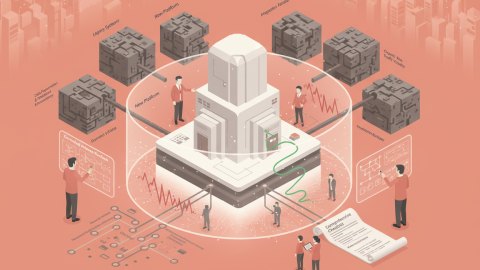
Content-driven commercial websites often evolve organically over years, accumulating legacy code, outdated dependencies, and fragmented architectures. These factors contribute to slow website audits and unpredictable performance regressions, which in turn impact user experience and business KPIs. The first step in any recovery plan is a comprehensive audit workflow that leverages AI-assisted tools to augment human expertise.
In a recent case involving a mid-sized B2B content portal, the engineering team faced frequent regressions after each release, with audit tools flagging slow page loads and SEO penalties. The legacy monolith, intertwined with multiple third-party scripts and unoptimized database queries, created a tangled web of performance issues.
The audit workflow was designed to systematically identify bottlenecks by combining static code analysis, runtime profiling, and AI-driven anomaly detection. AI models trained on historical performance data flagged unusual latency spikes and resource-heavy components. This hybrid approach enabled the team to pinpoint not only obvious hotspots but also subtle regressions that manual audits often missed.
Key decisions during the audit included:
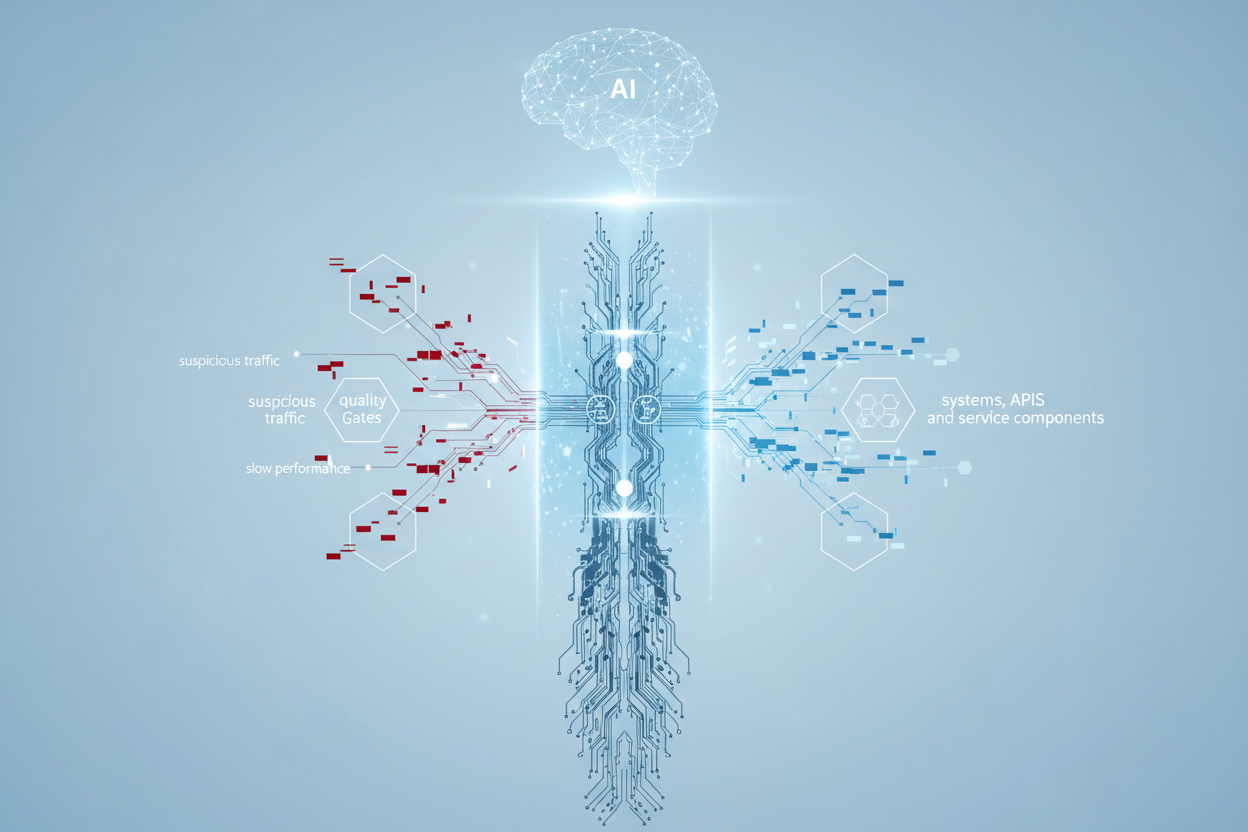
- Integrating AI-assisted anomaly detection into the continuous integration pipeline to catch performance regressions early.
- Mapping legacy dependencies and their impact on load times using AI-driven dependency graphs.
- Prioritizing audit findings based on business impact, using AI to correlate technical issues with user engagement metrics.
This audit workflow established a data-driven baseline, enabling the team to move beyond guesswork and focus engineering efforts where they mattered most.
Priorities: Balancing Business Impact and Technical Debt
With a detailed audit report in hand, the next challenge was prioritizing remediation efforts. Legacy systems often present a tradeoff between quick fixes that improve immediate performance and deep architectural changes that reduce technical debt but require significant investment.
In our case study, the team faced pressure from stakeholders to improve page load times rapidly to reduce bounce rates and improve SEO rankings. However, the audit revealed that many performance issues stemmed from architectural constraints, such as synchronous API calls and monolithic rendering logic.
The prioritization strategy adopted was twofold:
- Quick wins with measurable impact: Targeting high-frequency user flows and critical pages where performance gains would translate directly into business KPIs.
- Deep fixes for long-term stability: Planning phased refactoring of legacy modules and introducing asynchronous processing to decouple rendering from backend dependencies.
AI-assisted impact analysis helped quantify the expected gains from each remediation, enabling transparent tradeoff discussions with product and business teams. This approach avoided the common pitfall of chasing low-impact technical debt while neglecting urgent user-facing issues.
Quick Wins: Tactical Engineering Interventions
Quick wins are essential to demonstrate progress and build momentum. In the content-driven website scenario, these interventions focused on optimizing critical rendering paths and reducing resource bloat without requiring major architectural changes.
Examples of quick wins implemented included:
- Lazy loading of non-critical assets: AI-assisted analysis identified images and scripts that could be deferred, reducing initial page load times by up to 30%.
- Minimizing third-party script impact: By profiling third-party integrations, the team selectively disabled or deferred scripts that caused blocking behavior.
- Database query optimization: AI-driven query profiling revealed redundant or slow queries, which were optimized or cached to reduce backend latency.
These tactical fixes were rolled out incrementally through the CI/CD pipeline, with AI-powered performance regression tests ensuring no unintended side effects. The immediate outcome was a measurable reduction in page load times and improved audit scores, which boosted stakeholder confidence.
Deep Fixes: Architectural Refactoring and AI-Driven Workflow Integration
While quick wins addressed surface-level symptoms, sustainable performance recovery required deep fixes targeting the root causes embedded in legacy architecture. The engineering team embarked on a phased refactoring plan, guided by AI-assisted workflow design principles.
Key architectural changes included:
- Modularizing the monolith: Breaking down the legacy codebase into bounded contexts with clear interfaces, enabling independent deployment and testing.
- Introducing asynchronous rendering: Decoupling content generation from backend data fetching using event-driven patterns, reducing blocking times.
- Implementing AI-assisted code review gates: Embedding AI models in the pull request process to detect potential performance regressions and enforce coding standards.
This integration of AI into engineering workflows created a feedback loop where quality gates prevented regressions before they reached production. The team also established a continuous performance monitoring dashboard, enriched with AI anomaly detection, to proactively identify emerging issues.
The rollout of these deep fixes was staged over multiple sprints, with each phase validated against baseline metrics established during the audit. Over six months, the website saw a 40% reduction in average page load time and a 60% decrease in incident tickets related to performance regressions.
Quality Control: Enforcing Reliability Through AI-Assisted Gates
Quality gates are critical to maintaining the gains achieved through remediation. In legacy environments, manual quality control often fails to catch subtle regressions or enforce consistency across distributed teams.
The solution was to embed AI-assisted quality gates directly into the engineering workflow. This included:
- Automated performance regression detection: AI models trained on historical build data flagged pull requests likely to introduce latency or resource bloat.
- Code complexity and dependency analysis: Continuous monitoring of codebase health metrics to prevent creeping technical debt.
- Integration with CI/CD pipelines: Blocking merges that failed quality criteria, ensuring only vetted code reached production.
These gates were complemented by human reviews focused on architectural decisions and business logic, creating a balanced governance model. The result was a more predictable release cadence with fewer hotfixes and rollbacks.
Checklist for Implementing AI-Assisted Quality Gates
- Define performance and reliability metrics aligned with business KPIs.
- Integrate AI models into CI/CD pipelines for real-time feedback.
- Establish baseline metrics from comprehensive audits.
- Train AI models on historical build and incident data.
- Set clear thresholds for blocking merges and triggering alerts.
- Combine automated gates with manual architectural reviews.
- Continuously monitor and retrain AI models to adapt to evolving codebases.
Conclusion: From Legacy Constraints to Predictable Performance
This case-driven implementation plan demonstrates how AI-assisted engineering workflows and quality gates can transform content-driven commercial websites plagued by legacy constraints and slow audits. By combining data-driven audits, prioritized remediation, tactical quick wins, deep architectural fixes, and AI-embedded quality control, engineering teams can achieve measurable improvements in reliability and performance.
The key takeaway is the importance of integrating AI not as a silver bullet but as an enabler of disciplined engineering practices. This balanced approach reduces incidents, accelerates delivery, and aligns technical efforts with business outcomes.
For teams facing similar challenges, adopting an AI-assisted workflow design tailored to legacy environments is a strategic investment. To explore how to implement these solutions in your organization, visit our services page for expert guidance and tailored engineering support.
Related Resources
- AI-Assisted Engineering and Design Workflows for E-Commerce Operations – A playbook on integrating AI into complex engineering workflows.
- MVP Launch and Product Validation for Service Businesses – Acceptance checklists for integrating CRM and lead sources in product launches.
- Quality Engineering and Release Reliability in E-Commerce Operations – An AI-driven implementation plan for secure, audit-ready launches.
Operationalizing AI-Assisted Engineering Workflows: Practical Steps and Pitfalls
Transitioning from conceptual frameworks to operational AI-assisted workflows requires deliberate planning and execution. One critical step is establishing a cross-functional task force that includes engineering leads, QA specialists, product managers, and data scientists. This team collaboratively defines the scope, success criteria, and integration points for AI tools within existing processes.
For example, in one implementation, the team began by mapping the current CI/CD pipeline stages and identifying where AI models could provide the most value—such as during static code analysis, performance regression testing, and post-deployment monitoring. Early involvement of stakeholders ensured alignment on priorities and mitigated resistance to change.
However, a common pitfall is over-reliance on AI outputs without sufficient human oversight. In one case, an AI model flagged a performance regression that was actually a false positive caused by an unusual but valid code pattern. This incident underscored the importance of establishing clear escalation paths and feedback loops where engineers can review and annotate AI findings, improving model accuracy over time.
Operationalizing also involves investing in data quality and instrumentation. Without comprehensive telemetry and historical build data, AI models lack the context needed for reliable predictions. Teams should audit their logging, monitoring, and test coverage to ensure data completeness and consistency before deploying AI-assisted gates.
Trade-Offs in AI-Driven Quality Gate Implementation
Integrating AI into quality gates introduces trade-offs that must be carefully managed. One such trade-off is between gate strictness and developer velocity. Overly aggressive blocking criteria can frustrate engineers and delay releases, while lenient thresholds may allow regressions to slip through.
To balance this, a phased rollout approach is recommended. Initially, AI gates can operate in advisory mode, providing warnings without blocking merges. This allows teams to calibrate thresholds based on real-world feedback and build trust in the system. Gradually, as confidence grows, gates can be tightened to enforce stricter controls.
Another consideration is the computational overhead introduced by AI analyses. Running complex models on every pull request can increase build times, impacting developer productivity. Mitigation strategies include prioritizing critical paths for AI evaluation, caching intermediate results, and scheduling heavier analyses during off-peak hours.
Finally, there is the risk of AI bias or blind spots, especially if training data is skewed or incomplete. Continuous monitoring of AI gate effectiveness, combined with periodic audits of false positives and negatives, helps maintain balance and fairness in enforcement.
Rollout Scenarios: From Pilot to Full-Scale Adoption
Successful adoption of AI-assisted workflows typically follows a staged rollout. A pilot phase focuses on a single team or feature area, allowing for controlled experimentation and rapid iteration. During this phase, teams collect detailed metrics on gate accuracy, developer feedback, and impact on release cadence.
For instance, a pilot might target the homepage rendering module, where performance regressions have historically caused the most user complaints. By concentrating efforts, the team can fine-tune AI models and integration points before scaling.
Following pilot success, a phased expansion includes additional teams and codebases, accompanied by training sessions and documentation updates. Throughout this phase, governance structures are established to manage exceptions, handle disputes, and evolve AI models based on new data.
Full-scale adoption culminates in embedding AI-assisted gates as a standard part of the engineering culture. At this stage, continuous improvement processes are formalized, with dedicated roles for AI model stewardship and quality gate maintenance.
Quality Control Reasoning: Ensuring Sustainable Engineering Excellence
Embedding AI-assisted quality gates is not merely a technical exercise but a strategic enabler of sustainable engineering excellence. The reasoning behind this approach rests on several pillars:
Proactive defect prevention: By catching regressions early, AI gates reduce the cost and impact of defects, shifting the focus from firefighting to prevention.
Data-driven decision making: AI models provide objective, consistent assessments that complement human judgment, reducing bias and variability in quality reviews.
Scalability: As codebases and teams grow, manual quality control becomes untenable. AI-assisted gates scale quality enforcement without proportional increases in headcount.
Continuous learning: AI models evolve with the codebase, adapting to new patterns and technologies, ensuring that quality control remains relevant over time.
These pillars collectively support a culture of accountability and continuous improvement, where engineering teams can confidently deliver high-quality, performant websites aligned with business goals.
Implementation Example: Integrating AI-Assisted Gates in a Legacy CMS Environment
Consider a content-driven commercial website built on a legacy content management system (CMS) with tightly coupled front-end and back-end components. The engineering team faced frequent performance regressions due to uncoordinated changes and limited test coverage.
The team initiated an AI-assisted quality gate project by first instrumenting the CMS to collect detailed telemetry on page load times, API response latencies, and resource utilization. Historical incident data was aggregated to train AI models capable of predicting performance regressions based on code changes.
Next, the AI models were integrated into the pull request workflow. When a developer submitted a change, the AI gate analyzed the diff and associated metrics, flagging potential regressions. Developers received immediate feedback, enabling them to address issues before code review.
To complement automated gates, the team established a manual review checklist focusing on architectural impacts and business logic correctness. This hybrid approach balanced automation with human expertise.
Over several months, the team observed a significant reduction in post-deployment incidents and improved release predictability. The AI-assisted gates also fostered a culture of quality awareness, with developers proactively optimizing code for performance.
Anti-Patterns to Avoid in AI-Assisted Workflow Adoption
While AI-assisted workflows offer substantial benefits, certain anti-patterns can undermine success:
Blind trust in AI outputs: Treating AI findings as infallible can lead to overlooked errors and complacency. Always maintain human oversight and encourage critical evaluation.
Neglecting model maintenance: AI models degrade over time if not retrained with fresh data. Establish routines for continuous monitoring and updating.
Overloading developers with alerts: Excessive false positives or noisy feedback can cause alert fatigue, reducing responsiveness. Prioritize precision and relevance in AI gate design.
Ignoring organizational change management: Introducing AI-assisted gates without addressing cultural and process changes risks resistance and poor adoption. Invest in communication, training, and stakeholder engagement.
Concrete Checklist for Sustained AI-Assisted Workflow Success
To ensure ongoing value from AI-assisted engineering workflows, teams should regularly revisit the following checklist:
- Maintain comprehensive telemetry and incident data collection.
- Periodically retrain AI models with updated datasets.
- Review and adjust quality gate thresholds based on operational feedback.
- Conduct regular cross-functional retrospectives to surface process improvements.
- Document AI gate rationale, limitations, and escalation procedures.
- Foster a culture of continuous learning and quality ownership.
By embedding these practices, organizations can sustain the benefits of AI-assisted workflows and quality gates, driving long-term improvements in website performance and business outcomes.
Related reads
Relevant offers
If this article matches your task, here are two offers you can use to move from insight to implementation without extra discovery.
Bitrix or website integration with marketplace API
I integrate marketplace APIs with your website or Bitrix so synchronization stops relying on manual workarounds.
Support-to-sales handoff workflow
I configure the support-to-sales handoff so valuable requests do not get lost between systems and teams.